
By Diego Morra
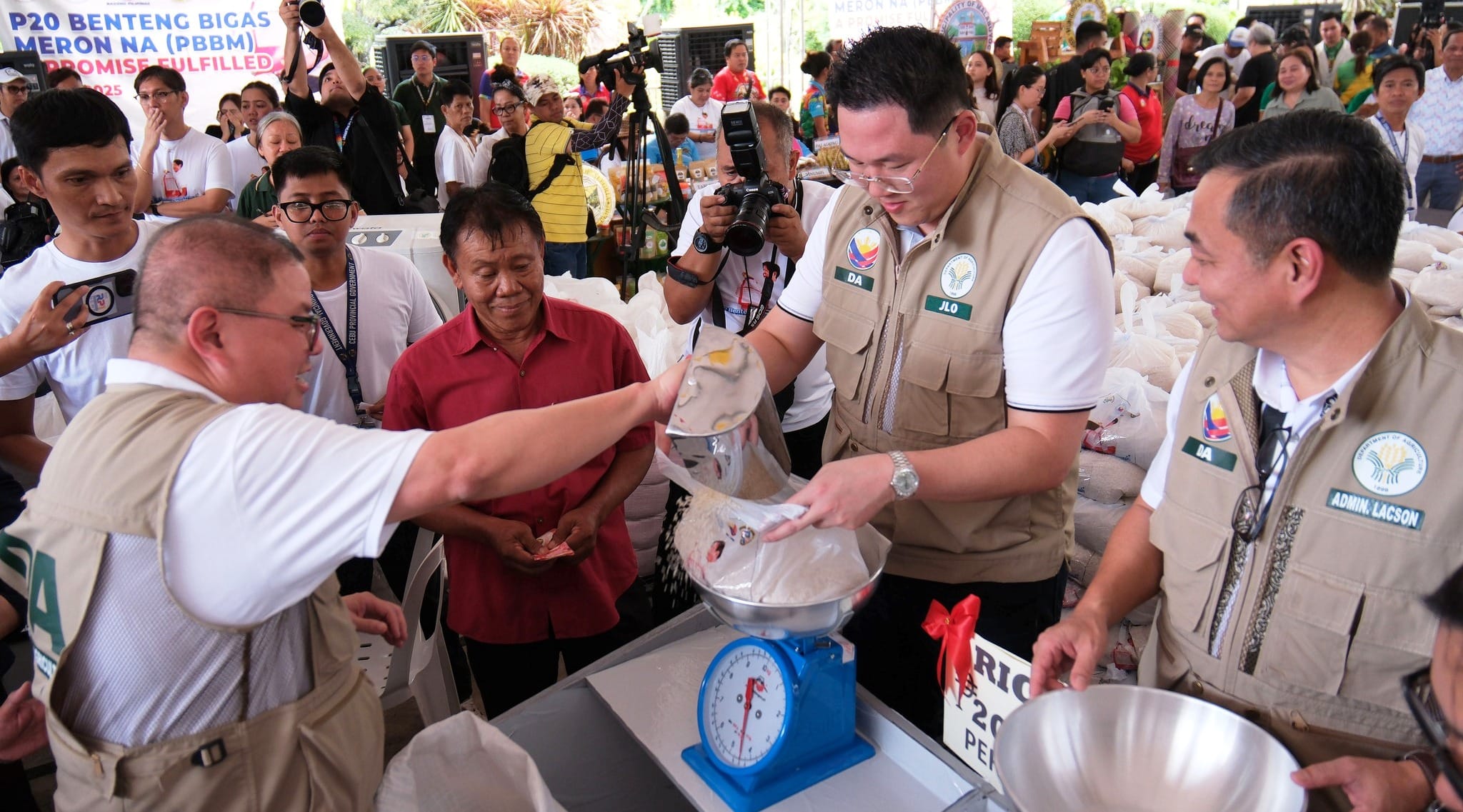
The Marcos Jr. administration is twisting itself into knots for thinking that selling the nearly 400,000 metric tons (MT) of rice stowed in the warehouses of the National Food Authority (NFA) for only P20 per kilo would force retailers and wholesalers to slash their prices in order to compete with the “Bente Bigas Mo” (BBM) rice.
Fact is, the NFA’s admitted volume is roughly equivalent to what the Kilusang Magbubukid ng Pilipinas (KMP) said was the buffer stock that could not be sold by the agency to influence prices, as what the Rice Liberalization Law (RLL) contemplated. The 390,000 MT of NFA rice is the same as the 7.8 million sacks that Malacanang said would be available on May 2, just 10 days before the midterm elections. This volume is good only for 10 days of national consumption. After getting the flak for the clear aim of BBM to influence voters, government has retreated.
In short, the Palace delulu, supported by Agriculture Secretary Franco Tiu Laurel, has crashed down to earth, with the regime announcing the postponement of the much-hyped P20-per-kilo rice sale which was supposed to start on May 2. By moving the BBM launch to May 13, KMP chairperson and Makabayan Coalition senatorial candidate Danilo Ramos said government is confessing that it cannot sustain its BBM rice scheme. “It is a grand deception and an empty publicity stunt to cover up the deepening rice crisis under the Marcos Jr. administration. BBM was designed to be limited, short-lived and tokenistic, far from offering genuine relief to the millions suffering from rising rice prices,” Ramos said.
Ramos said the basic error of the Marcos Jr. administration is that it is pursuing the same failed food policy that was worsened by the Duterte regime when it enacted RLL, which assumed that the world is awash with rice and that Philippine agriculture could shift to high-value crops (HVCs) and rely on rice imports from Vietnam, Thailand, Pakistan, India and Myanmar. Truth to tell, the Philippines also imports from Japan, Italy (incidentally, Bela Ciao was a hymn among female rice farmers in Italy)and even Singapore. Ramos explained that only 7% of the world’s annual rice output is traded globally and when drought strikes, the country’s reliance on imports becomes unsustainable. The influx of cheap imports since 2019 has also caused thousands of rice mills to shut down, displacing farmers who have to seek other types of livelihood. Ramos said that in Asia, only Malaysia has pegged rice imports at 30% of annual consumption, with farm production shifting to oil palms and other crops.
Only the Makabayan Coalition has taken a firm stand against import-based food security and opposed persistently the government’s failure to increase rice production through subsidies of agricultural inputs, fertilizers and other farm inputs, reduced fuel costs and power rates and free and sustained irrigation services. Both KMP and the Amihan women farmers’ federation have demanded that RLL be junked, genuine agrarian reform implemented and domestic rice production be boosted to guarantee real food security. “Hindi ‘Bente Bigas Mo,’ kundi Bente Milyong Pilipinong Nagugutom ang realidad. Tama na ang panloloko. Ibalik ang suporta sa lokal na produksyon ng bigas, hindi importasyon,” Amihan stressed.
“Simula’t sapul, malinaw na propaganda at panloloko ang Bente Bigas Mo. Ang postponement nito ay pruweba na walang kakayahan at walang intensyon ang gobyernong Marcos Jr. na ibaba talaga ang presyo ng bigas. Hindi ito solusyon, kundi panlilinlang habang patuloy ang pagkalam ng sikmura ng mamamayan,” Ramos argued. He explained that the Department of Agriculture’s never-ending vow to slash rice prices will be dashed to smithereens because of RLL. “This core policy, enacted under Duterte and worsened under Marcos Jr. almost decimated local rice production, intensified dependence on imports, and caused rice prices to soar at record-high levels.Because of RLL, the Philippines’ rice import dependency surged from 14% in 2018 to 23% in 2022. Sa madaling salita, isinugal ng gobyerno ang pagkain ng mamamayan sa merkado ng dayuhan. Isang kriminal na kapabayaan ito sa pagkain at kabuhayan ng taumbayan,” Ramos added.
Between 2018 and 2024, the national average price of rice increased by 17%, affecting tremendously farmers themselves, rural workers percent and the urban poor. For the entire period, the minimum wage in Metro Manila rose by only 14% while wage growth in other regions was lower over the same period, with even lower wage growth in other regions. For agriculture, earnings have gone south. Many people are unemployed or underemployed. Curiously, the price of rice rose after RLL was enacted, indicating that contrary to the pious wishes of the backers of RLL led by Sen. Cynthia Villar, importations did not lead to any reduction in rice prices. In short, the law favored only the compradors who now control the rice industry and who can import as they please, hoard the grain as they must and earn windfall profits from their price manipulation.
Ramos argued that “naghihingalo na ang sektor ng palay at bigas. Pinatay ng importasyon ang kabuhayan ng libu-libong magsasaka, manggagawang bukid, at manggagawa sa mga rice mills. Ang resulta: malawakang pagkawala ng trabaho at malalim na gutom.” Amihan secretary-general Cathy Estavillo, also a Gabriela Partylist nominee, said: “Nakakagalit na pinaglalaruan at pinapa-asa ng DA at Malakanyang ang masa sa BBM. Uumpisahan tapos ipo-postpone, pruweba na buladas ang pangakong P20/kilo ng bigas ni Marcos Jr. Ginawa lang itong pampalubag-loob at gimik sa eleksyon. Gayundin, habang nalulubog sa gutom at utang ang taumbayan, bilyon-bilyong piso ang kinikita ng rice cartel at importers.”#