
Restoring order and cleanliness became the top priority of Isko Moreno after being re-elected as mayor of Manila. On his first day in office, June 30, one of his first actions was the immediate launch of a city-wide flushing and street-cleaning operation across key districts in the city, which coincided with his declaration of a State of Health Emergency.
However, behind these cleaning operations is paving the way for clearing operations that have directly impacted the livelihoods of street vendors, especially those on sidewalks. Accordingly, the said operation is part of the implementation of the “Zero Vendor Policy,” which considers street vending illegal.
Illegal vs informal
Moreno has directed several departments, particularly the Hawkers Division, the Department of Engineering and Public Works (DEPW), the Manila Traffic and Parking Bureau (MTPB), and the Department of Public Services (DPS), to ensure that public roads and alleys remained free of “illegal vendors.”
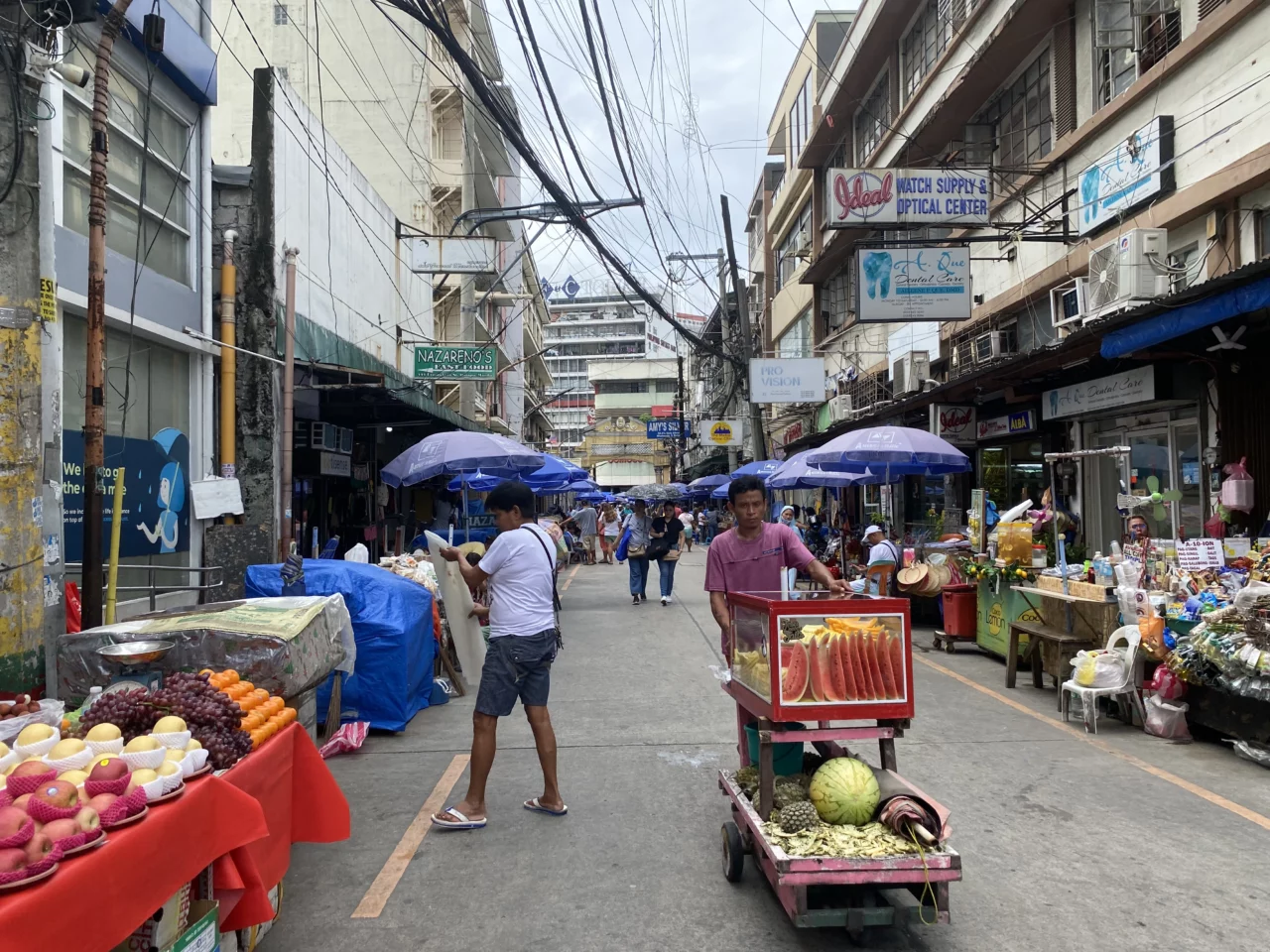
The said policy was strictly enforced in areas such as Palanca, Blumentritt, Soler, Juan Luna, Linao, Carriedo, Avenida, Plaza Miranda Square, Padre Faura, and Pedro Gil.
“Hindi naman kami iligal dahil hindi naman masama o ipinagbabawal ang mga binebenta namin. Naghahanapbuhay kami nang marangal,” explained Marilyn Escope, an ambulant vendor in Quiapo.
According to Rena Cañete, advocacy director of Defend Jobs Philippines, street vending is part of the informal economy and should not automatically be considered illegal.
“Kung sa konsepto ng illegal, maaring tinutukoy ito dahil sa kawalan ng permit. Ngunit paano naman sa bahagi ng mga ambulant vendors? Yung mga naglalako sa iba’t ibang lansangan? Marami sa kanila ang nakararanas pa nga ng kotong para lang hindi kumpiskahin ang kanilang itinitinda. Marami sa kanila ang natatakot sa ganitong mga panukala. Mali rin ang pagtukoy agad sa mga street vendors na iligal dahil sila ay bahagi ng informal economy, at sa mas malawak na tingin, bahagi rin ng sektor ng serbisyo,” said Cañete.
According to the International Labour Organization, about two billion or 61.2% of the global workforce are currently engaged in informal employment. These workers often lack legal protection, social security, and stable income, which limits economic growth and deepens inequality. Such descriptions closely reflect the situation of Manila’s street vendors.
Zero Vendor Policy
The Zero Vendor Policy, as implemented by local governments such as Manila, is aligned with the DILG Memorandum Circular No. 2024-053 on the Nationwide Implementation of the Barangay Road Clearing Operations Assessment under the Bagong Pilipinas Program, specifically targeting informal workers like sidewalk or street vendors.
In Manila, Executive Order No 43 was signed during Moreno’s first term to carry out weekly clean-up drives across 896 barangays in support of the Duterte administration’s call for city decongestion. From this, the Zero Vendor Policy was reintroduced, framed as part of these clean-up drives that aimed to remove vendors considered “obstructions” on public roads. Meanwhile, Executive Order No. 15 or the ‘No Parking, No Vending Policy’ was enacted by Honey Lacuna in July 2022, targeting 18 selected roads.
The different faces of street vending

According to Canete, there are different types of vendors:
- Ambulant vendors – those who push carts or kariton, or sell their goods while walking. They are the most vulnerable to clearing operations and extortion.
- Semi-formal vendors – those with sidewalk stalls or spaces on alleys, often paying daily fees to the city’s hawkers division.
- Vendors in grey areas – especially in Recto, where some make a living producing fake documents and IDs.
Vendors like Jonar Babatio, sherbet or ice-cream seller; Zenaida Sultan, biko vendor; and Gracia Pascual, vegetable vendor, sell daily while pushing carts. Semi-formal vendors like Terry Cabuñag and Rea Roda pay daily hawker tickets ranging from P20 to P35 for “cleanliness” or to avoid being apprehended.
One vendor from Blumentritt further shared that the hawkers’ fee varied under different mayors:
- P45 under Atienza
- P30 under Estrada
- No fee under Alfredo Lim
- P20 under Isko Moreno
- P35 under Honey Lacuna
Meanwhile, along Carriedo and Recto, “informal services” like fake document production are well-known. According to a vendor who asked for anonymity, police officers and city hall staff extort bribes in exchange for letting vendors operate.
There have long been reports of extortion targeting vendors without permits, particularly where barangay tanods, police, or clearing teams demand unofficial “hawker fees.”
Although Manila regulates fees for market stalls, these are supposed to apply only to formal vendors in designated markets. Additionally, the Manila Stall Fee Policy, which was introduced as early as the 1970s, does not cover street vendors. However, many vendors continue to be charged under the guise of cleanliness or order.
“We’re not against the mayor’s policies…”
For Manila vendors, they support Moreno’s call for a clean and orderly city, but not when the policies put their livelihood at risk.
Starting this month, the Manila Hawkers Department actively conducts clearing operations, focusing on removing “illegal” vendors and freeing sidewalks for pedestrian use.
“Ang bangketa ay para sa tao, hindi para sa negosyo. Panatilihin nating malinis, maayos, at ligtas ang ating lungsod,” said the department.
For Adelina Deyta, a coconut vendor in Blumentritt, Moreno’s vision and policy served as an eye-opener for many.

“Sa nangyaring paglilinis, wala naman akong tutol. Kaya lang ang balik, masakit sa puso ko na katulad sa aming vendors ang nawalan ng kabuhayan. Bilang vendor, ganoon ang habag ko sa kapwa ko vendor na sila ngayon ay nagugutom, nawalan ng hanapbuhay. Kung may tamang lugar lang na mapaglalagyan sa kanila, sana magawa. Kapwa naman natin sila Pilipino,” Deyta lamented.
Cabuñag, who sells near Quiapo Church, shared the same sentiment.

“Masakit sa amin. Mahirap. Okay lang naman sana pero sana pagbigyan kami na makapaghanapbuhay pa rin dahil hindi naman kami nagiging sagabal,” said Cabuñag.
For Pascual, her guiding principle has long been the saying: “Kapag may tiyaga, may nilaga” [If you persevere, you will reap the rewards]. Since being forced to leave her spot along the Blumentritt sidewalk, he’s resorted to selling from a pushcart. She said she even borrowed money from a loan shark (5-6) just to buy the cart.
“Kapag nandiyan na yung clearing ay tumatakbo kami. Pero nagpapatuloy kami sa ganitong trabago kasi kailangan mabuhay. Kapag hindi kami nagtyaga, wala kaming kakainin,” Pascual said.

She also shared having metal implants in her foot, but she doesn’t mind if it means quickly fleeing during clearing operations.
“Sana mabigyan kami ni Yorme ng pwesto kung saan kami talaga pwede magtinda. Kasi kami yung mga vendor na nasa bangketa, kahit dalawang bilao lang. Konti lang ang tinutubo namin, kung iuupa pa namin, sana yung abot kaya lang,” Pascual added
Meanwhile, street vendors like Babatio and Sultan have experienced the fear of being caught during these operations.

“Nahuli na ako nito, ilang araw din akong hindi nakapagtinda. May mga binabayaran ako araw-araw. Nabawi ko naman pero pahirapan,” said Babatio.

“Takot na po akong huminto,” shared Sultan, who is already 75 years old. “Muntik na akong maclearing, may tumulong lang sa akin at binili agad lahat ng paninda ko. Nandoon kasi ako nakapwesto kalsada at nagbebenta. Gusto na akong hulihin, pero may naawa sa akin at itinago ako roon sa loob ng palengke.”
According to Daduds Corvito, a vendor of religious items near Quiapo Church, the items confiscated during a clearing operation were eventually returned to him. However, some were broken, and many were incomplete.
“Noong unang upo ni Isko, kinarga yung tinda ko. Naikarga na yung amin, hindi na ako makapiyok. Tinubos ko nalang,” Corvito shared.
Who else is affected?
Manila street vendors shared the same demand for proper consultation and dialogue, as well as designated spaces to continue their livelihood.
According to Moreno, his platform includes allocating designated areas for vendors through city government planning.
But for ambulant vendors like Sultan, Gracia, and Babatio, they hope for a more comprehensive assessment and assurance of their conditions as vendors.
Besides vendors, they also noted the situation among their suki or regular customers who are affected by the clearing operations.

“Diyan na kami kilala ng mga suki namin, kaya kahit sana mabigyan ako kahit kapirasong pwesto lang,” said Maribel Valeria, a dried fish vendor in Blumentritt. She used to be on the sidewalk, but now squeezes into narrow spaces or negotiates with nearby shop owners to set up her goods.
Another group impacted by clearing operations includes the tricycle drivers in the Hipodromo area, or HITODA (Hipodromo Tricycle Operators and Drivers Association), which further demands a permanent terminal and safe routes. Such a demand is also not far from what the Manila vendors want: a permanent, secure space to continue their livelihood.