A regional network of ecology-based agriculture advocates said it hopes governments in the Asia-Pacific (AP) region realizes the Philippines remains the deadliest country for farmers, indigenous peoples, and land activists advocating for land rights.
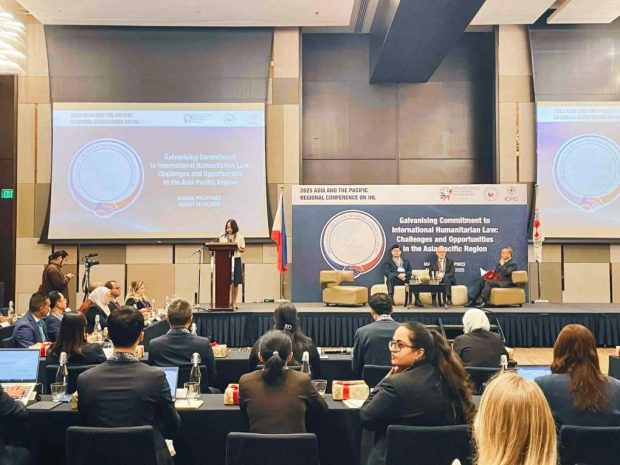
As the Philippines hosts the regional conference on International Humanitarian Law (IHL) this week, Malaysia-based Pesticide Action Network-AP (PANAP) announced the upcoming issuance of its “Land & Rights Watch” report listing human rights abuses against communities resisting land and resource grabbing in the Philippines.
PANAP said it monitored 10 cases of land conflict-related arrests, detention, and legal persecution in the Philippines last year, with 41 victims, as well as nine cases of threats, harassment, and physical assault with 11 victims.
“These alarming numbers cast doubt on the Philippine government’s claimed commitment to human rights and international humanitarian law,” PANAP deputy executive director Arnold Padilla said.
The regional group said the Ferdinand Marcos Jr.’s government aims to present the Philippines as a regional champion of human rights through hosting of the ongoing IHL regional conference in Makati City from August 11 to 14.
Thirty countries from the AP region are attending the conference, the Department of Foreign Affairs announced.
“However, the increasingly repressive political environment experienced by Filipino farmers, farm workers, indigenous peoples, and other rural sectors—and their advocates—paints a very different picture,” Padilla said.
Their new report compiled reports of human rights abuses against communities resisting land and resource grabs that it monitored last year, PANAP said.
However, two weeks before the IHL regional conference, human rights and cause-oriented groups in the Philippines reported a series of human rights atrocities against local farmers and indigenous peoples.
On August 1, 2025, indigenous Maranao farmer and former political prisoner Juan Sumilhig was reportedly killed by soldiers from the Philippine Army’s 4th Infantry Battalion in San Jose, a town in Occidental Mindoro, more than 330 kilometers south of Manila.
Then, from August 2 to 3, the Army’s 16th Infantry Battalion conducted strafing, shelling, and two aerial bombings in a rural village in the town of Tagkawayan in Quezon province, over 260 kilometers south of Manila.
“These recent incidents followed a series of ongoing military operations in these areas that involved strafing and aerial bombings,” Padilla said.
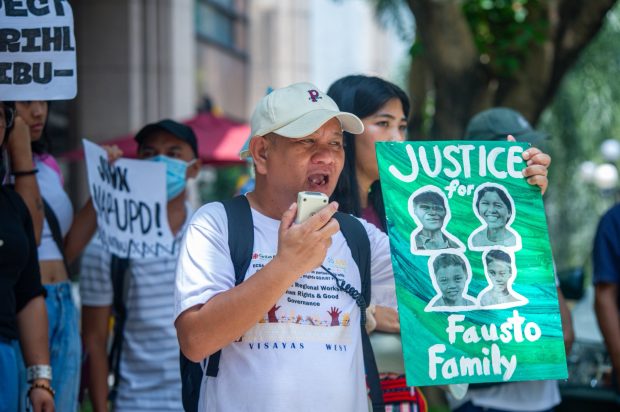
“We recognize that a civil war is ongoing in the Philippines between the government and revolutionary groups in rural areas. But IHL clearly prohibits bombings, indiscriminate gunfire, and the killing of unarmed civilians, which the Philippine military appears to violate,” he said.
Additionally, relentless red-tagging, including that of farmers and activists asserting the right to land, blurs the line between civilians and combatants within the government’s counterinsurgency efforts and is used to justify such attacks, added Padilla.
PANAP also noted that efforts to deliver humanitarian aid to rural communities affected by the army’s strafing and bombings are allegedly being impeded by suspected military elements.
“Again, if true, this violates the IHL, which recognizes the right of civilians to relief essential for their survival and mandates parties to the conflict to allow the safe and unimpeded passage of such relief,” Padilla said.
PANAP said it hopes the Marcos Jr. administration is not copying Israel’s playbook in Gaza and allows the entry of humanitarian assistance to affected communities.
Globally, the Philippines ranked second behind Mexico, which recorded five killings of farmers with 18 victims.
The Philippines is a State Party to all four of the 1949 Geneva Conventions and their Additional Protocols, which form the foundation of international humanitarian law and provide vital protections for wounded soldiers, prisoners of war, and civilians during armed conflict.
PANAP urged the Marcos Jr. administration to show that it truly respects and upholds IHL and human rights principles by halting the military’s offensive, allowing an independent and credible probe of the reported human rights abuses, and making those behind the atrocities accountable.
August is being observed as IHL month throughout the world in commemoration of the passage of the Geneva Conventions creating ethical behavior in the conduct of war. # (Raymund B. Villanueva)