Tuguegarao Mayor Maila Ting-Que said the project stalled after allocations were diverted by the previous administration, and attempts to resume testing and completion have supposedly been blocked in the city council.
The city government has sought national intervention to verify the bridge’s structural integrity and determine whether it can still be completed.
Tuguegarao–Solana Bridge
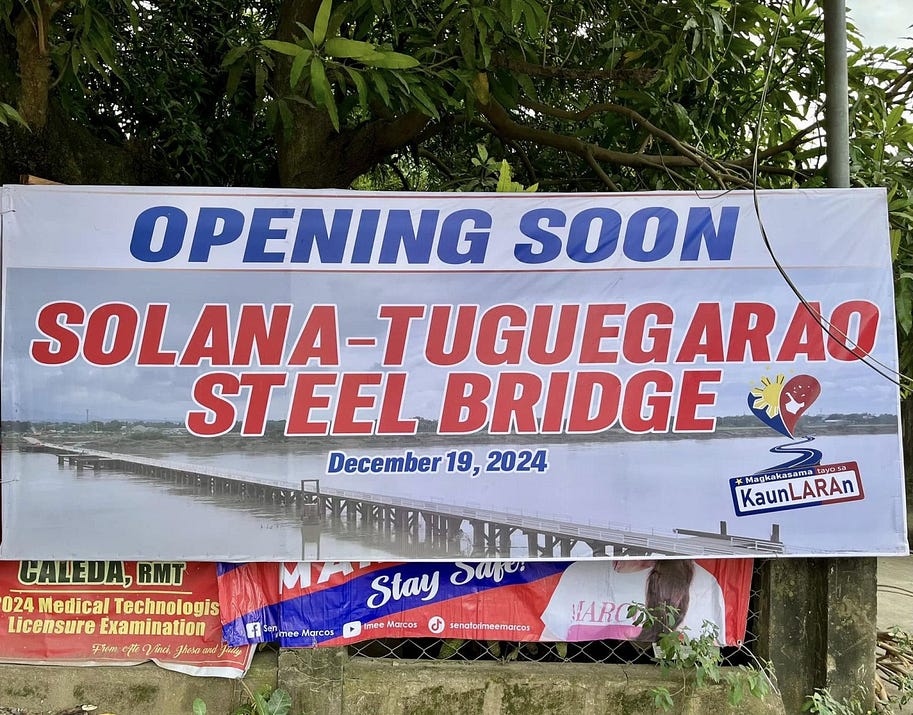
The Tuguegarao–Solana Bridge remains under construction, with unclear details on how much funding has been allotted, and for how long it would take to complete.
While delayed construction is ongoing, a temporary overflow steel bridge was installed to allow movement of construction equipment and, at times, light vehicles.
It has now been submerged due to the rising Cagayan River.
‘Bridge to nowhere’

The Tuguegarao–Enrile Bridge, which was envisioned to cross the Cagayan River and connect Barangay Gosi in Tuguegarao to Barangay Alibago in Enrile, remains incomplete.
The approach road construction and right-of-way settlements have not been finalized, according to records.
In December 2024, a section of the bridge approach project collapsed before it could be opened for public use.
Enrile Mayor Miguel Decena questioned why construction proceeded despite reports that the area was classified as a no-build zone.
He said several affected landowners had yet to be compensated despite a stated right-of-way allocation of P432 million.
A formal complaint has reportedly been filed with oversight agencies.
14 years to build, 4 weeks to crumble
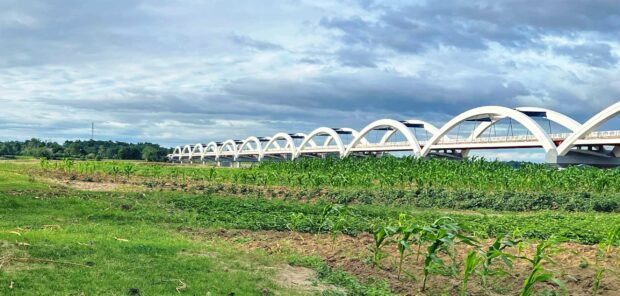
The collapse of the Sta. Maria–Cabagan Bridge earlier this year also continues to affect mobility between Cagayan and Isabela.
The 990-meter bridge — a major river crossing of the Cagayan River, collapsed on the evening of 27 February, forcing commuters to revert to longer, more congested detours.
It took the DPWH and its projects contractors 14 years to build the bridge — severely delayed by more than a decade.
The bridge, which was begun in November 2014 and was completed just weeks prior to its collapse, comprised 12 arch spans which has become popular among residents for Instagram snaps.
The effect on mobility has been severe: commuters between western Cagayan province and eastern Isabela now must take longer detour routes, many of which route through the city of Tuguegarao City, adding time, fuel cost and congestion to daily travel.
Local transport groups say the collapse has compounded an already fragile infrastructure network in Cagayan Valley.
Piggatan Bridge (Alcala)

In Alcala, the Piggatan Bridge collapse has forced travelers heading to northern Cagayan towns — including Gattaran, Lasam, and Aparri — to divert through interior routes that redirect traffic back toward Tuguegarao.
The detour has increased travel times by more than an hour and added strain to the remaining functional road network.
The DPWH is rushing construction of a temporary detour bridge beside the fallen structure.
‘Lifelines vs floods’
Disaster risk specialists warn that reliance on only a few operational bridges places Tuguegarao at high risk during extreme weather events.
With more intense rainfall patterns expected, mobility disruptions could extend to emergency response, food supply movements, and hospital access.
“Bridges are not just transport links. During floods, they determine whether communities can evacuate, access healthcare, or receive supplies,” a city engineer said. #