
Despite downplaying the existence of a crisis while declaring the country under a state of national energy emergency due to the continued surge in oil prices, the Marcos Jr. administration has proposed various measures, such as implementing staggered fuel price increases, a four-day work week for employees, and approving 100% online education for students, among others.
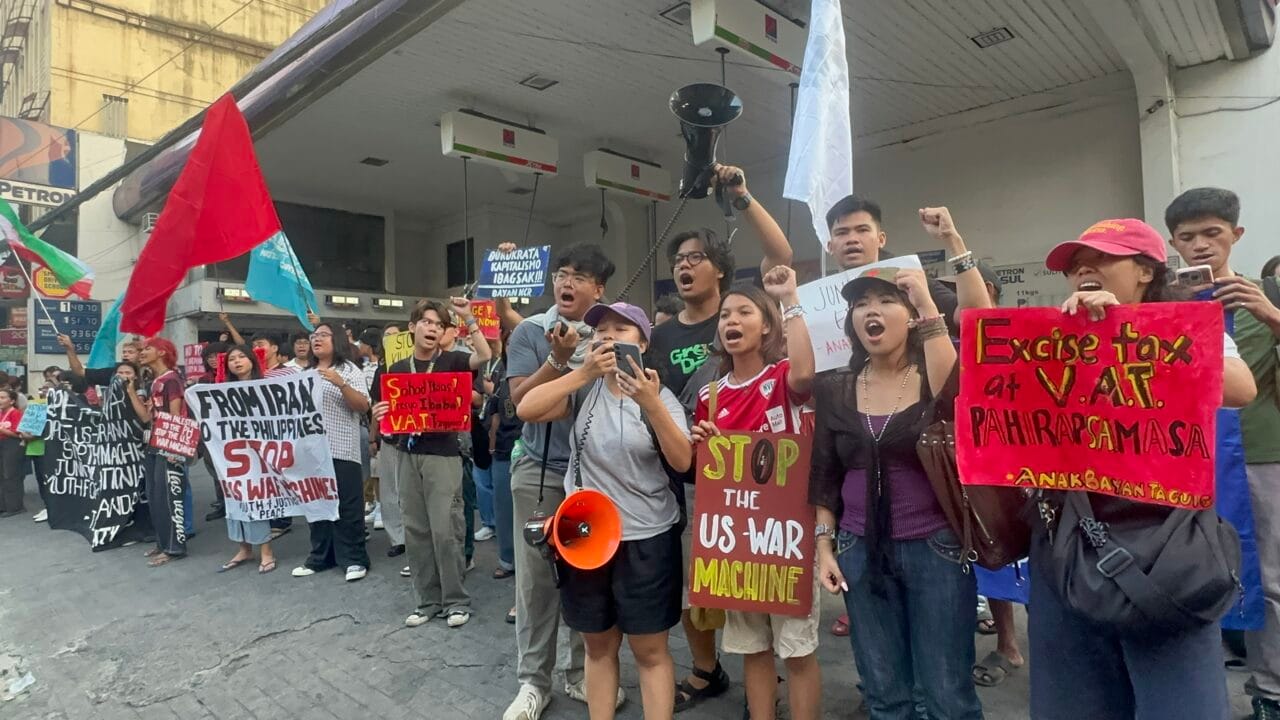
On April 10, various progressive groups conducted a Black Friday protest (BFP) at Petron in Pedro Gil, Manila, to lambast these measures as inept and ineffective in addressing the oil crisis. The groups further vowed to launch a series of BFPs in the coming weeks, leading up to Labor Day on May 1.
On the 4-day work week
On March 9, the proposed four-day workweek took effect in some executive branch offices under the Marcos Jr. administration.
Under Memorandum Circular (MC) 114, the policy covers all national government agencies, government-owned or -controlled corporations (GOCCs), local government units, constitutional bodies, state universities and colleges, and other government instrumentalities.
For All UP Workers Union National President Jossel I. Ebesate, such a policy is not the real solution to alleviating labor pains, particularly among workers at the Philippine General Hospital and the University of the Philippines at large.
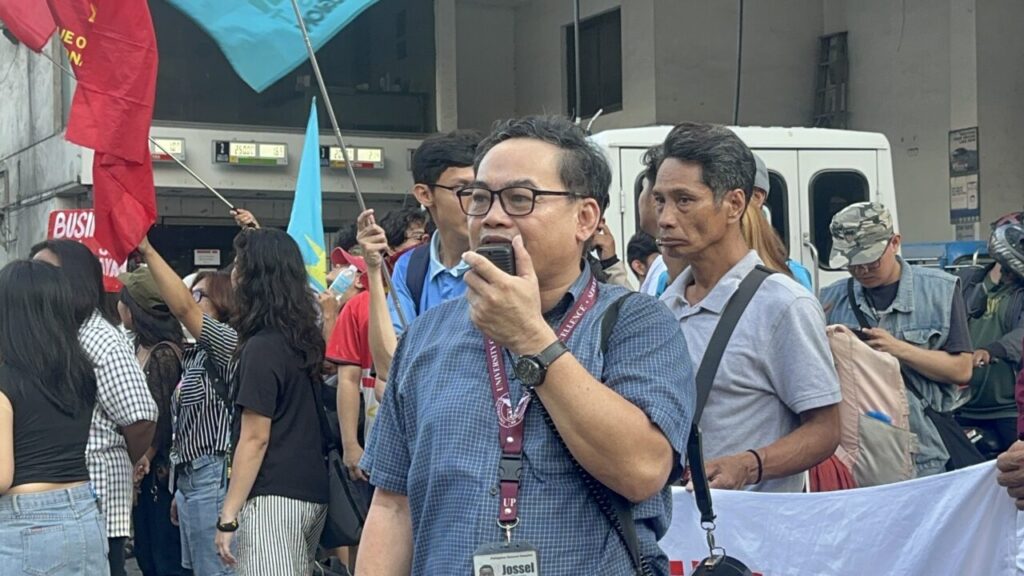
“Ipinawawalang-bisa nito ang makasaysayang paglaban natin para sa walong oras nating pagtatrabaho,” Ebesate lamented.
In the 1900s, various uprising movements from the labor sector and unions including the Union Obrera Democratica highlighted the demand for an 8-hour workday stemming from the dire conditions of workers under the American regime where Filipinos worked up to 10 to 12 hours a day.
This is also formally stated in the Labor Code of the Philippines and became a standard which limits working hours to 8 per day or 48 per week unless overtime is agreed upon.
For university employees like Ebesate, he shared that they only receive around P14,600 monthly. Despite this, the amount remains insufficient due to the oil crisis driving up the prices of goods and basic services.
According to IBON Foundation, a typical family needs P27,196 per month or P1,250 per day to live decently. In the case of Ebesate and other university workers, their monthly salary amounts to only about half of what is needed for a decent standard of living.
“Sa 4-day work week, may dagdag tao ba silang ibibigay? Sa amin pa lang, limang araw pa rin naman kaming nagre-report. At sa kabila nito, patuloy naming iniinda ang mga nagtataasang presyo sa batayang serbisyo,” said Ebesate.
“Kaya nararapat lamang na kundenahin ang pahirap na mga panukalang ito na tayong mga ordinaryong mamamayan ang naghihirap,” he added.
On 100% online classes
At the height of the COVID-19 pandemic, online or blended learning was introduced as a way for the “ligtas na balik-eskwela” for students to continue their education. However, various progressive youth groups demanded the “balik-paaralan” or the return of face-to-face classes alongside demands for mass testing and medical solutions against the militaristic response of the former Duterte administration to the pandemic.
Now, a similar scheme appears to have been adopted again through proposals to implement 100% online learning for students due to the oil crisis.
On April 6, the Commission on Higher Education approved a policy granting all higher education institutions (HEIs) full flexibility to transition to 100% online classes in response to the oil crisis. According to CHED, the move is designed as a temporary “stop-gap mechanism” to supposedly ease the financial strain on students and faculty due to rising transportation costs and other basic expenses.
Angelique Tomilloso, a student from Adamson University, condemned this arrangement.
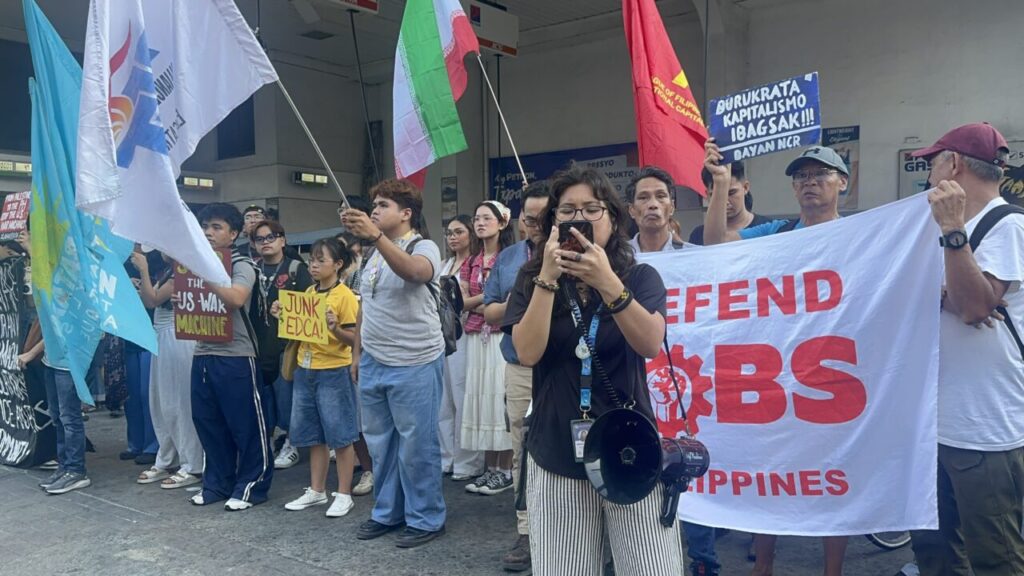
“Lalo lang nitong gagawing apathetic ang sangkaestudyantehan at disconnected sa material conditions sa mga krisis na nangyayari lalo na sa sunod-sunod na global tensions sa pangunguna ng US kung saan tayo ang pumapasan ng bigat nito,” aniya.
According to research by the National Union of Students of the Philippines National Capital Region (NUSP-NCR), around 88% of private higher education institutions (PHEIs) in Metro Manila face recurring issues of looming tuition increases every year.
At Adamson University, a 5% tuition fee increase was implemented for the academic year 2025–2026. This marks the fourth increase since the pandemic, justified by the university to cover rising operational costs, with tuition rising by roughly P2,500.
“Sa Adamson, ang binabayaran naming matrikula sa average ay P40,000 hanggang P80,000. Pero kung tatanungin mo ang mga estudyante tungkol sa mga pasilidad, bulok ang mga aircon, sira, pinagbabawalan pa ang mga estudyante na gamitin ang mga classroom,” said Tomilloso.
Similarly, Prof. Lakan Umali and Prof. Rendell Sanchez from the UP Diliman College of Arts and Letters echoed the same sentiment on the issue of lack of space in universities and colleges.
In a video uploaded on the UPD Department of English and Comparative Literature Facebook page, the professors shared how they have to walk around 20 minutes from their “temporary” offices at Acacia Residence Hall to reach their classes at the CAL building since the UP Diliman Faculty Center burned down a decade ago.
The UP Diliman Faculty Center (Rizal Hall), which housed the College of Arts and Letters (CAL) and the College of Social Sciences and Philosophy (CSSP), was destroyed by a fire on April 1, 2016. The blaze destroyed decades of academic records, research, and personal collections, with faculty like Prof. Umali and Prof. Sanchez still demanding new, permanent facilities.
On the P5,000 fuel subsidy for PUVs
Azrael De Guzman from Tanggol Pasada Network CAMANAVA reiterated that the P5,000 fuel subsidy is only a scheme and a sham in addressing systemic problems amid rising fuel prices and operational costs.
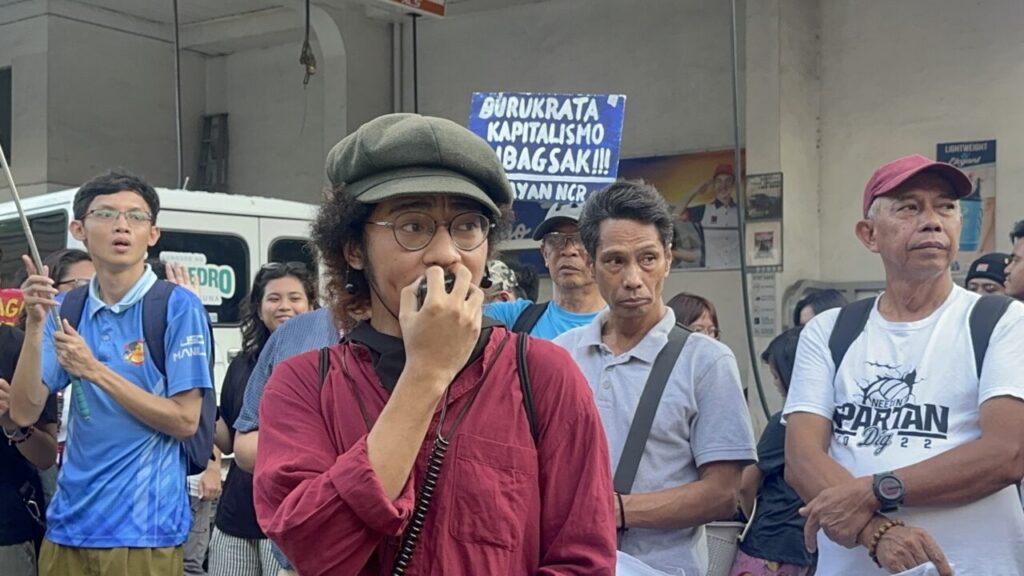
“Sa Caloocan City, halos 40-50% sa mga pampublikong jeep ay kasalukuyang hindi na nakakapasada dahil sa mataas na presyo ng langis,” De Guzman shared.
He added that many drivers have resorted to side hustles such as construction work, vending, and others due to the lack of job security.
On the other hand, the Department of Transportation (DOTr) said it will roll out a P1 billion Net Service Contracting Program to assist PUV operators and passengers starting April 15. Participating drivers will receive compensation based on kilometers traveled rather than passenger count, while passengers benefit from a 20% fare discount.
This did not sit well with transport groups, who called it yet another band-aid solution, referring to it as “kapos, pantapal, at papogi” or insufficient, band-aid, and purely performative.
“Nagsisilbi ang net service contracting at baryang fuel subsidy para linlangin tayong nagseserbisyo ang gobyerno. Sa aktwal, lalo nitong inililihis ang pananagutan ng gobyerno na kontrolin ang pagkaganid sa tubo ng mga kartel ng langis at mga korporasyon, nagsisilbi itong pang-iwas sa pagbawas ng mga atrasadong buwis na VAT at excise tax, at dagdag-rason para pigilan ang magkatambal na panawagang fare hike at wage hike,” said PISTON in a statement.
According to PISTON, the P10 per liter fuel subsidy and the Net Service Contracting Program of the Marcos Jr. administration are insufficient stopgap measures. Coverage is limited to only 50,000 PUVs, confined to the NCR and “off-peak” hours, with compensation too low compared to the total expenses of drivers and operators.
“Ito ang dahilan kung bakit ang mga tsuper at operator sa CAMANAVA ay may kapasyahan na kunin ang manibela ng lipunan at i-arangkada sa lansangan patungo mismo sa pagbabagong panlipunan,” De Guzman concluded.