
Statement
June 12, 2026
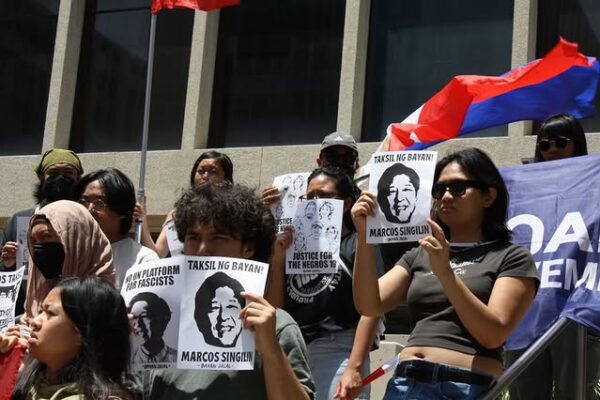
The International Coalition for Human Rights in the Philippines (ICHRP) honors the revolutionary spirit and sacrifice of the Katipuneros of 1896, but condemns the ongoing selling out of Philippine sovereignty since the so-called “independence” of the country in 1946. Until now, the Philippines remains utterly subject to US economic and military interests.
Since the Philippines was declared an independent republic in 1946, various unequal agreements have solidified its semicolonial relationship with the US. Treaty, basing, and access arrangements such as the 1951 Mutual Defense Treaty oblige “mutual defense”. The 1999 Visiting Forces Agreement and the 2014 Enhanced Defense Cooperation Agreement (EDCA) give US forces rotational access, prepositioning rights and construction and use of agreed sites on Philippine bases. The latter two agreements restore a significant US operational footprint without permanent bases, after the closing of US bases in the Philippines in 1992.
U.S. security assistance and funding for EDCA site improvements (for coast guard/navy capability) create local economic inputs while tying Philippine defense modernization to U.S. suppliers and contractors. Expanded EDCA sites (including new northern Luzon and Palawan locations), larger Balikatan and other joint exercises, and prepositioned equipment increase U.S. ability to project force, conduct surveillance, and respond in the South China Sea–Taiwan theater.
Deeper and further integration is implicit in recent developments with the US-led Luzon Economic Corridor and Pax Silica initiatives. These initiatives will displace farmers and indigenous people while further establishing the Philippines as the largest aircraft carrier of the US military. Pax Silica is set to establish a special economic zone in New Clark City, carved out of the former US Military base, as well as the ancestral lands of the Aeta indigenous people and Filipino farmers.
The US is already a major trade partner and investor in the Philippines that receives preferential market access. The ongoing business ties create economic dependence that shapes Philippine policy choices.
Pax Silica is packaged as technological progress and economic security, yet it advances a deeper form of foreign domination—placing vast tracts of Philippine land through the Luzon Economic Corridor, critical mineral industries, and national policy at the service of U.S. geopolitical and military interests.
Pax Silica reorganizes the Philippine economy around the demands of U.S. semiconductor, artificial intelligence, and strategic mineral supply chains while intensifying neocolonial subordination, land dispossession, ecological destruction, and militarization. This is the pattern of US-imposed neoliberal economic policy on the Philippines, which has declining agricultural and industrial output, but ever increasing export of contract workers and profound widespread poverty and landlessness.
Israel, known as one of the most egregious violators of human rights in the world, is also seeking to capitalize on Pax Silica, accessing critical minerals in the Philippines used for weapons and developing an AI hub, a technology that has been broadly used in its war crimes against the Palestinian people.
This is all happening while US forces in the Philippines are rapidly preparing for war against China, marked by the largest Balikatan exercises ever and recently the Salaknib exercises—joint training and operations between Australian, NZ, US, Japanese, and Philippines forces. While Balikatan has largely dealt with war preparations against China, Salaknib exercises focus on counterinsurgency operations and jungle warfare, highlighting foreign participation in the ever-intensifying COIN operations that continue to result in massive war crimes, such as the April 19 Toboso Massacre in Negros.
Overall, the Pax Silica strengthens the US First Island Chain Strategy against China but also ties Philippine security choices to US strategic priorities and draws the Philippines further into great power confrontations. Economically, the Pax Silica Declaration accelerates integration of Philippine industry, regulation, infrastructure, and security arrangements into a U.S.-centered tech and supplychain ecosystem/ This creates material economic dependencies, aligning technical and legal standards with U.S. policy, and increasing U.S. military and security involvement to protect those strategic assets.
ICHRP supports the call of the Filipino People for genuine Independence and a decoupling from the reckless militarism of a decaying US empire.
ICHRP supports the Filipino people in their call to Shut Down Pax Silica and remove US and foreign troops from the Philippines as major affronts to Philippine sovereignty.