

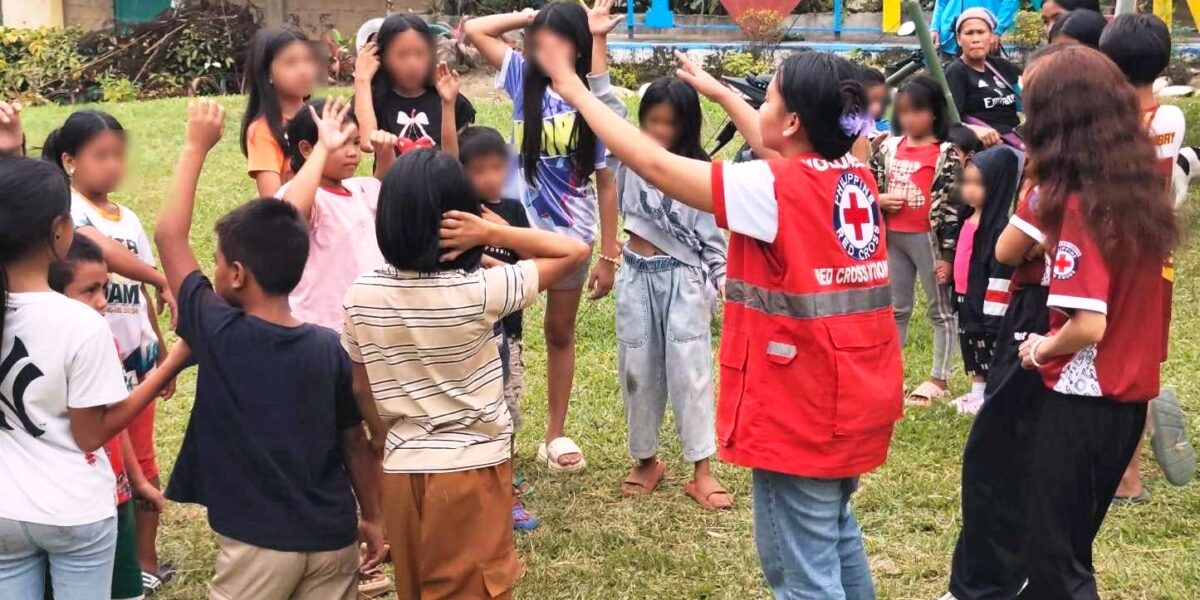
It was young Robert’s first day in school in Sarangani province in Southern Philippines last Monday. Wearing his brand-new school uniform and carrying his colorful schoolbag, he waved goodbye to his equally excited mother at the school gate before joining his kindergarten classmates at the campus for their flag ceremony.
At 7:37 in the morning, the Magnitude 7.8 earthquake struck southern Philippines, disrupting what was usually a memorable moment for all schoolchildren.
His mother Erika ran all the way back to the school as soon as the shaking stopped to get to Robert as soon as possible.
As soon as mother and son embraced, Robert broke down. In between sobs, he told his mother he does not want to go back to school ever again. When asked why, Robert replied: “The school shakes. I am scared.”
Schools remain suspended
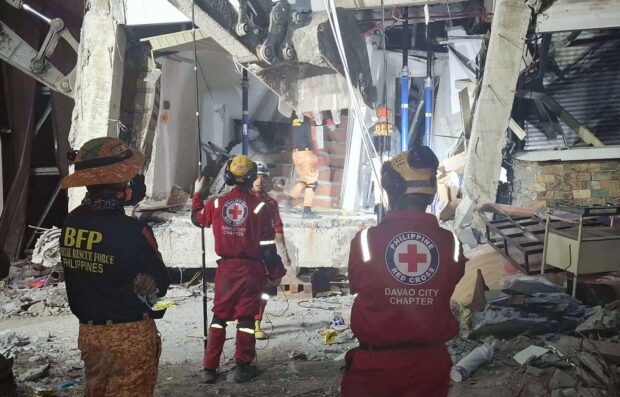
Four days after the disaster, schools in several earthquake-affected provinces remain suspended. Several school buildings in the area have either collapsed or rendered useless by the country’s strongest tremor in the last five decades.
The death toll reached 61 while thousands of families have been staying in evacuation areas as their houses have become unsafe.
Government authorities have yet to determine how many school buildings may still be used. They have no timetable for the resumption of classes in the affected areas.
Meanwhile, experts said children who survived the earthquake may suffer anxiety, fear and doubt. They must be assured of safety and security.

Regaining normalcy
Former Philippine Department of Social Welfare and Development undersecretary Mae Fae Templa said parents must closely observe their children’s behavior if they are exhibiting negative symptoms from the effects of the disaster. “Loss of sleep, fatigue, fever, even boils should be noted by the parents,” she said.
In such cases, the children must be given psycho-social first aid and emotional support, Templa stressed. The children’s first and most natural therapists are their parents who should patiently answer questions or vocalizations.
Templa said games and plays must be encouraged as an assessment and therapy tool. “Playing allows children to be just themselves, a natural vehicle and venue or mechanism to be free. They talk naturally and conveniently when they play with others or even in solitary,” she said.
The board member of the group Children’s Rehabilitation Center explained children express and release emotions as they play, emotionally and mentally transforming spaces and objects as secured and safe when they play even amid devastation.
Movement for Safe, Equitable, Quality and Relevant Education convenor Lisamarie Oligario agrees with Templa, adding parents should take the suspension of classes as an opportunity to make their children feel normal once again. “Slowly, make them feel normal at home before bringing them back to school,” Oligario said.
Easier said than done
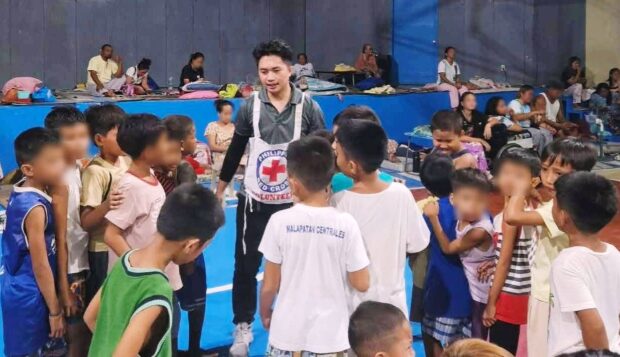
Oligario however admitted that these are easier said than done. She noted that many families suffered collapsed houses and many are forced to sleep outside because of ongoing aftershocks.
She also pointed out that Philippine school buildings are also evacuation centers for other types of disasters such as typhoons and floods. “This is why the government must be unrelenting in looking for safe shelters for victims,” she said.
Templa added that relief efforts must also ensure clean water, blankets and mosquito nets especially for children to help them overcome the impacts of the disaster.
Oligario said there must be widespread psychological debriefing for schoolchildren to make them understand that earthquakes and other disasters and calamities happen.
Psychological first aid is a huge task that should be entrusted to the school’s guidance counselors, Oligario said. The Philippine Department of Education, however, only has 2,400 licensed counselors, a shocking 1:14,000 ratio. The ideal global standard is one counsellor for every 250 students.
Steps to help children recover from trauma
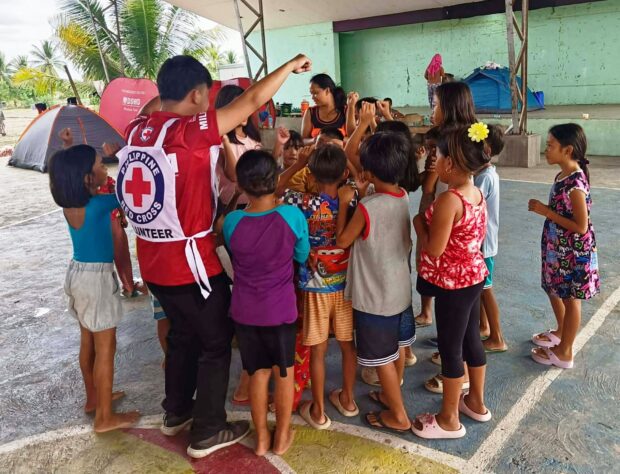
Templa said anyone can help children recover from trauma brought about by the likes of Monday’s devastation. She said essential steps may be easily understood and implement through the acronym “STOP”:
Secure space – creating a safe space for children will eventually help them in future life events.
Talking to Children – talking is a form of communicating and healing. Preparing children during disasters is best when they learn to listen to both their bodies and their significant others. Assessing children’s situation is best done by talking to them in the most creative manner.
Organized activities – process the children’s thoughts, feelings, and aspirations using play and simulation games. Day care centers for children in each community to normalize creative activities for both the release of tensions as well as therapy. These centers prepare children to confront difficult situations. Early childhood care and development is paramount in building the self.
Parental support – parents need competence-building. Increasing their capacity to deal with their children is critical in disaster response.
The experts pointed out that children are more resilient than adults expect them to be. They said that as soon as children are back to feeling normal with their families and friends, it is easier for them to recover. # (Raymund B. Villanueva)