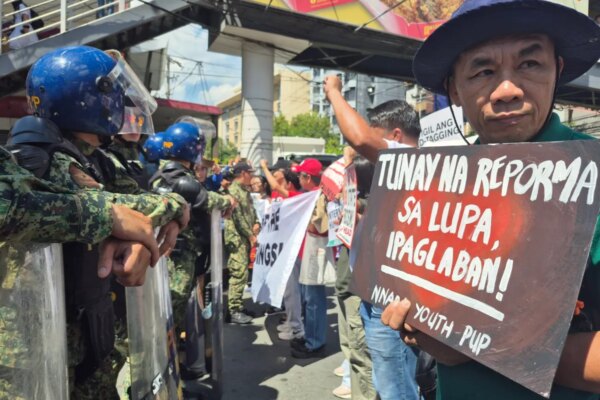


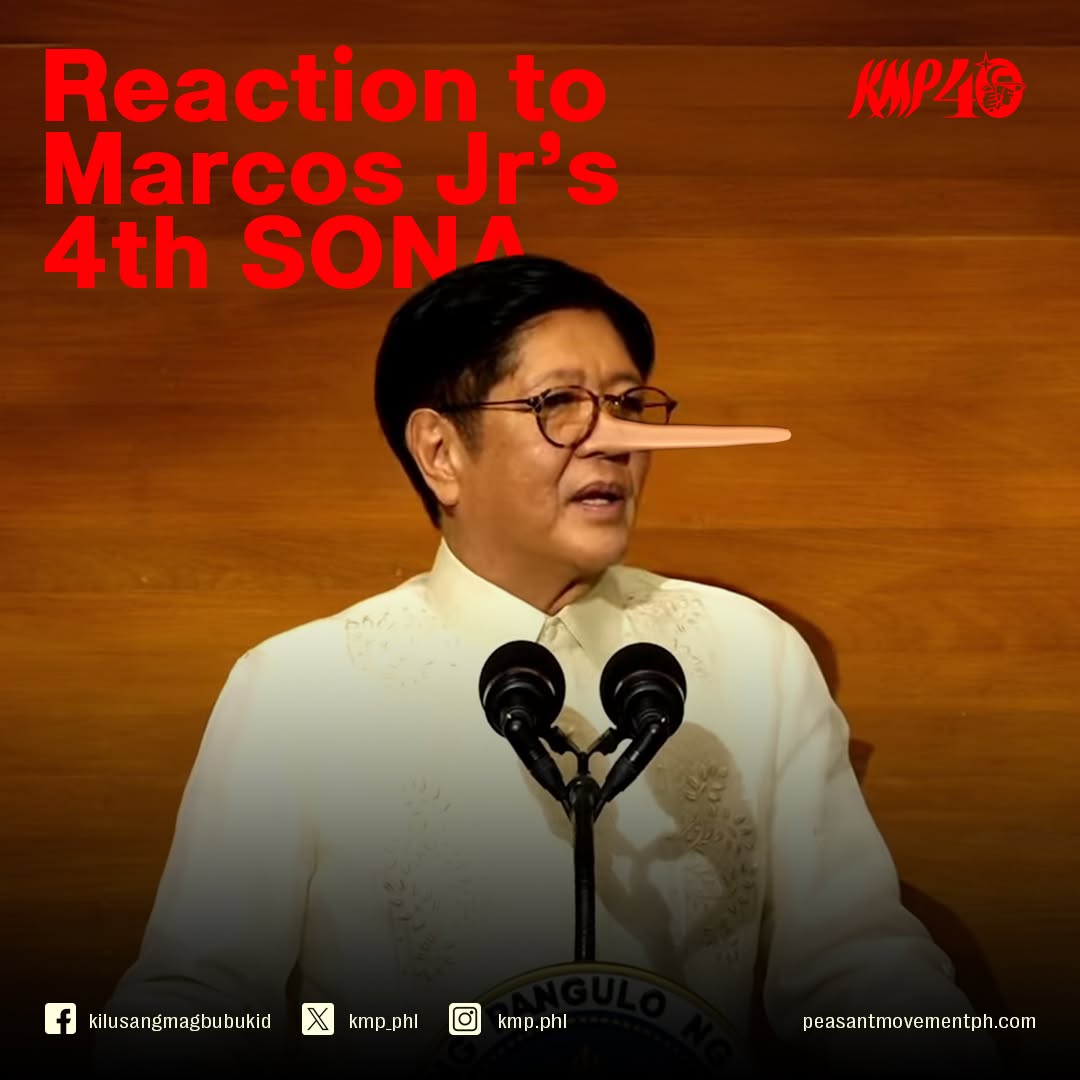
President Ferdinand Marcos Jr.’s 2025 State of the Nation Address painted a glossy image of Philippine agriculture and highlighted promises of increased support, rising production, and supposed “liberation” of farmers. But for millions of peasants, these assurances ring hollow. Their daily realities reflect deepening neglect, persistent landlessness, and a chronic agricultural crisis.
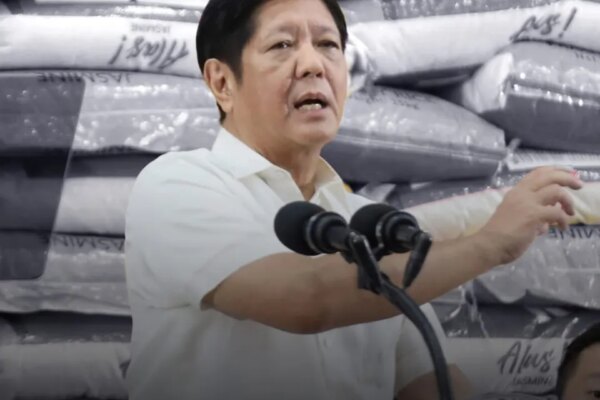
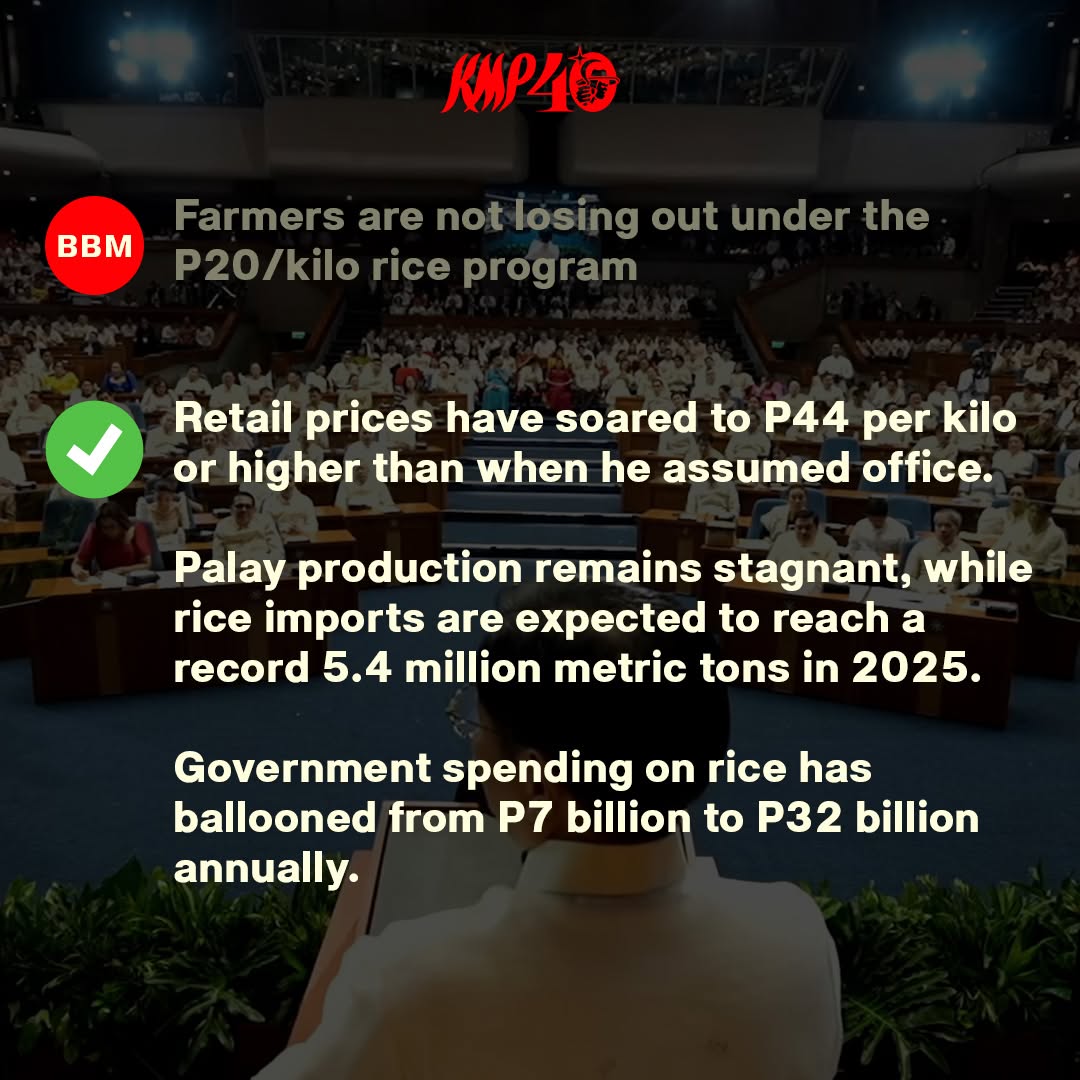
Marcos claimed that farmers are not losing out under the P20/kilo rice program. This is a gross distortion. Retail prices have soared to Php44 per kilo or higher than when he assumed office. Palay production remains stagnant, while rice imports are expected to reach a record 5.4 million metric tons in 2025. Government spending on rice has ballooned from Php7 billion to Php32 billion annually, yet farmers in Bulacan earn as little as Php55 per day during harvest season. Meanwhile, top rice importers and traders continue to profit under a liberalized regime, while small rice producers are left struggling to survive.
The President also touted the faster release of CLOAs and land titles as proof of “agricultural emancipation.” But this is largely bureaucratic window-dressing. In reality, 68% of these were mere parcelizations of collective titles under the SPLIT program and not new land distribution. Only a small fraction of farmers have benefited from debt condonation under the New Agrarian Emancipation Act (NAEA) future amortizations remain. Genuine land reform and free land distribution remain elusive, while land grabbing escalates under the guise of “development.” Across Central Luzon and Laguna, farmers and indigenous peoples are being displaced by mega-projects such as New Clark City, the Bulacan Aerotropolis, and foreign-backed solar and mining ventures, many are linked to political cronies.
The President also proclaims a Php113 billion budget for the Department of Agriculture, including KADIWA stores and farm-to-market roads. But where do these funds go? Public money increasingly supports big agribusiness and foreign corporations. While the President boasts of distributing piglets, boats, and hybrid coconuts, these token efforts pale in contrast to the billions funneled into agribusiness giants. The Maharlika Fund’s planned US$100M investment in Charoen Pokphand, a Thai agribusiness giant and the world’s largest feed company, reflects whose interests are being prioritized by this administration.
The President also highlights an increase in production of rice, corn, fruits, and livestock. But small producers remain in never-ending crisis. Sugar workers in Negros earn as little as Php82/day. Pork production is still below pre-ASF levels, while pork import dependency remains high. Commercial fishers continue to encroach on municipal waters, displacing millions of small fishers. Technocratic solutions like hybrid seeds, mechanization, and off-season cropping are being pushed, but without addressing landlessness, poverty wages, and exploitative tenancy systems.
The local coconut industry ravaged for decades by the coco levy scam is again being used as a talking point. Yet, historic cases against Marcos Sr. and cronies were dismissed in 2024, erasing the hopes of justice for millions of small coconut farmers robbed of their hard-earned money.
Agriculture cannot thrive in an environment of fear. The climate of impunity and violence in rural communities persists under Marcos Jr. From 2022 to 2024, 72% of extrajudicial killings documented involved peasants, many of them red-tagged for resisting land grabs. Rural development will never be possible under this regime that targets farmers who feed the nation.
Overall, President Marcos Jr’s narrative of “agricultural revival” is contradicted by deepening landlessness, rising food imports, rural poverty, and state repression. ###