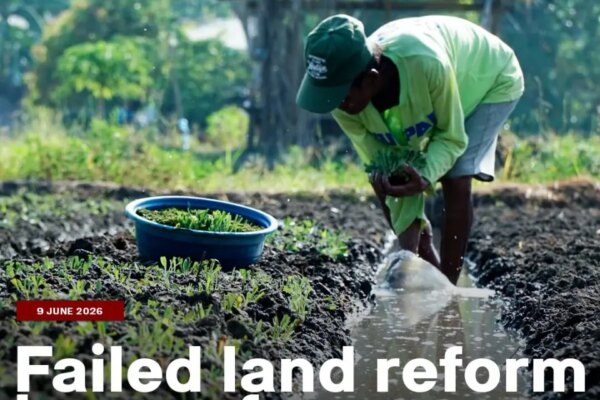

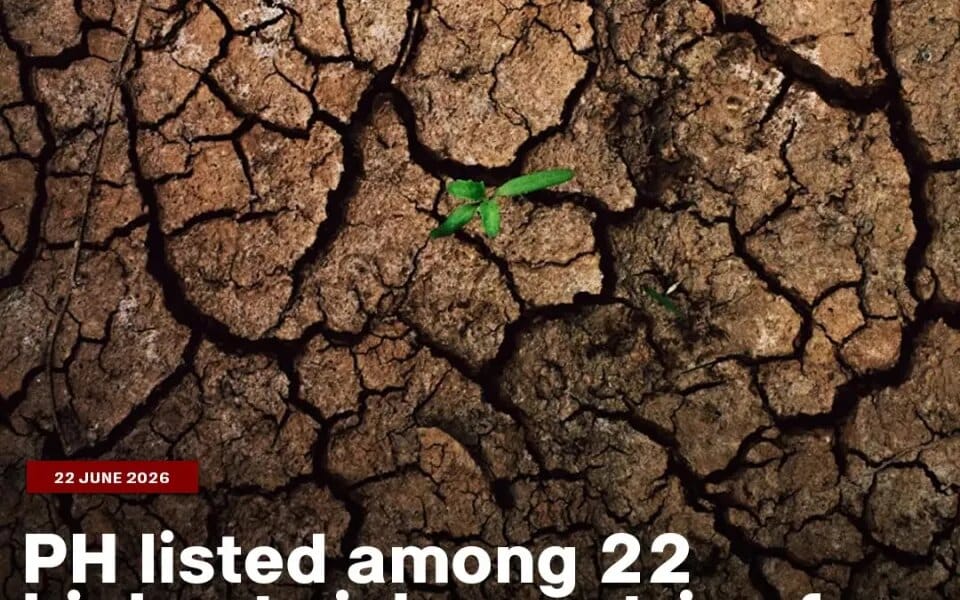
The Kilusang Magbubukid ng Pilipinas (KMP) warned that millions of Filipino farmers and rural communities face heightened risks from the looming El Nino, as the Philippines has been identified by the United Nations Food and Agriculture Organization (FAO) and the World Food Programme (WFP) as one of only 22 countries worldwide at highest risk from extreme weather events associated with El Nino.
According to a joint FAO-WFP global appeal launched this month, the Philippines is among 22 high-risk countries requiring urgent anticipatory action to protect vulnerable populations from droughts, floods, storms, crop failures, and food insecurity. The appeal seeks US$202 million (Php 12.275 billion) to protect 8.8 million people across Africa, Asia-Pacific, Latin America, and the Caribbean from the expected impacts of a strong El Niño event in the second half of 2026.
“The inclusion of the Philippines in this list of El Nino highest-risk countries is a damning indictment of the Marcos administration’s failure to build climate resilience in agriculture and rural communities,” said KMP. Marcos served as Department of Agriculture Secretary from 2022 to 2023.
The peasant group noted that the Philippines now finds itself grouped with countries suffering from severe humanitarian crises, conflict, and chronic food insecurity, including Sudan, South Sudan, Somalia, Afghanistan, Haiti, and Venezuela.
“That the Philippines is being flagged alongside war-torn and crisis-stricken countries should alarm the public. This reflects not only our extreme vulnerability to climate disasters but also decades of government neglect and the continued failure of the Marcos administration to protect farmers and food producers,” KMP said.
The FAO and WFP warned that strong El Nino conditions could trigger severe droughts, floods, and storms across affected countries. Planned interventions include climate-resilient agricultural support, livestock protection, cash assistance, and flood-control measures – precisely the kinds of support that Philippine farmers have long demanded but have been denied.
KMP criticized the Department of Agriculture (DA) and the Marcos administration for their continued inaction despite repeated warnings from scientists, weather agencies, and international organizations regarding worsening climate extremes.
“Instead of preparing communities and strengthening local food production systems in the country, the government remains focused on import dependence, PR campaigns, and infrastructure projects plagued by corruption and inefficiency,” KMP said. Marcos Jr and DA have been using the Bente Bigas caravan to dispel the government’s failure to address the worsening state of agricultural production and food insecurity in the country.
Official government data states that palay (unhusked rice) production in the first quarter of 2026 declined by 6.26% year-on-year. Local palay harvest stood at 4,40,567.90 metric tons during the January to March 2026 period, down from 4,698,724.31 in the same period last year based on the latest data from the Philippine Statistics Authority (PSA). The Philippines’ farm output decreased by 0.3 percent to P437.52 billion in value during the first quarter of 2026. This is attributed to decreases in the value of crops and fisheries production. Crops decreased by 2.4 percent to P243.62 billion, contributing 55.7 percent to the overall production value. Fisheries posted the biggest decline of 6.1 percent among sub-sectors, valued at P52.34 billion. These figures will worsen at the onset of El Nino’s onslaught and impact.
The farmers’ group also pointed to the long-standing corruption issues surrounding flood control projects, irrigation systems, farm-to-market roads, and other agricultural infrastructure. Billions of pesos have been allocated over the years, yet farmers continue to suffer from recurring floods, drought damage, impassable rural roads, inadequate irrigation, and poor post-harvest facilities.
“Every year, farmers witness flood control projects that fail at the first major storm, irrigation systems that never reach their intended beneficiaries, and farm-to-market roads that quickly deteriorate despite enormous public expenditures. Corruption has transformed what should be climate adaptation infrastructure into opportunities for political patronage and profiteering of politicians and contractors,” KMP said.
The group stressed that climate vulnerability is not merely the result of natural hazards but of political choices that leave rural communities exposed and unprotected.
“The threat of El Niño is predictable. What is unacceptable is the government’s refusal to act decisively despite years of warning. The country’s food producers should not be left to bear the consequences of official incompetence, corruption, and neglect,” KMP added.
KMP called for urgent public investments in genuine climate-resilient agriculture, irrigation rehabilitation, farmer-led water management systems, disaster preparedness, flood mitigation, and support for domestic food production. The group also renewed its call for a thorough audit and investigation of flood control, irrigation, and agricultural infrastructure projects nationwide.
“Without significant reforms and accountability, Filipino farmers will once again shoulder the burden of climate disasters while government officials and contractors continue to profit from failed projects. The country cannot afford another cycle of devastation made worse by corruption and government inaction,” KMP concluded. ###