

By Girard Mariano Lopez
Death is used as a warning but memory becomes a form of defiance.
TAIWAN — “And when your time is up, will you have done enough, will they tell your story?”
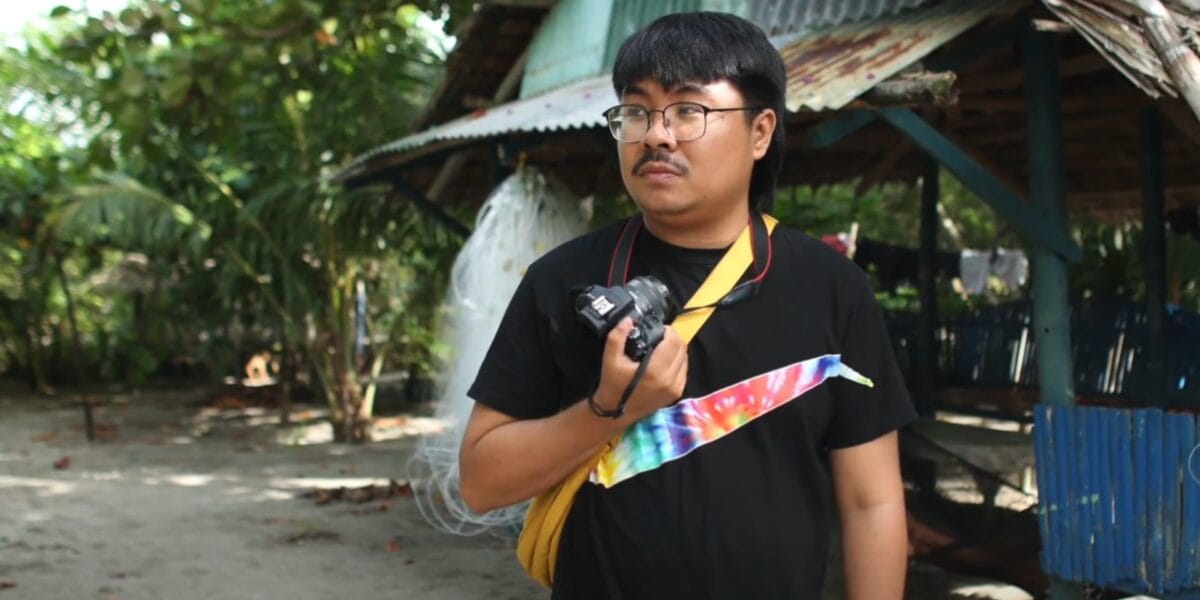
These paraphrased words may be from the hit broadway musical Hamilton, but it is an ever perennial question for activists and journalists in Negros Island. Community journalist RJ Ledesma faced it daily as he dared to write the critical stories that needed to be told despite the danger he faced.
Long before his name appeared in statements and articles nationwide as a casualty in the Toboso 19 massacre, Ledesma was a student journalist in Bacolod City. He studied psychology at the University of St. La Salle and served as editor-in-chief of The Spectrum, the university’s student publication.
It was there, in the small but demanding world of campus journalism that Ledesma began shaping the discipline that would later define his work. He listened closely and wrote plainly. He treated journalism not as a career detached from the people but as a form of public service.
Since 2021, Ledesma led Paghimutad, an alternative media outfit in Negros island focused on human rights reporting and grassroots storytelling. He later became AlterMidya’s regional coordinator for the area, covering social, environmental, and agrarian issues from the grassroots.
Those were not abstract beats in Negros. They were the island’s living contradictions as evidenced in renewable energy projects rising on contested agrarian reform land, palm oil expansion promising jobs while farmers feared eviction, and “development” arriving in communities already marked by militarization, poverty, and landlessness.
In July 2024, Ledesma reported on residents of three Candoni villages who feared being uprooted by a PhP2-billion palm oil project tied to the Consunji family. Locals said that bulldozers had already arrived, homes and livelihoods were being disrupted, and land classified as forest included areas long inhabited by Indigenous people.
Months later, he reported on 19 farmworker households in Hacienda Sta. Maria Uno in Silay City who faced demolition as a PhP3-billion, 69-megawatt solar project rose on land previously covered by agrarian reform.
Such stories show the kind of journalism Ledesma pursued. It did not begin with a copy and paste military-fed press release or government or corporate photo ops. It began with the people at the heart of the story who stood to lose the most.
This was the Negros that Ledesma documented, not an island of postcard sweet sugarcane but the bitter realities sustaining the island’s semi-feudal structure kept hidden by the powerful few.
It was also the Negros that had buried many of its brightest souls that dared to not only serve the marginalized but also critique the system that sustains the island-wide injustice.
Human rights worker Zara Alvarez was fatally shot in Bacolod City in August 2020 during the height of the pandemic. The deceased Karapatan paralegal and research officer of the Negros Island Health Integrated Program had faced threats and harassment linked to her human rights work, and had been among the many frequently red-tagged activists in Negros.
In November 2018, lawyer Benjamin Ramos was killed in Kabankalan City. He was a founding member of the National Union of Peoples’ Lawyers in Negros Occidental. He was a peasant rights advocate and a lawyer who provided free legal aid to marginalized communities. At the time of his death, he was representing families of farmers killed in the Sagay 9 massacre.
Their stories form part of a grim pattern in Negros. Those who defend farmers, document abuses, or challenge official state narratives often do not only face death. They face a second violence after death, which is the attempt to define their lives for them.
The state and military have repeatedly vilified activists, organizers, and alternative media workers through the language of insurgency and red-tagging. At the time of his murder along with 18 others in Toboso, the military quickly labeled them as “terrorists” and combatants of the New People’s Army.
But for the farmers Ledesma covered, the state’s attempt at slandering his life could not erase the person they knew.
In Candoni, former palm oil plantation worker Rosie Canillo said that Ledesma was not a distant reporter who arrived only to collect quotes. He stayed with communities, listened to their accounts, and helped bring attention to land displacement, labor retrenchment and environmental destruction linked to plantation expansion.
When asked if her name could be used to tell her story about him, Canillo answered in Hiligaynon: “Definitely, anything for RJ.”
Canillo said that Ledesma helped retrenched workers file a case with the Department of Labor and Employment after they lost their jobs. Another local farmer, Lynlyn Casenio, remembered him spending days with farmers facing displacement. She said that he did not treat their experiences as ordinary interviews but as stories carrying the pain of families at risk of losing land, homes, and livelihood.
That is the kind of memory the state has difficulty destroying. A press release can call a person an enemy. Trolls can flood social media with impunity. Officials can reduce a journalist’s life to an allegation.
But the people who were heard, because Ledesma listened, remember differently. They remember who sat with them. They remember who wrote their names. They remember who made their struggles harder to erase.
In the harsh reality that Negros has endured for decades, it is often the privileged few who get to live fully and safely. The activists, journalists, lawyers, and organizers are made to know death intimately. But it is the masses and the people’s movement that continue to tell the story, despite every attempt to demonize those who choose to serve the marginalized, whether by the gun, the law, or the pen.
This is the paradox of Negros. Death is used as a warning but memory becomes a form of defiance.
Ledesma once said in an essay, “To live in Negros is to know death.” It is a sentence that now reads almost like prophecy. But his life also showed another truth: To write in Negros is to resist.
And because of the farmers, workers, students, advocates, and communities whose voices he carried, RJ Ledesma’s story will not end with the military’s version of his death.
It will live in the people who still speak his name. It will live in the struggles he wrote about. It will live so long as people continue to resist and hold truth to power. (DAA)
DISCLOSURE: The author was a friend of RJ Ledesma and a previous assistant editor of Paghimutad prior to Ledesma taking over in 2021.
 Save as PDF