

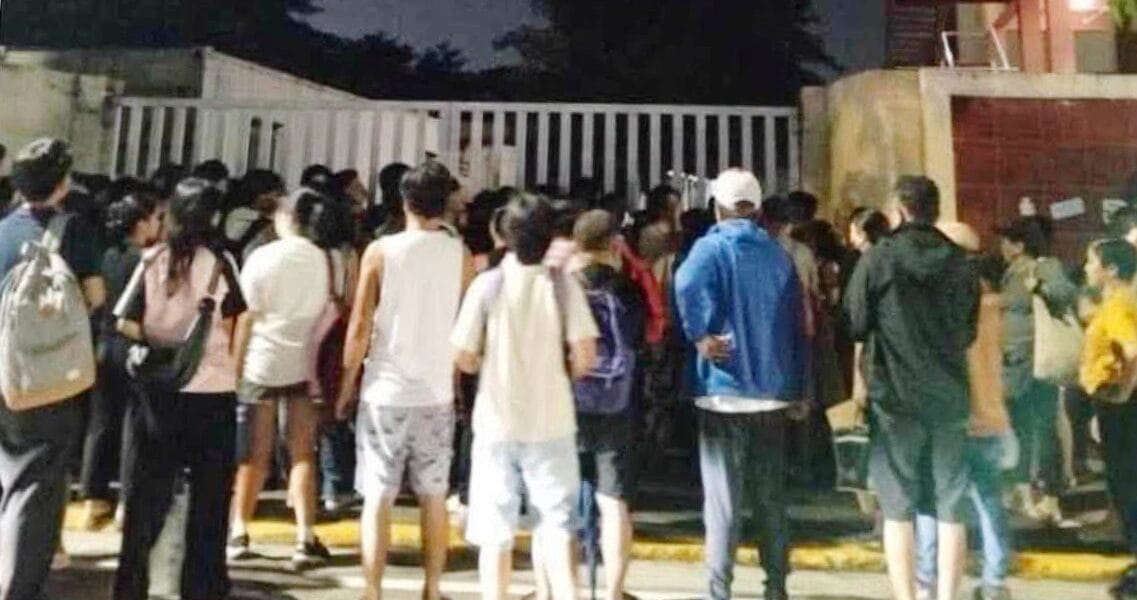
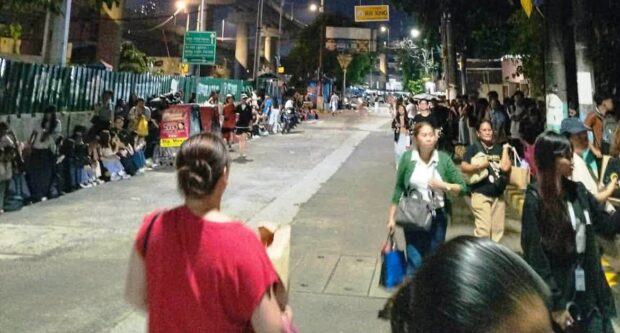
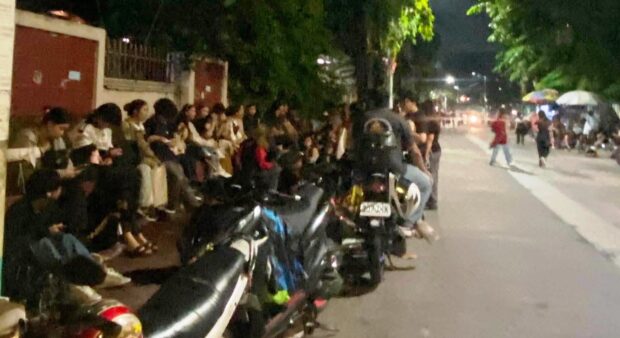
It is enlistment period in one of the world’s biggest university systems and hundreds of students lined up overnight for limited slots for courses they wish to be enrolled at before dawn of Tuesday. The Polytechnic University of the Philippines (PUP) has a student population of about 106,000, yet not all incoming first year students are assured they will be enrolled in courses they dream of taking.
“Wet from the rain, hungry, and worried that slots in their desired program will run out,” PUP student Alvin Aligam described the suffering by schoolmates overnight. “And you know what’s worst? They are still not allowed inside the campus because the policy is they would only be allowed in two hours before office hours,” he reported.
What drove the students to queue for slots they are not even sure are available for them? How desperate are they to forego a good night’s sleep and stand in line for hours for what should be their right to education? What could the Philippine government do to solve the problem?
Philippines’ biggest university
PUP’s tuition is practically free for undergraduate students. A student only needs to pay miscellaneous and laboratory fees, which typically range from P3,000 to P5,000 annually in some courses. It offers at least 80 undergraduate courses in its 23 campuses nationwide, many of which are in far-flung and underdeveloped areas.
Despite its long list of problems, PUP ranks eighth among all Philippine universities in, second among state universities and colleges in the country. It also highly regarded for the employability of its graduates who are most eager to find jobs and please employers to better their lives.
While it serves the largest student population in the Philippines, PUP’s funding, however, ranks outside the top 5 overall at P3.62 billion. It is far behind the University of the Philippines (UP) System with 66,000 students and receives P25.8 billion.
The Philippine government spends a measly P34,150 (Dh2,000) per PUP student annually. This results in severe classroom shortages, ageing facilities, underpaid faculty and staff and other problems.
Still, while other universities claim to be academically superior, PUP’s claim to be the true people’s university in the Philippines is unassailable. It is where many students from the poorest families dream of getting into.
Long queues sign of desperation
Aligam said that despite claims by the Philippine government that it prioritizes education, the situation in their university is a clear manifestation that free and quality education remains a dream for the Filipino youth and their parents.
“It is sad and infuriating that the situation had been like this for the longest time. Nothing has changed and it is getting worse every year. It is clear that the government continues to fail us,” Aligam said.
The camp-out of incoming first year students and their parents outside the gate of the school’s main campus is a sign of their desperation to enroll in a course they desire,” PUP Professor Prestoline Suyat told Khaleej Times.
“There are also few slots in the courses because there are also a lack of usable rooms, professors who can teach, and employees who can serve the students. This is still rooted in the government’s disregard for free and accessible education that should be given to our youth,” Suyat underscored.
Still, corruption
There are 113 state colleges and universities throughout the Philippines, with a total enrollment of 5.7 million students. The Ferdinand Marcos Jr. government has allotted P137.904 billion (Dh8.2 billion) for all of them this year.
Meanwhile, the total amount involved in the Philippines’ biggest corruption scandal in the country’s history, the massive flood control controversy, reaches staggering figures across multiple years, with allegations of up to P1 trillion in climate-tagged funds being misused by government officials, from government engineers all the way up to the Office of the President himself.
A special law, the Universal Access to Quality Tertiary Education Act, (also known as Republic Act No. 10931) assures students of state universities and colleges access to quality education. As the pre-dawn situation in the Philippines’ biggest university shows, however, the country’s future is not as important as the pockets of its corrupt government officials.