

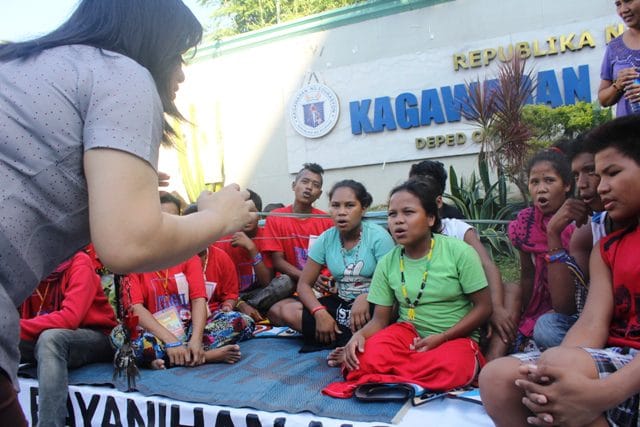
“We expect reforms in education that will address classroom shortages, increase teaching and education support personnel, and improve teachers’ salaries.”
By Wendyl Geronimo
Davao Today

MANILA – When Vice President Sara Duterte took leadership of the Department of Education (DepEd) in July 2022, she inherited a school system still grappling with the pandemic aftermath.
Millions of learners were returning to classrooms after prolonged school closures, while teachers faced learning losses, overcrowded classrooms and shortages in educational resources.
Nearly two years later, Duterte stepped down from the department, leaving behind a mixed legacy marked by sweeping curriculum reforms, expanded learner welfare initiatives, and lingering questions over whether these policies translated into meaningful improvements inside Philippine classrooms.
As President Ferdinand Marcos Jr. prepares to deliver his fourth State of the Nation Address (SONA), education stakeholders say the administration now faces the challenge of sustaining reforms while confronting the learning crisis that continues to affect millions of Filipino students.

The MATATAG agenda
One of Duterte’s defining initiatives as Education secretary was the MATATAG Agenda, introduced in January 2023 as DepEd’s long-term reform framework.
The agenda focused on making the curriculum more relevant, improving the delivery of basic education services, promoting learner well-being and inclusive education, and supporting teachers through policy reforms.
Under her leadership, DepEd piloted the MATATAG Curriculum, implemented the National Learning Camp and Catch-Up Fridays, reviewed the Senior High School curriculum, institutionalized a 30-day uninterrupted vacation for teachers, and strengthened learner protection and mental health programs.
In April 2024, the National Economic and Development Authority (NEDA) Board adopted the MATATAG Agenda and the Basic Education Development Plan 2030 as the country’s official roadmap for basic education reforms.
Education received the largest allocation in the national budget during Duterte’s tenure, consistent with the Constitution’s mandate that education be given the highest priority in government spending.
When Duterte resigned as education secretary in July 2024, former Senator Juan Edgardo “Sonny” Angara assumed leadership of DepEd, inheriting both the reforms introduced under the MATATAG Agenda and the longstanding challenges confronting Philippine education.
Rather than replacing Duterte’s flagship reforms, Angara opted to continue the MATATAG Agenda while placing greater emphasis on learning recovery, classroom construction and teacher welfare.
Under his leadership, DepEd expanded the Academic Recovery and Accessible Learning (ARAL) Program, accelerated classroom construction projects, fast-tracked teacher promotions and hiring, and pursued reforms to the strengthened Senior High School curriculum to better prepare graduates for higher education and employment.
Angara also pushed for improved textbook procurement and increased support for digital learning resources as part of the department’s broader efforts to improve learning outcomes.
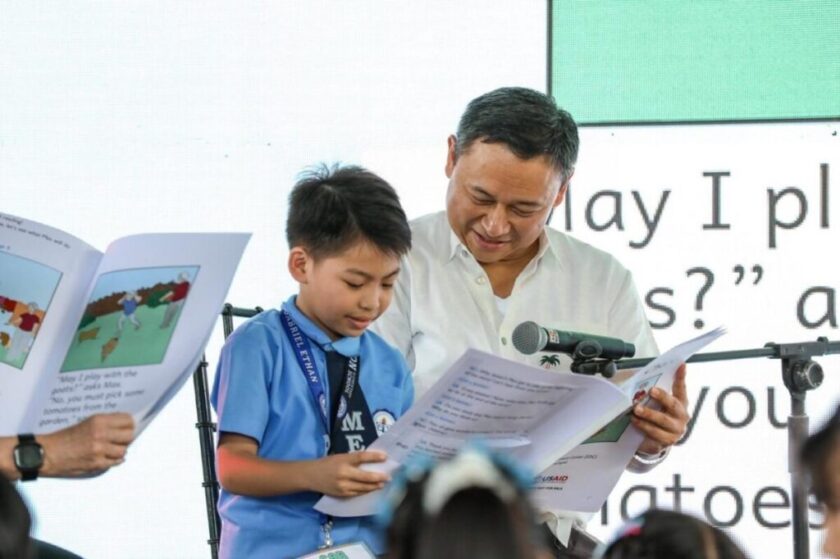
For fiscal year 2026, the education sector received a record 1.34 trillion pesos under the General Appropriations Act (GAA), the largest in Philippine history and equivalent to about 4.36 percent of gross domestic product (GDP), meeting UNESCO’s recommended benchmark for education spending.
The budget includes funding for classroom construction, teacher development, learner support programs, digital learning initiatives and continued learning recovery efforts. Angara said the investments are intended to sustain ongoing reforms while addressing persistent gaps in basic education.

A crisis that persists
Despite these reforms and budgets, the country’s learning crisis remains far from over.
The World Bank estimates that 91%of Filipino children age 10 are unable to read and understand a simple age-appropriate text, one of the highest learning poverty rates in East Asia.
The Philippines continued to rank among the world’s lowest-performing countries in reading, math and science in the 2022 Programme for International Student Assessment (PISA).
The Second Congressional Commission on Education (EDCOM II) has described the country’s education system as facing a “learning crisis,” citing persistent shortages in classrooms, teachers, learning materials and education support personnel.
For the Alliance of Concerned Teachers (ACT), these problems remained largely unresolved throughout Duterte’s tenure.
“If there is a flagship program of VP Sara, that is the MATATAG Curriculum,” ACT Chairperson Ruby Bernardo said.
However, she argued that the curriculum’s implementation came with unintended consequences for teachers. The reduction of class periods to 45 minutes, she explained, increased teaching loads from six to as many as seven or eight classes a day, leaving teachers with little transition time between lessons.
Bernardo also questioned whether the reforms produced meaningful improvements in learning outcomes.
“We saw almost nothing in the changes, especially in addressing the learning crisis,” Bernardo said.
She added that major structural problems, including classroom shortages and insufficient teaching and nonteaching personnel, continued to burden public schools.
“What is happening now is a manifestation of chronic underfunding,” Bernardo said, arguing that meaningful reforms require not only curriculum changes but also sustained investments in teachers, guidance counselors, nurses, administrative staff and learning recovery programs.
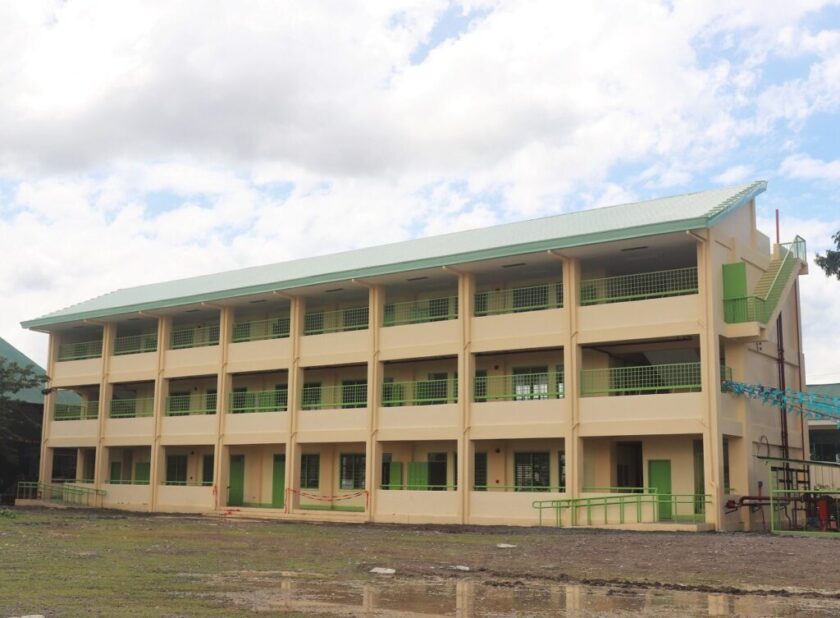
According to EDCOM II, the Philippines continues to face a backlog of approximately 165,000 classrooms, alongside shortages in teachers and education support personnel, problems that teacher groups say directly affect the quality of instruction delivered to students.
Students seek reforms beyond infrastructure
While teachers focus on classroom conditions, students say quality education extends beyond infrastructure and budgets.
Mel Baliguat, a literature and cultural studies student from the University of Southeastern Philippines (USEP) and one of the youth speakers during this year’s State of the Youth Address, said education policies should respond more directly to students’ everyday realities.
Although education receives the biggest share of the national budget, Baliguat noted that many students continue to experience cuts in student services and learning resources while universities increasingly commercialize facilities that should primarily serve learners.
She also pointed to the limited support available for learners with disabilities, saying schools continue to lack sufficient educational resources, trained teachers and fully implemented inclusive education policies.
For Baliguat, the discussion on education should move beyond infrastructure projects and annual budget allocations.
“Quality education is a holistic educational experience. It is not only about classrooms or facilities but also about ensuring that students have access to transportation, learning materials, inclusive education, and support systems that allow them to learn with dignity,” she emphasized.
She said that while reforms and increased government spending are important, they should ultimately be reflected in students’ day-to-day experiences inside and outside the classroom, particularly for marginalized learners who continue to face barriers to accessing education.
Eyes on the SONA
Nearly a year into Angara’s leadership, several reforms have begun taking shape, including the expansion of the ARAL Program for struggling learners, acceleration of classroom construction, teacher promotions and the rollout of the strengthened Senior High School curriculum.
Education researchers have reported encouraging early results from pilot implementation of the MATATAG Curriculum, particularly in improving foundational literacy among second-grade learners. However, they continue to stress that curriculum reform alone cannot reverse decades of systemic problems without sufficient investments in teachers, school facilities and learner support.
As President Marcos Jr. prepares to deliver his State of the Nation Address, education stakeholders are looking beyond promises and toward the administration’s next spending priorities.
While the Department of Education received the highest allocation under the 2026 national budget, the proposed 2027 budget is expected to allocate around 900 billion pesos to the agency as part of the government’s 7.2-trillion-peso National Expenditure Program
Instead, they hope to hear concrete plans that will finally reduce classroom shortages, strengthen learning recovery, hire more teachers and education support personnel, improve teachers’ welfare, and ensure that reforms introduced under both Duterte and Angara translate into measurable gains for Filipino learners.
For ACT, the challenge remains urgent.
“We expect reforms in education that will address classroom shortages, increase teaching and education support personnel, and improve teachers’ salaries,” Bernardo stressed.
For teachers and students alike, the success of Philippine education will ultimately be measured not by the size of the education budget or the number of reforms announced, but by whether those investments translate into smaller class sizes, better-supported teachers, improved learning outcomes, and quality education that reaches every Filipino child. (davaotoday.com)
 Save as PDF