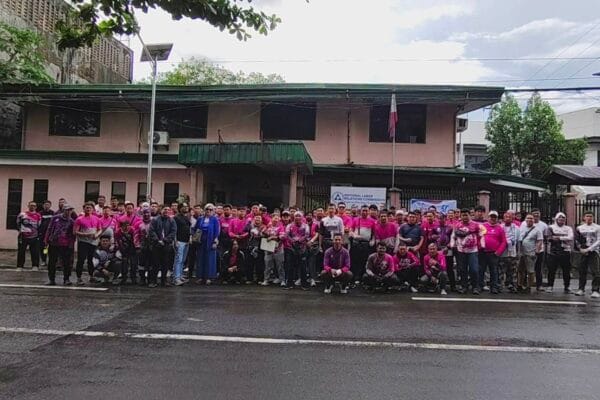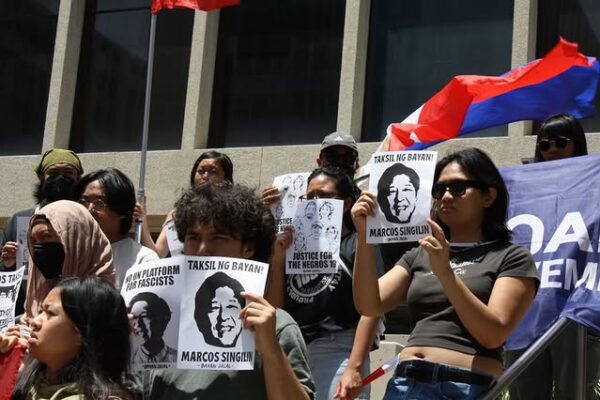

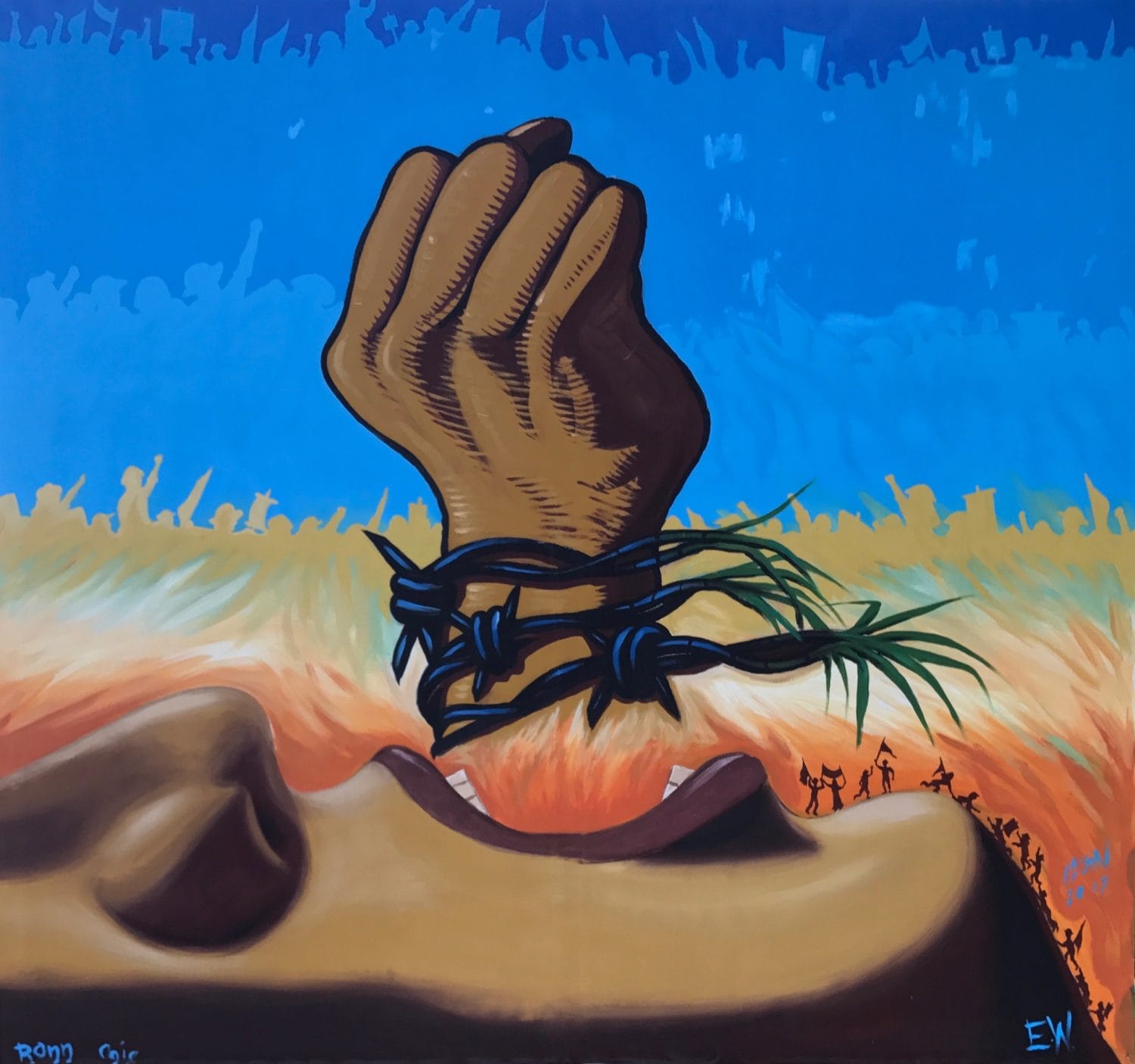
Agricultural workers called attention to “rural wage discrimination” last labor day, joining the broad demand for living wages nationwide.
The Unyon ng Manggagawa sa Agrikultura (UMA) said that while the minimum wage set by the government in Metro Manila is only barely half of family living wage (FLW), agricultural workers are receiving even less.
The Metro Manila regional wage board has pegged the minimum wage in the capital at P645 a day, slightly half of the living wage of P1,200 workers and other progressive groups demanded in rallies nationwide last May 1.
Already forced by systemic landlessness into the wage relations instead of tilling their own lands, agri-workers said they are being discriminated twice over, putting up not only with rural wage standards but with a tiered remuneration system where agriculture warranted lower pay versus fields like manufacturing, UMA said.
In Eastern Visayas, for example, the minimum wage for workers outside of agriculture is P420, only 35% of the family living wage of P1,200. But the rate for agri-workers was even lower at P390 or 32.5% of the FLW, the group explained.
“Agri-workers are like third-class citizen in their own country,” observed UMA national chairperson Ariel Casilao. “No land of their own, no food to eat and, based on how government treats them, no dignity.”
Third-class wages for third-class citizens
It is bad enough that other workers are receiving 54% of the FLW, but the legal standard for agri-workers in poor regions such as the Bangsamoro Autonomous Region in Muslim Mindanao is currently at P316, or 26.3% of the FLW.
Even in first class provinces such as Batangas, the minimum wage for agri-workers is set at P500. The province’s sugar workers receive as low as P280 per day.
In the “pakyawan system” in Negros island, the hacienda capital and sugarbowl of the country, sugar workers earn a measly P333 for seedling production.
Some tasks are priced even lower, like weeding, UMA said, revealing that in sugar estates, the job could earn one a destitute P60 per day. In Isabela province, the same task could even drop to P15 — a whopping 1.25% of the FLW.
Worse, the workers have to wait for the end of their contracts before getting paid — and by then, they are already neck-deep in debt, the group revealed.
“From (Ferdinand) Marcos Sr. to Marcos Jr., and through all other regimes in between, they have kept wages of agri-workers to serfdom levels, especially in sugar estates,” Casilao complained.
Added hardships
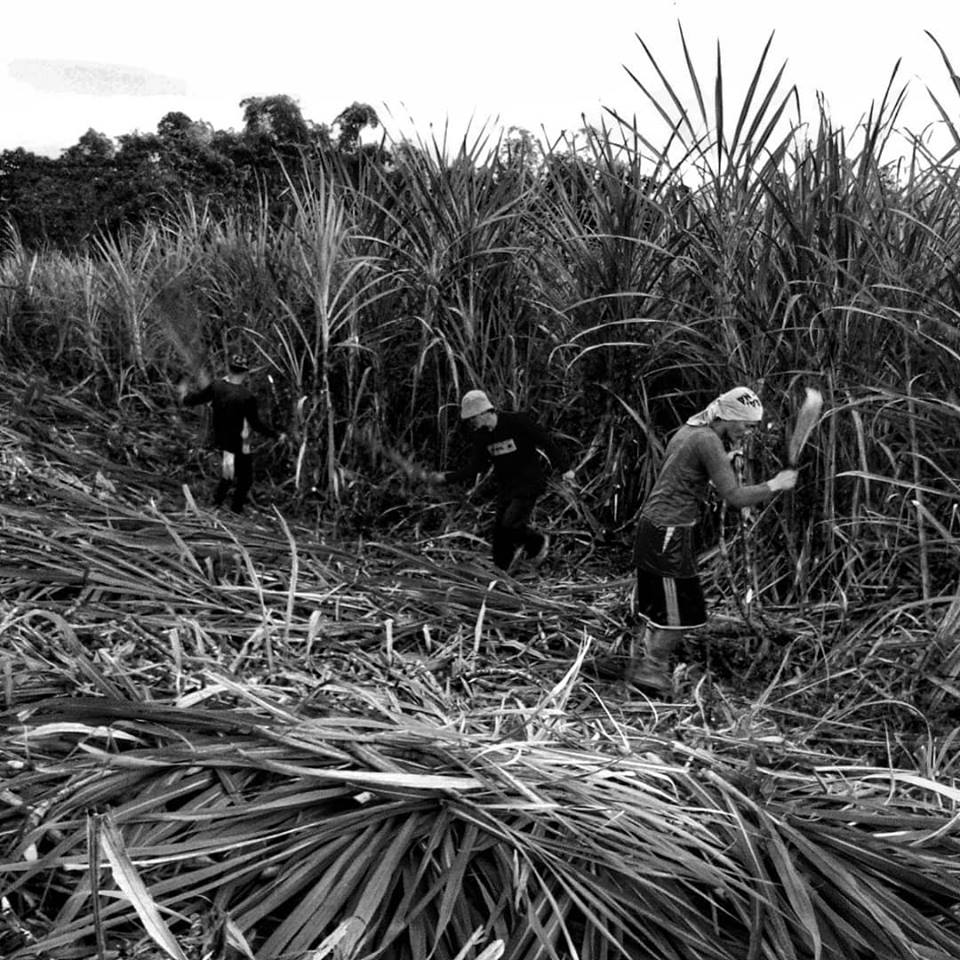
Low wages are not the sole concern of agri-workers as their working conditions are just as abhorrent. With no personal protective equipment, for instance, sugar workers often harvest sugar cane—one of the hardest farming work—well into midnight to avoid the harsh sun.
The increased use of dangerous chemicals in the form of fertilizers and pesticides also pose health risks to agri-workers, especially in corporate plantations, UMA reported.
When agri-workers form unions and demand higher compensation for their backbreaking and dangerous work, rural militarization is unleashed upon them, the group said, citing that under Marcos Jr. killings of farmers is already nearing 100. UMA also revealed that of the 761 political prisoners in the country, 90% of them are farmers.
“As the state aggravated peasant landlessness by peddling land to landlords, compradors, and imperialists, the Armed Forces of the Philippines doubled as agri- and real estate corporations’ own private army,” UMA said.
“The P320.34 billion for buying 20 F-16 jets to be used to bomb peasant communities is enough for the living wages of 1.03 milyong agri-workers for an entire year,” Casilao cited.
Land reform, national industrialization
Aside from family living wages, UMA called on the Marcos Jr. government to end rural militarization and union-busting. Freedom of association should enable agri-workers to assert their rights to land and living wages, it said.
The federation joined the broad All Workers Unity alliance that pushes for a national minimum wage of P1,200.
UMA also said that nothing short of a policy abolishing “wage rationalization” in the regions would solve the problem of rural wage discrimination.
The agri-workers also said it is urgent that the Philippine government adopt of national industrialization as an economic policy. They said that only by establishing basic industries could the state make sustainable the implementation of a national minimum wage equal to the FLW in the long run. But for national industrialization to take place, the state would have to embark on a program of genuine agrarian reform, the sole means by which the peasantry, including the agri-worker, could cut their feudal bondage, UMA demanded. # (Raymund B. Villanueva)