
By Charles Lester M. De Guzman
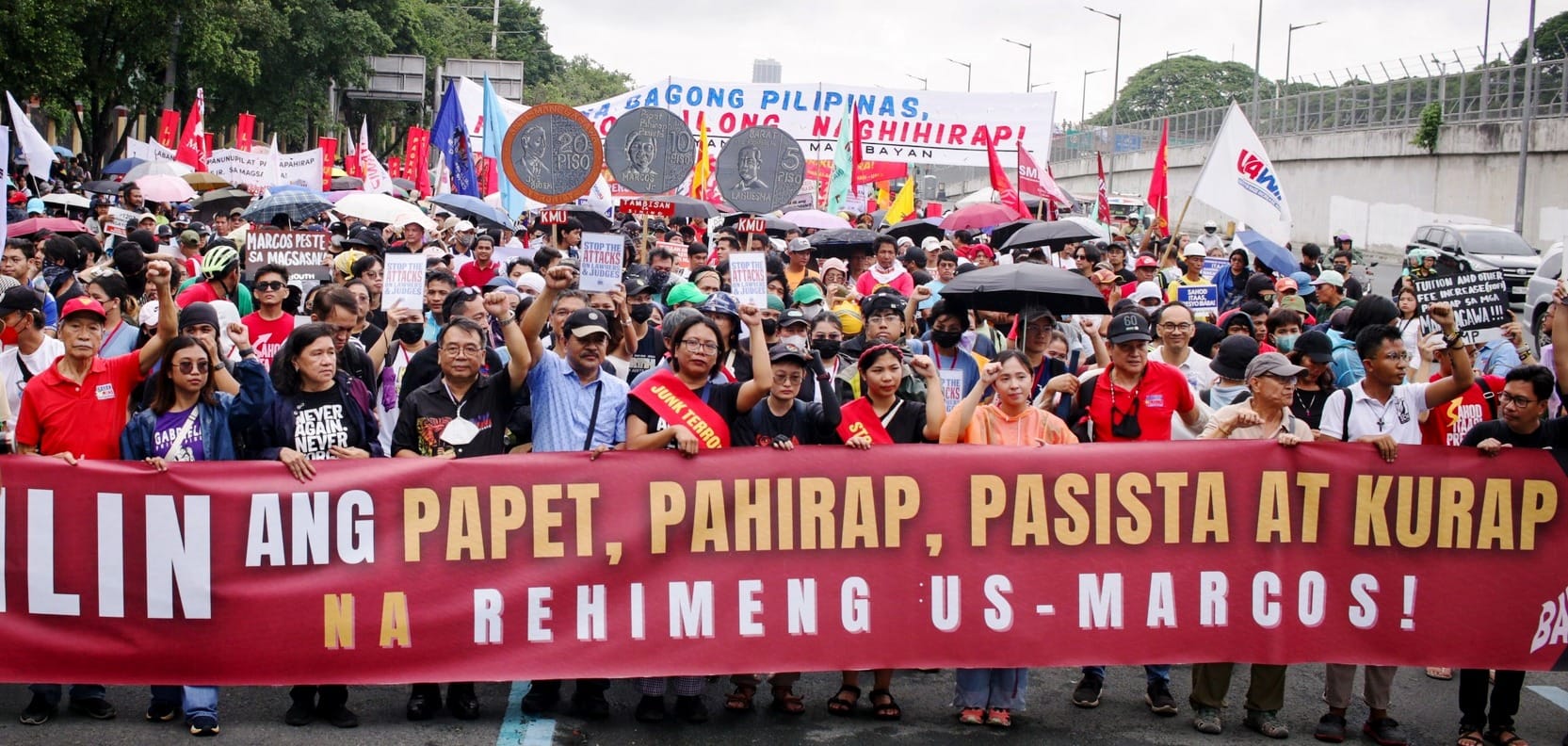
Thousands gathered along Commonwealth Avenue for the People’s SONA, a protest rally organized by various progressive groups last week while President Ferdinand Marcos Jr. delivered his fourth State of the Nation Address (SONA). Participants included youth organizations, indigenous communities, workers, teachers, and healthcare workers – all calling out the administration’s failure to address key national issues.
But while the progressive group’s chants for justice echoed on the streets, a different noise was heard online.
On TikTok, content creator Frince Fortunado posted a video featuring scenes from the protests accompanied by Ben&Ben (featuring SB19)’s ‘Kapangyarihan.’ In 24 hours, the video gained 1.6 million views and over 181,000 reactions. Comments from netizens however wre mixed, which could be generally categorized into two kinds.
The first kind is dismissive of the protesters, saying they are NPA (New People’s Army) sympathizers or backward-looking “unproductive citizens.” The comments also ask what do protesters get from joining rallies, suggesting that such activities are pointless as the government does not listen anyway.
Some comments read:
- “ nagpa halatang npa tlga [talaga]”
- “Kahit cnung [sinong] president ganyan kayo”
- “ ano napapala nyo pag tapos? Curious lang”
- “Why can’t the past be the past? Move on already instead of protesting, unite do something productive.”
- “Sa palagay mo, may nakinig ba? Wala diba sasayang lang sila araw”
These reactions are not really new. These have in fact become standard comments mostly by troll armies supportive of whoever is in power. These were not isolated, seen across multiple social media platforms. But these really show lack of understanding of rallies.
On the other hand, many netizens expressed support, several even showing newfound understanding of rallies:
- “Ang tunay na Pilipino ay ang ipaglalaban ang maayos na politika at ekonomiya!!”
- “IPAGLABAN ANG TAMA! IPAGTANGGOL ANG WALANG BOSES!!!”
- “Taong bayan ang may mapapala pag ang mga nagra-rally ay napakinggan. Dahil sa mga nagra-rally, may pagkakataon na marinig ang hinanaing ng sambayanan. ang ibang naisagawang programa o batas ng gobyerno dahil din yon sa mga sigaw ng mga nag rarally.”
- “The voices of the people are getting louder. No one is above the law, and the priority of the politics is to protect the welfare of the people. Sa 2028 maririnig na tayo!”
- “First time kong pumanig sa mga nagpoprotesta ngayon.”
- “I’m not a fan of this kind of activities, but the situation of our country right now?? D*mn, I’ll be there.”
These to me are more powerful as they seem to be sincere. These kinds of comments are really hopeful for change. Granting that some of these supportive comments suggest that they are supporters of politicians who present themselves as the opposition, these also show there is still reflection among the Filipino people.
The real point
As a student who is beginning to look at such political activities with more interest, I now look at rallies with a more nuanced appreciation. The corporate media has bombarded us with unsubtle suggestions that rallies only bring traffic gridlocks, but I now see that there is more to it than that.
To protesters, rallies are ways to fight for justice, to protest against the devastation of our environment, the violations of workers’ rights, the failure of the justice system, the discrimination against minority groups, the corruption even in the delivery of social services such as education and health.
In a society beset with problems, rallies are legitimate ways for the people express their disgust at government’s failure to deliver on its promises. It is also a non-violent way where people put forward their desires and aspirations for a better country. Failure to listen to such forms of expression makes higher forms of struggle justified, even necessary.
I have covered President Marcos’s SONA last week from outside Congress as a student journalist, among ordinary folk and activists who braved the rains just to be able to participate in a political process. I witnessed firsthand the wisdom of the framers of the 1987 Philippine Constitution when they wrote that real power resides in the people. Their speeches made more sense than whatever accomplishments and promises presidents make in their annual report. I just wish that those who try to make themselves heard online make the effort to understand them. Better yet, they should try attending rallies to begin to truly understand.
The People’s SONA wasn’t just a protest on the streets; it was a fight for better governance. It should not be reduced as a mere online battle where netizens try to outshout each other without truly understanding. #