
Protests hounded President Ferdinand Marcos Jr.’s visit to Japan to discuss bilateral defense and security cooperation with the country’s former invader, now ally in the US-led geopolitical manoeuvres against China.
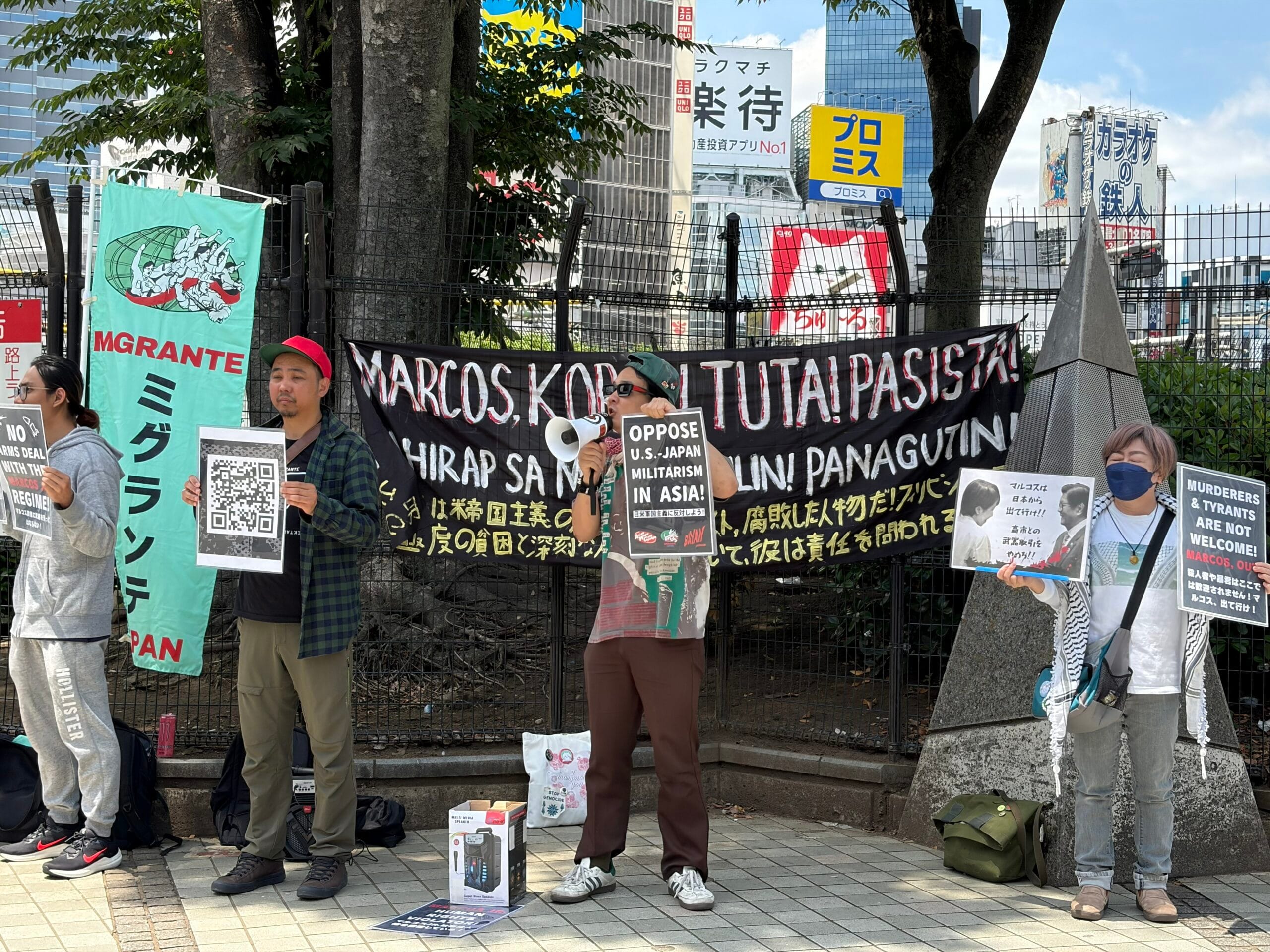
Activists under Bagong Alyansang Makabayan (BAYAN)-Japan, Migrante-Japan and allies from the Japan Campaign for Human Rights in the Philippines (JHCRP) mounted week-long protest actions across Tokyo demanding a stop to the Marcos government’s repression against Filipinos.
Upon the president’s arrival last May 26, BAYAN Japan and JCHRP protested in front of the Imperial Hotel where Marcos met with members of the local Filipino community. He was met with another protest at Tokyo’s famous Roponggi intersection on Tuesday evening.
The groups demand justice to the victims of the Marcos Jr. administration’s counterinsurgency program and political repression under its National Action Plan for Unity, Peace, and Development (NAP-UPD).
“Thousands of human rights violations have been committed by state forces under the Marcos Jr. administration. The Toboso massacre is the most recent one, a gruesome example of how little human life is valued by his government,” said Roger Raymundo, BAYAN Japan spokesperson.
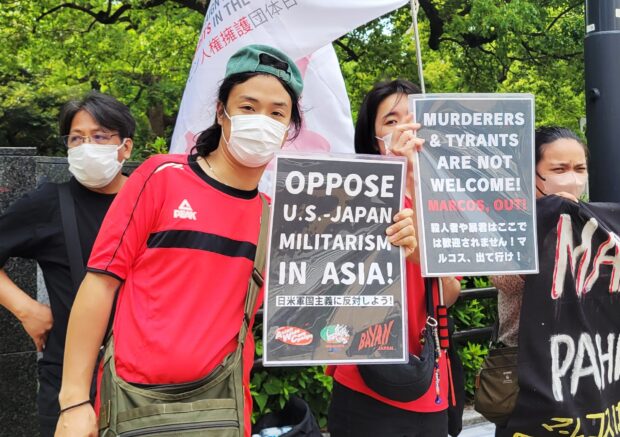
Back to militarism
JCHRP called on the Japanese government to stop defense and security agreements which involve major arms deals with the Philippines.
“The weapons to be sold and the security aid to the Philippines will be used neither for territorial defense nor for peace-keeping but to silence dissent and people’s resistance. It’s our taxes that will fund this murderous regime,” a JCHRP member said in one of the demonstrations.
The activists pointed out Japan’s return to militarism which coincides with its support of repression and counterinsurgency in the Philippines.
“We condemn the worsening militaristic and economic subservience of the Marcos Jr. administration to imperialist countries especially the US and its junior partner Japan,” JCHRP stated.
“Due to involvement in geopolitical tensions and war-mongering by imperialist powers, both Filipinos and Japanese people become vulnerable to the possibility of major conflicts,” it added.
Raymundo said, citing the Reciprocal Access Agreement between Japan and the Philippines as a policy under US’ pressure.
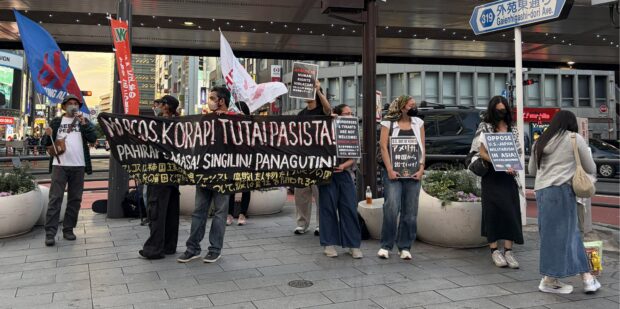
Trade for whose benefit?
The groups also questioned the administration’s priorities as Filipinos back home suffer from inflation, corruption and declining public services and severe political repression.
“Instead of dealing with other pressing national concerns, this visit has become a political image-building exercise while our nation continues to suffer,” Raymundo said.
The groups highlight that this state visit is taking place as fuel prices in the Philippines remain unstable and billions of public funds are being stolen with no major public figures being held accountable.
“While you’re having a good time in a posh hotel here in Tokyo, we overseas Filipino workers live in old and cramped apartments. We barely receive any substantial assistance when we become victims of workplace violations while you’re on VIP treatment 24/7,” a Migrante-Japan member said. # (Raymund B. Villanueva)