Forced to go north, mussel farmers lose their livelihood amidst reclamation projects in Navotas –
Manila Today
·
2 min read
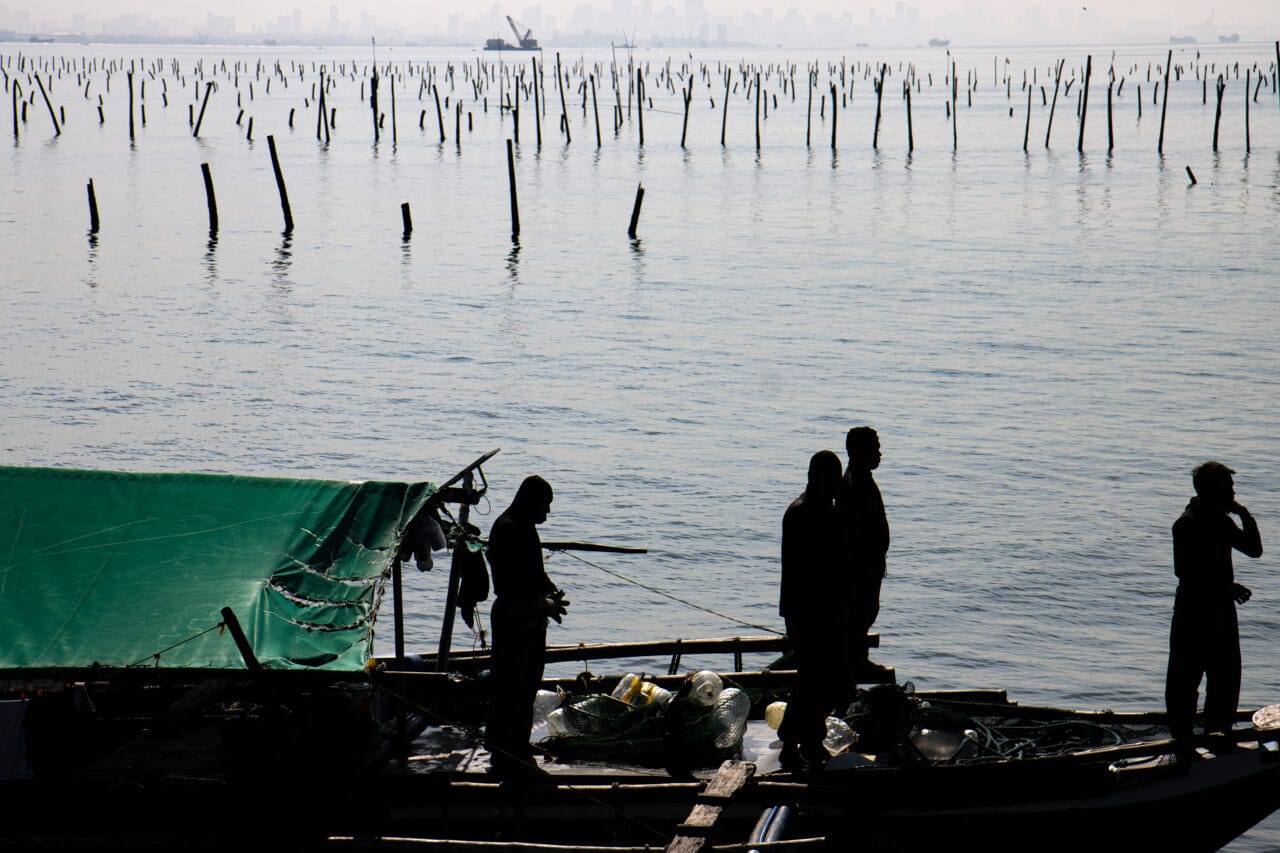
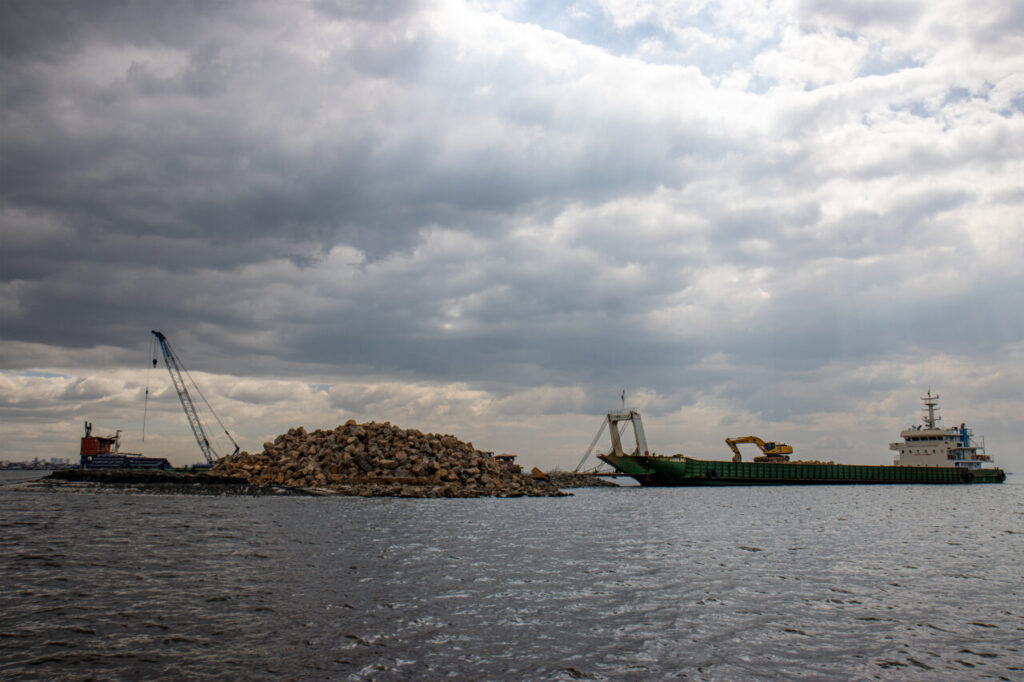
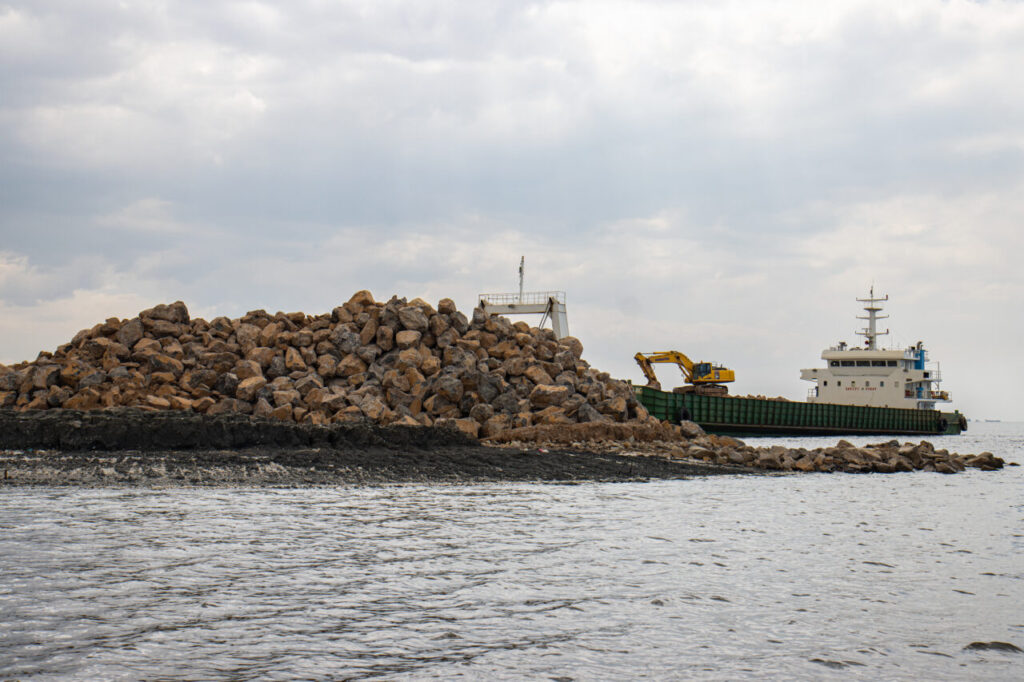
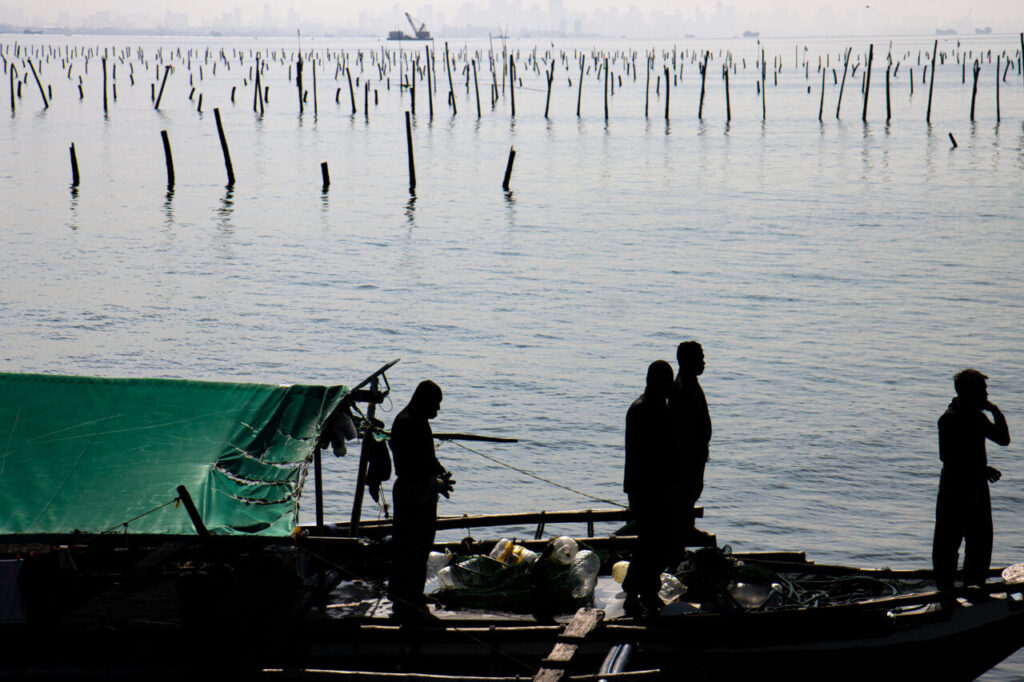
Navotas mussel farmers are now forced to travel farther north to Bulacan and even Bataan, which resulted in higher gas costs and fewer harvests, two years after the ongoing development of the Navotas Coastal Bay Reclamation Project (NBCRP) under San Miguel Corporation, backed by Navotas City Mayor John Rey Tiangco, which led to the demolition of mussel farms in the city.
Some mussel farmers have already shifted into other livelihoods, such as selling balut and other commodities or working in construction, while some have already sold off their own boats but are still paying off debt after failing to recuperate the capital they borrowed for their mussel farms.
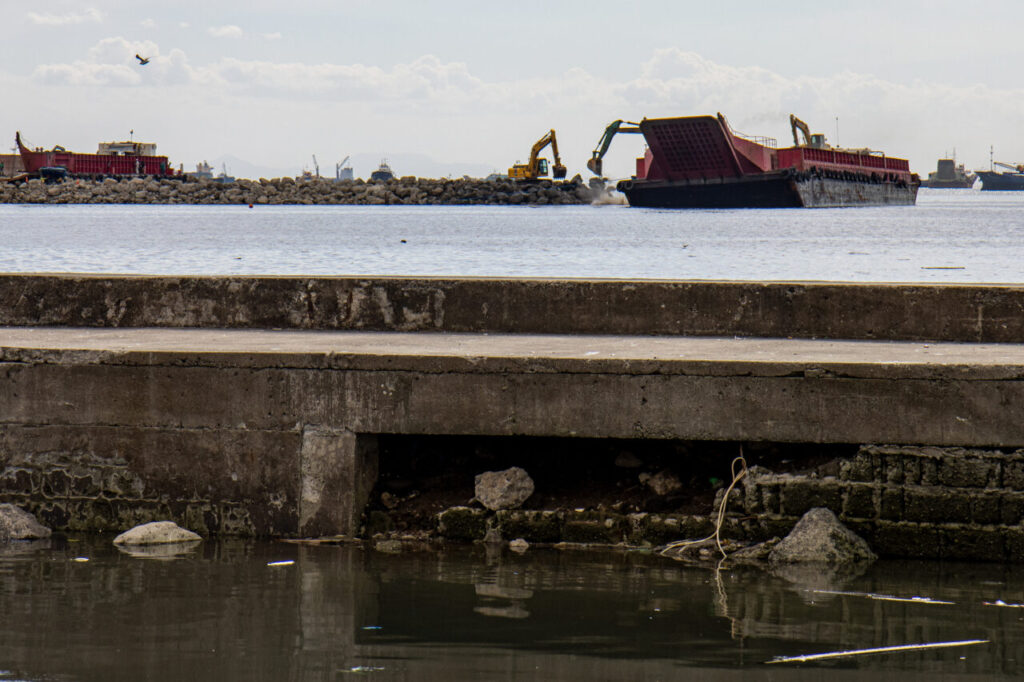
Local fisherfolk also endured the adverse effects of continuous dredging and landfill dumping, which have increased over the years. As a result, fish catch depletion and intense flooding during inclement weather have become more frequent in nearby coastal communities. They also fear that they may no longer be able to fish once the reclaimed land encircles the coast.
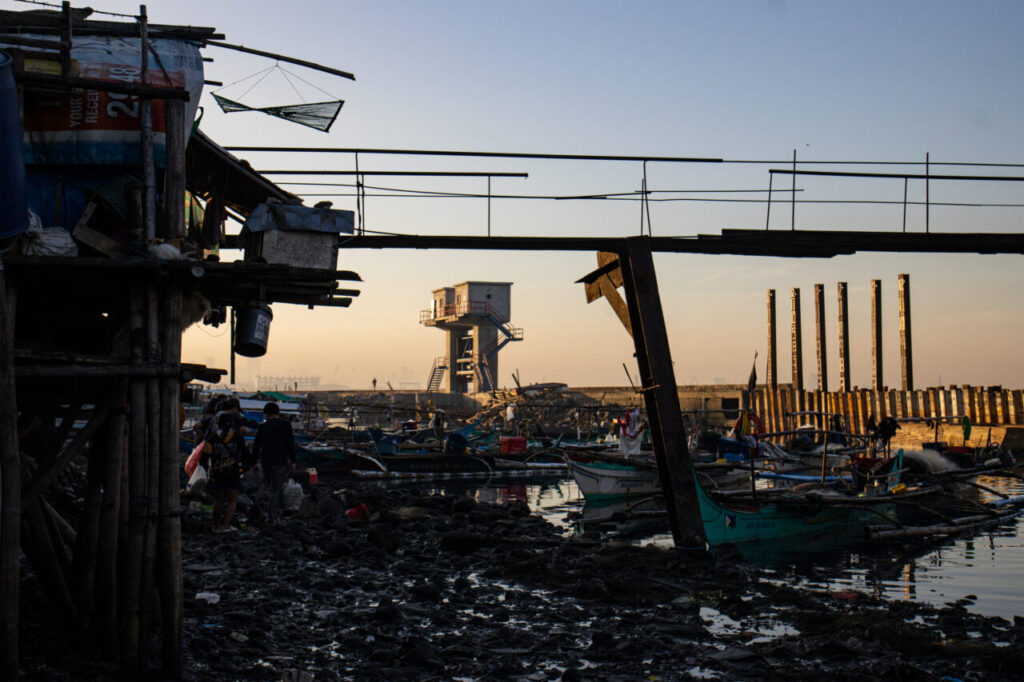
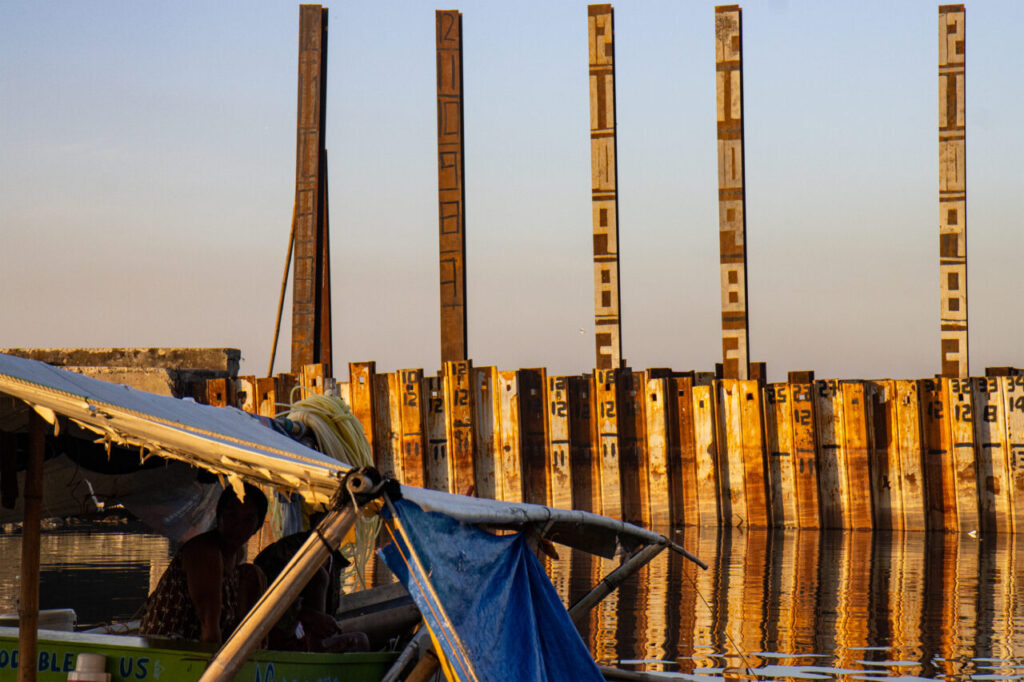
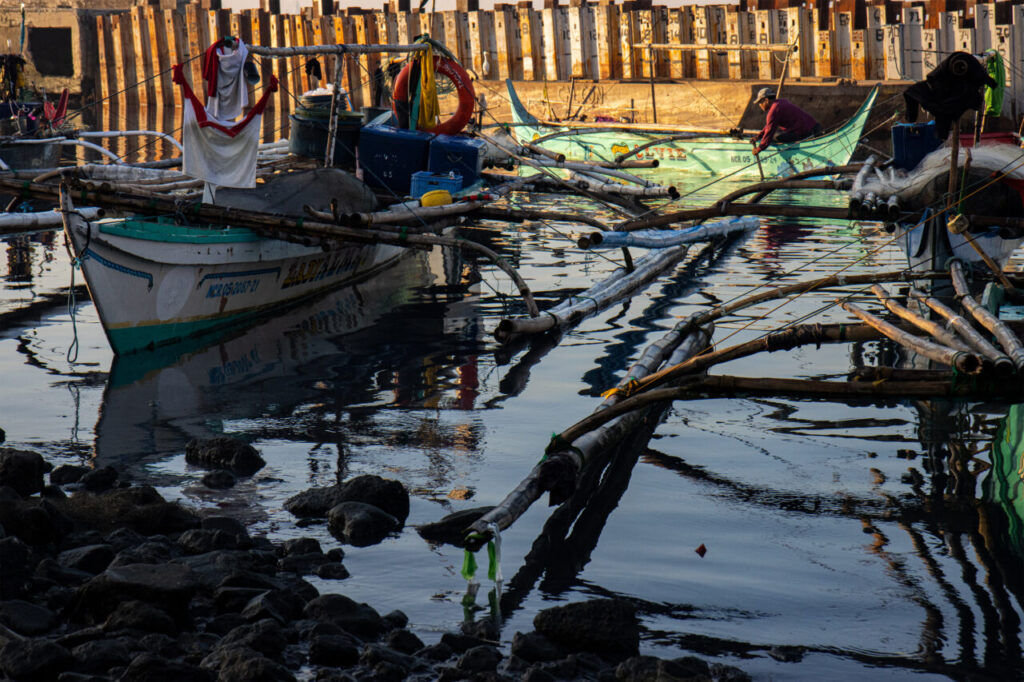
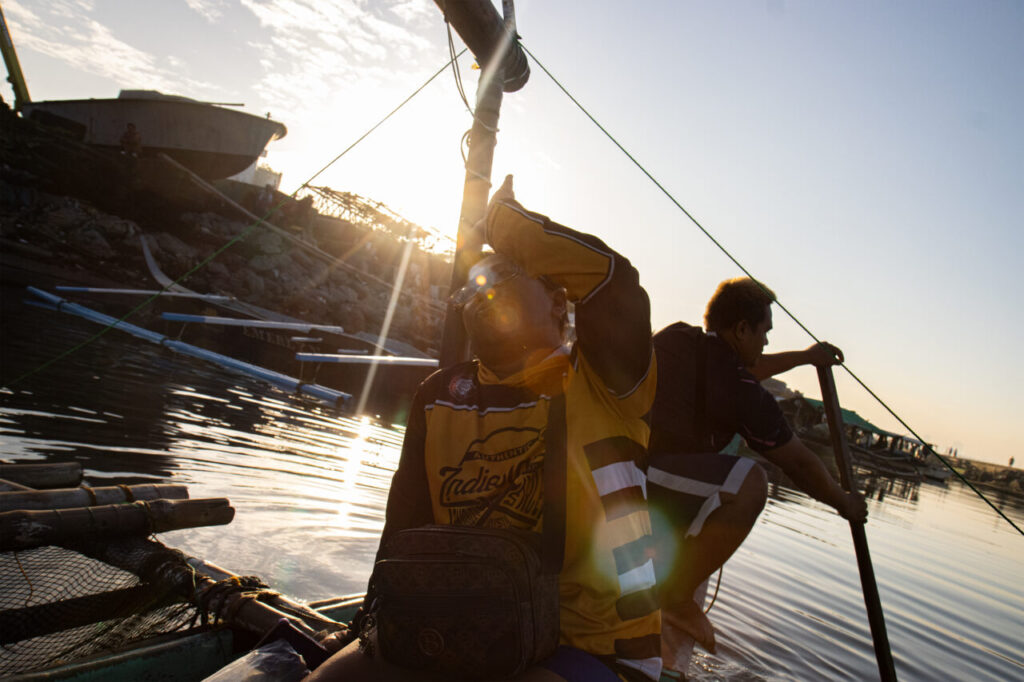
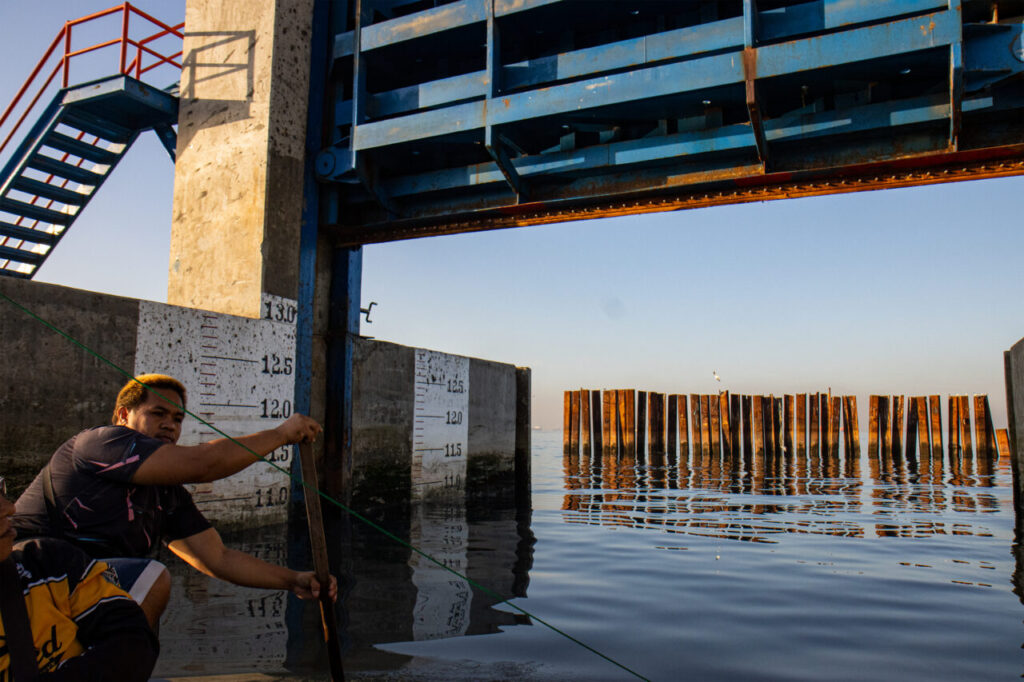
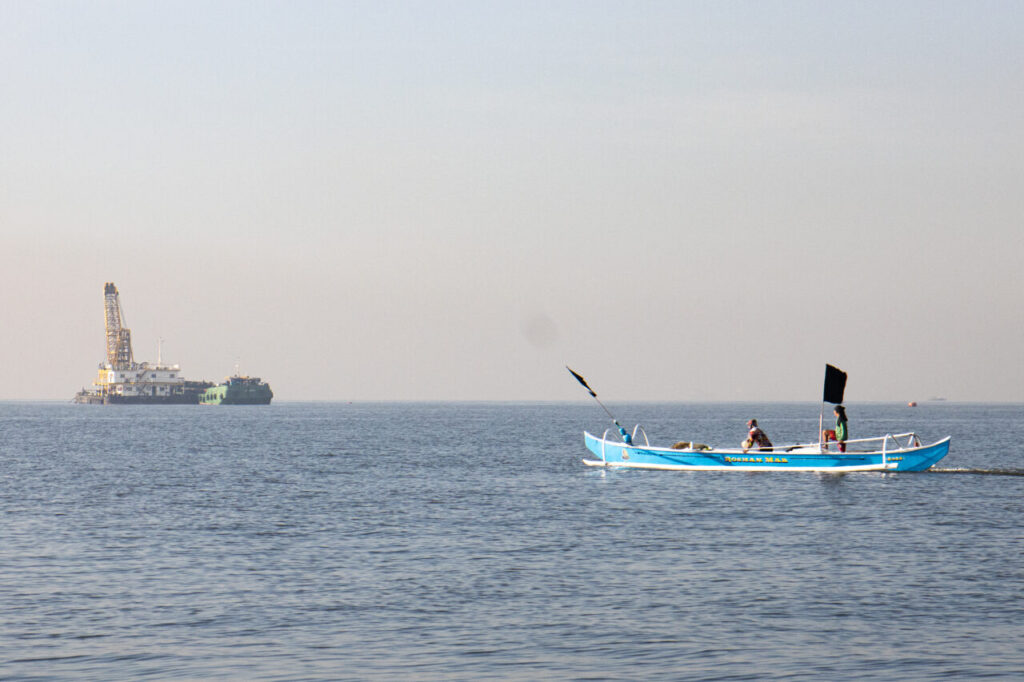
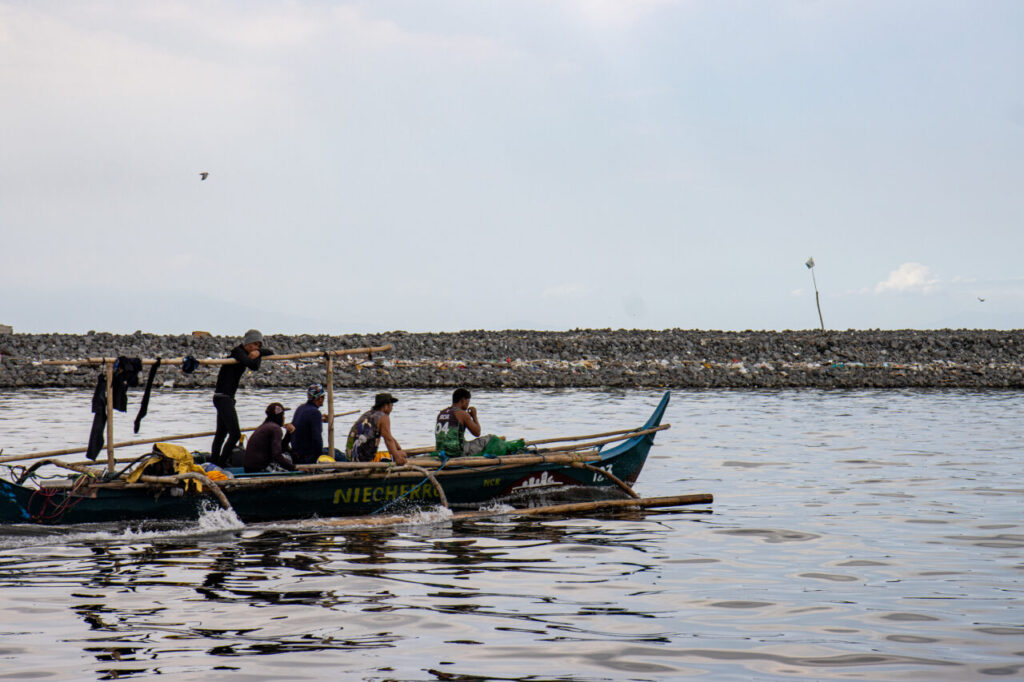
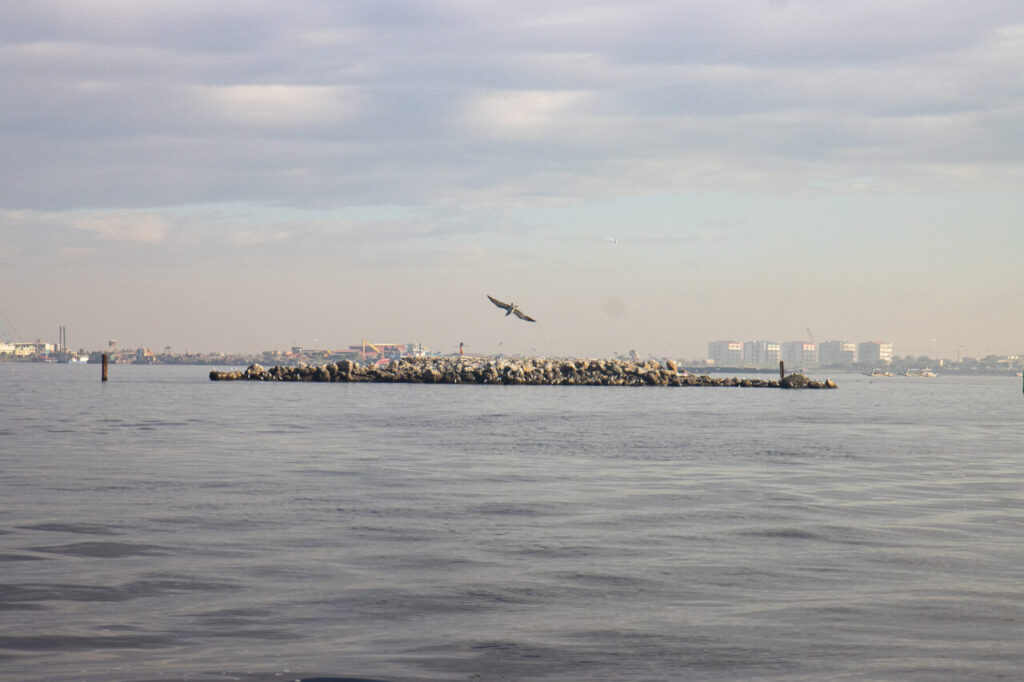
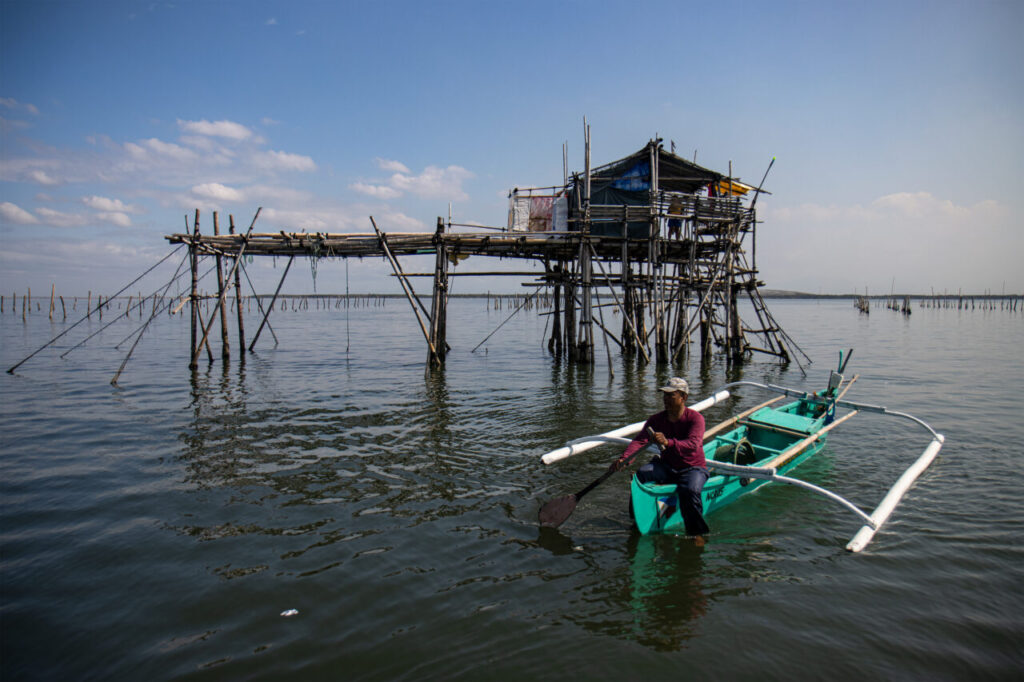
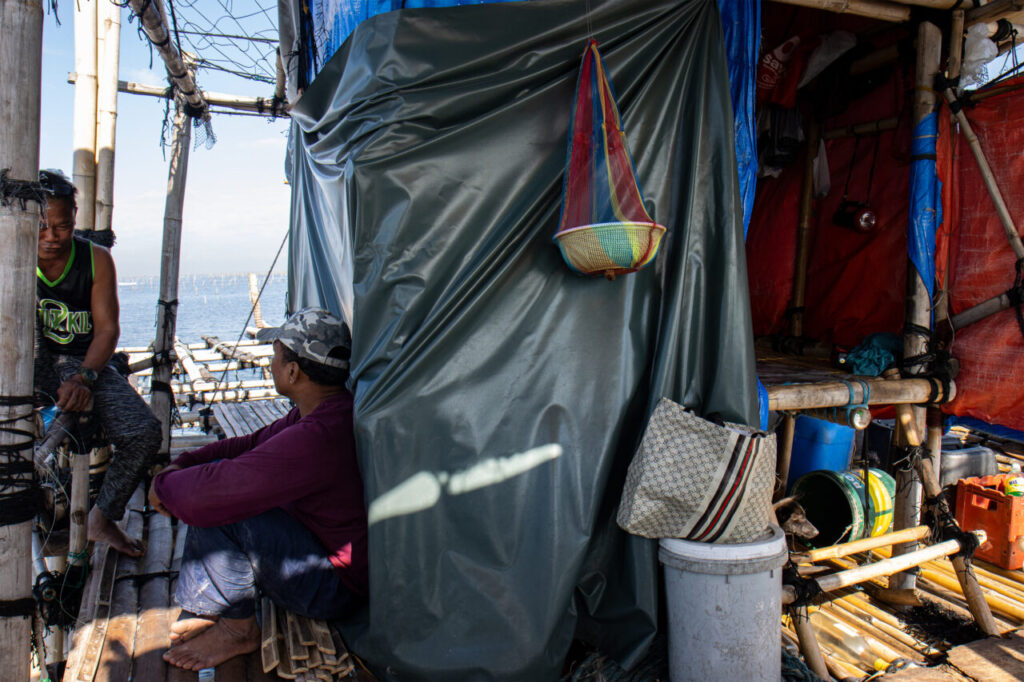
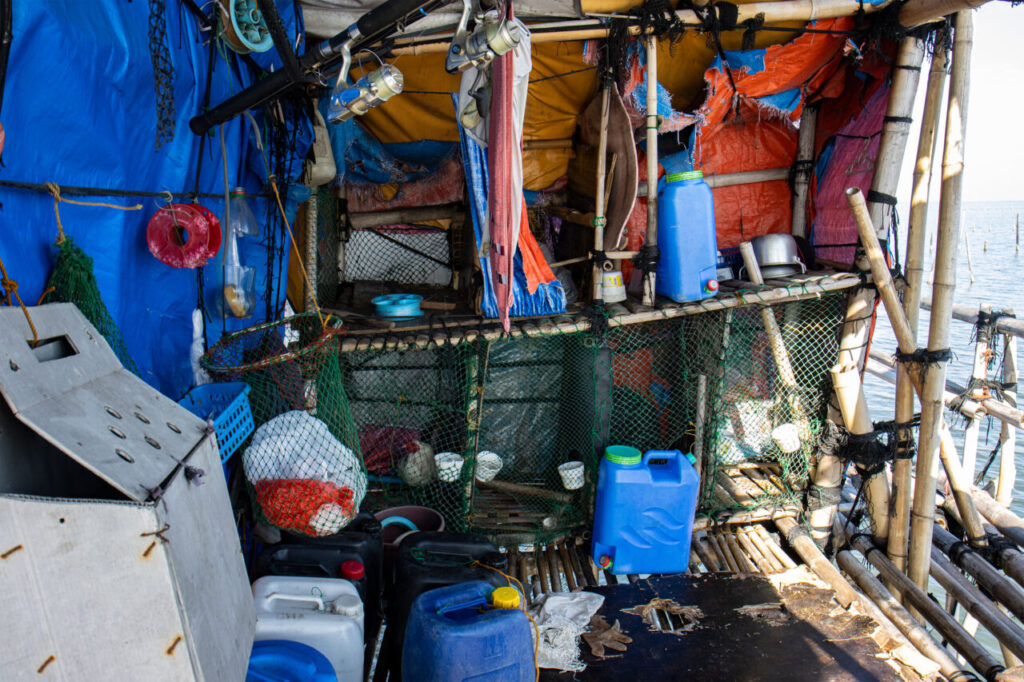
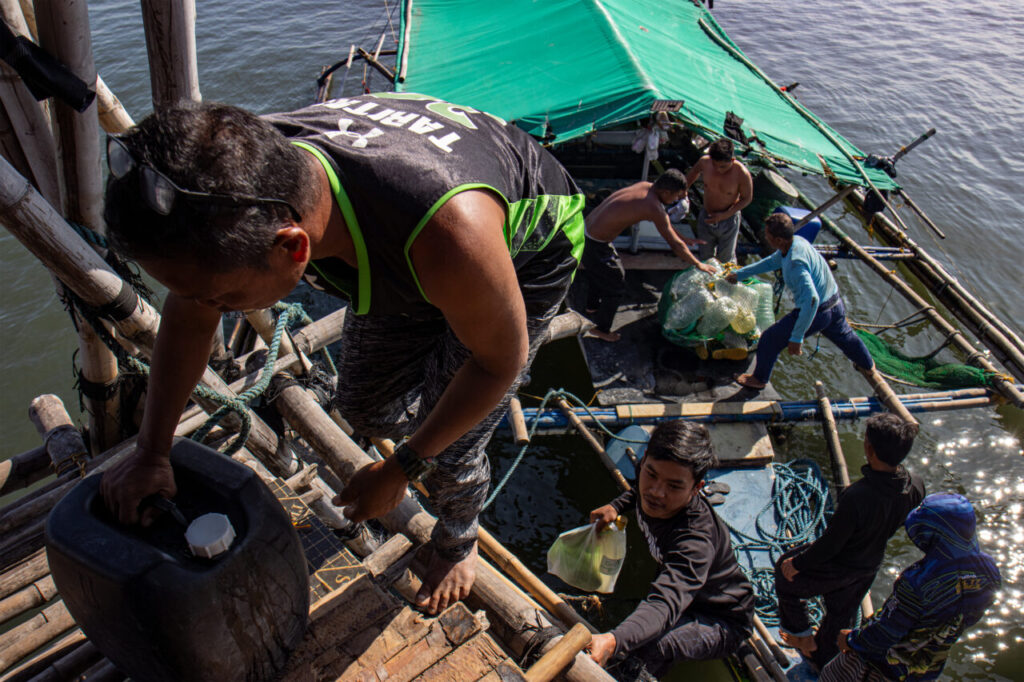
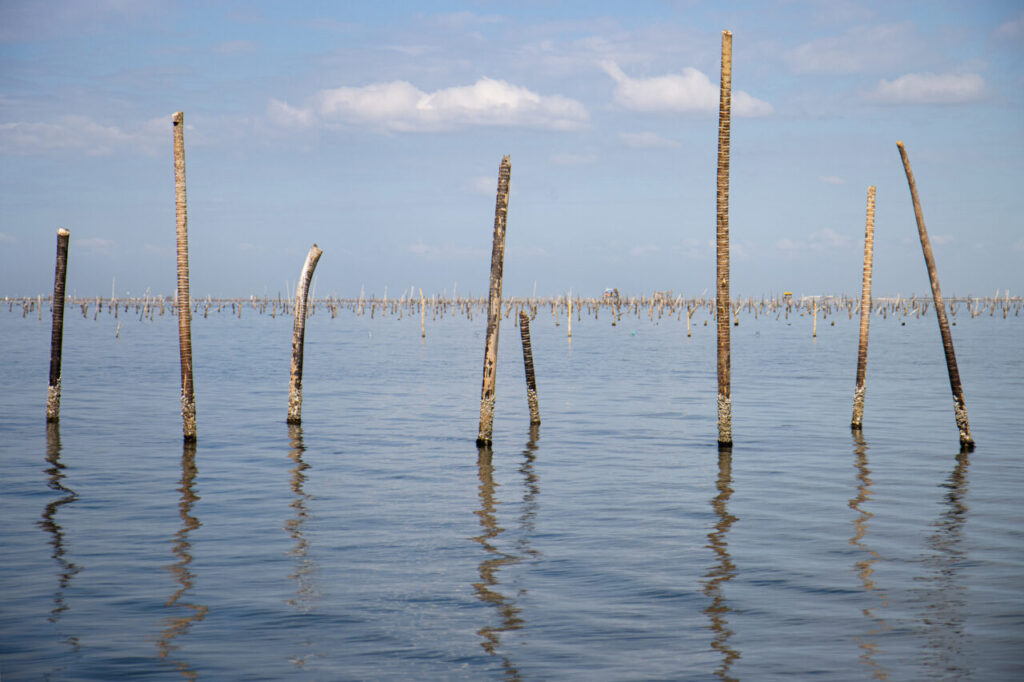
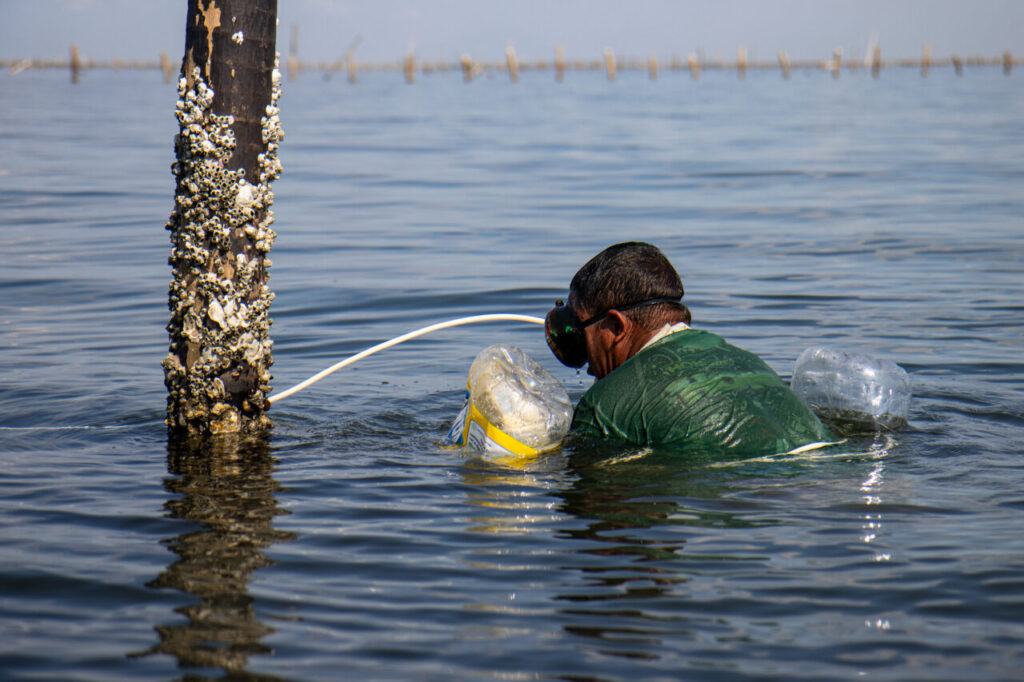
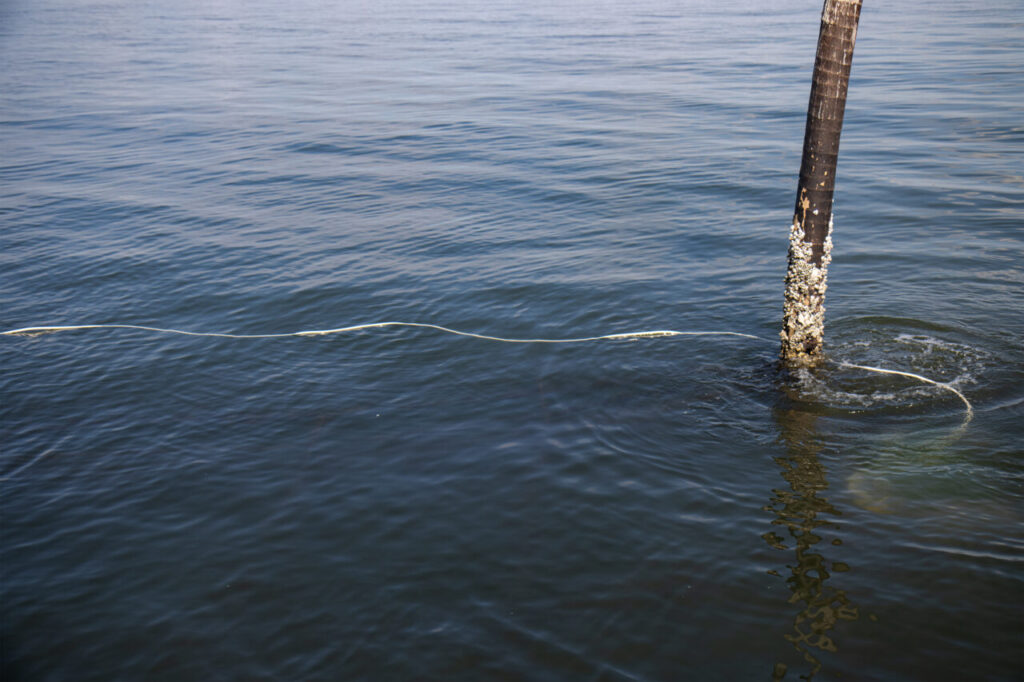
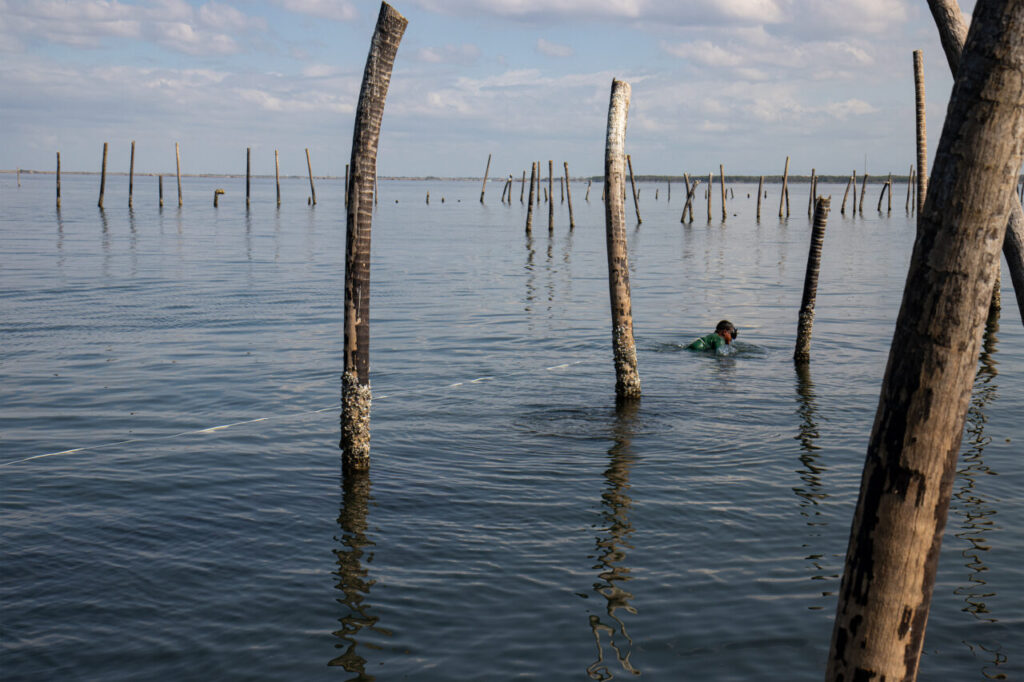
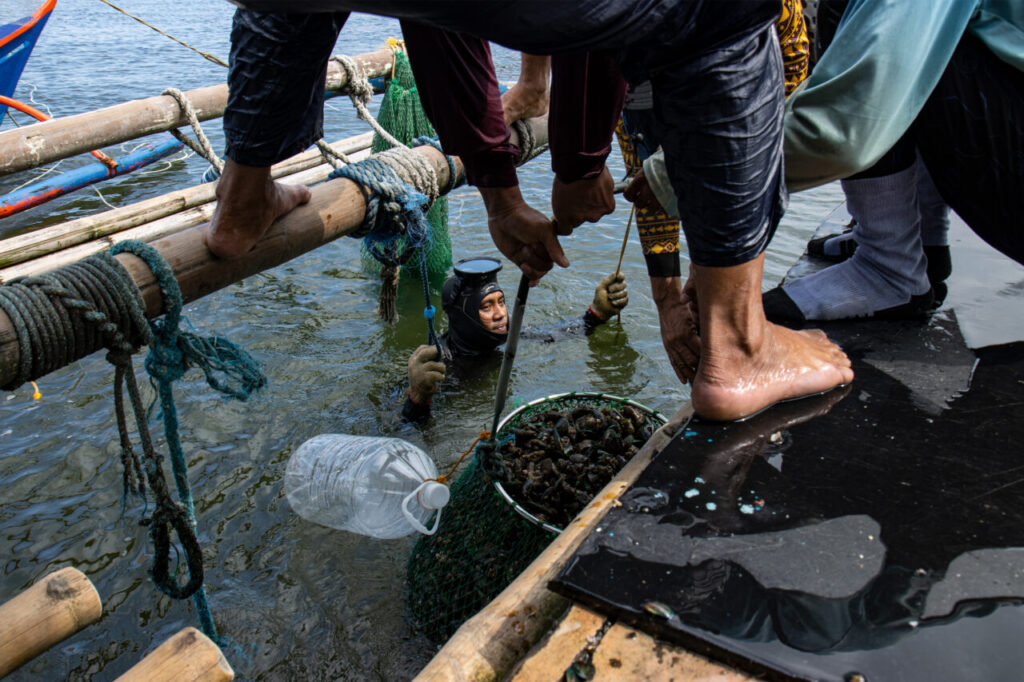
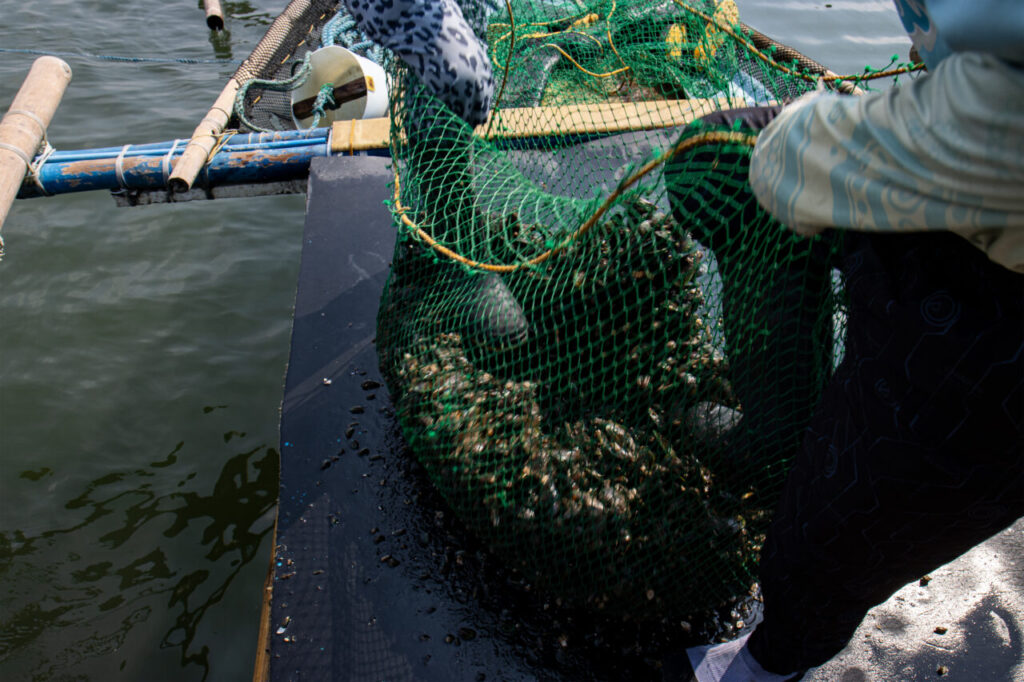
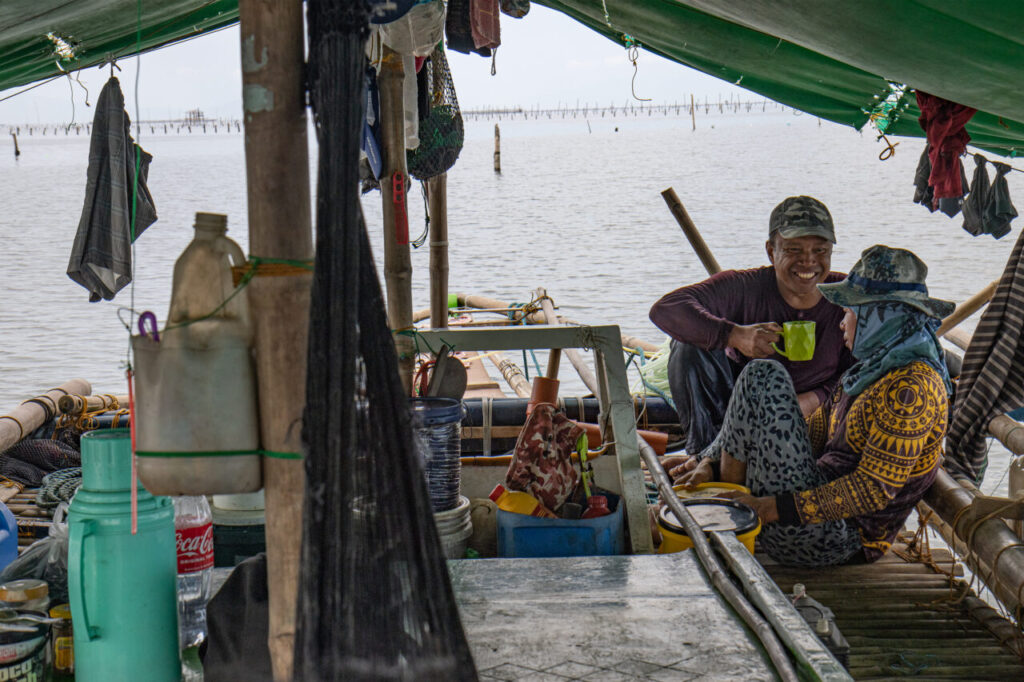
The Tangos floodgate and moored boats can be seen in the distance.Markers indicating the water level when the Navotas LGU declares a high tide.A fisherman paddles his way towards the floodgate, going out to sea for his daily catch.Local fisherman Rommel and his wife Bebe sailed to check on the landfills in Navotas and the mussel farms in Bulacan.The Tangos floodgate remains open as water levels remain relatively low.Two fishermen sail on as they pass through a dredge in the distance.Backhoes dump dredged rocks and other materials to landfill sites.Reclamation sites can be seen in multiple areas on the Navotas coast.A kubo-like structure stands in the middle of the sea near Obanda, Bulacan. Fishermen and mussel farmers staying here could only last from days to months, depending on the volume of the harvest and if the trip strays far from their dock.Some fishermen rest and converse inside the kubo.Different wares and even live chicken can be seen in the kubo, allowing the fishermen to sustain themselves for long periods.A group of fishermen resupplying the kubo.A group of fishermen heads towards the mussel farms to harvest.Hundreds of ”tulos” or the body of anahaw plunged onto the sea floor where mussels can cling and eventually harvested by mussel farmers. A stretch of “tulos” could cost tens of thousands.A mussel farmer catches his breath as makeshift buoys made from water containers keep him afloat.A mussel farmer dives down to scrape the “tulos” for mussels. They use gasoline-powered machines connected to long rubber hoses to provide them with oxygen while underwater.A mussel farmer makes his rounds, going from different tulos to check for mussels ready to harvest.A net filled with mussels is lifted onto the boat.Mussel farmers collectively step onto the harvested mussels in order to separate them in a process called “pagyayakyak”.Mussel farmers share conversation and rest on their boat.