
By Ciriaco “Jun” Santiago III, CSsR
Inside a courtroom in The Hague, I found myself seated between two worlds — and perhaps between two versions of the Philippines.
In the morning session of the International Criminal Court’s confirmation of charges proceedings, I was surrounded by ardent supporters of former President Rodrigo Duterte. Many were overseas Filipino workers. Many came from poor families.
They carried with them not hatred, but fatigue — the exhaustion of people who have struggled abroad, who have known insecurity, who longed for order in a country they felt had failed them. Their loyalty was palpable. For them, the “war on drugs” symbolized strength, discipline, and decisive leadership.
In the afternoon, I moved seats.
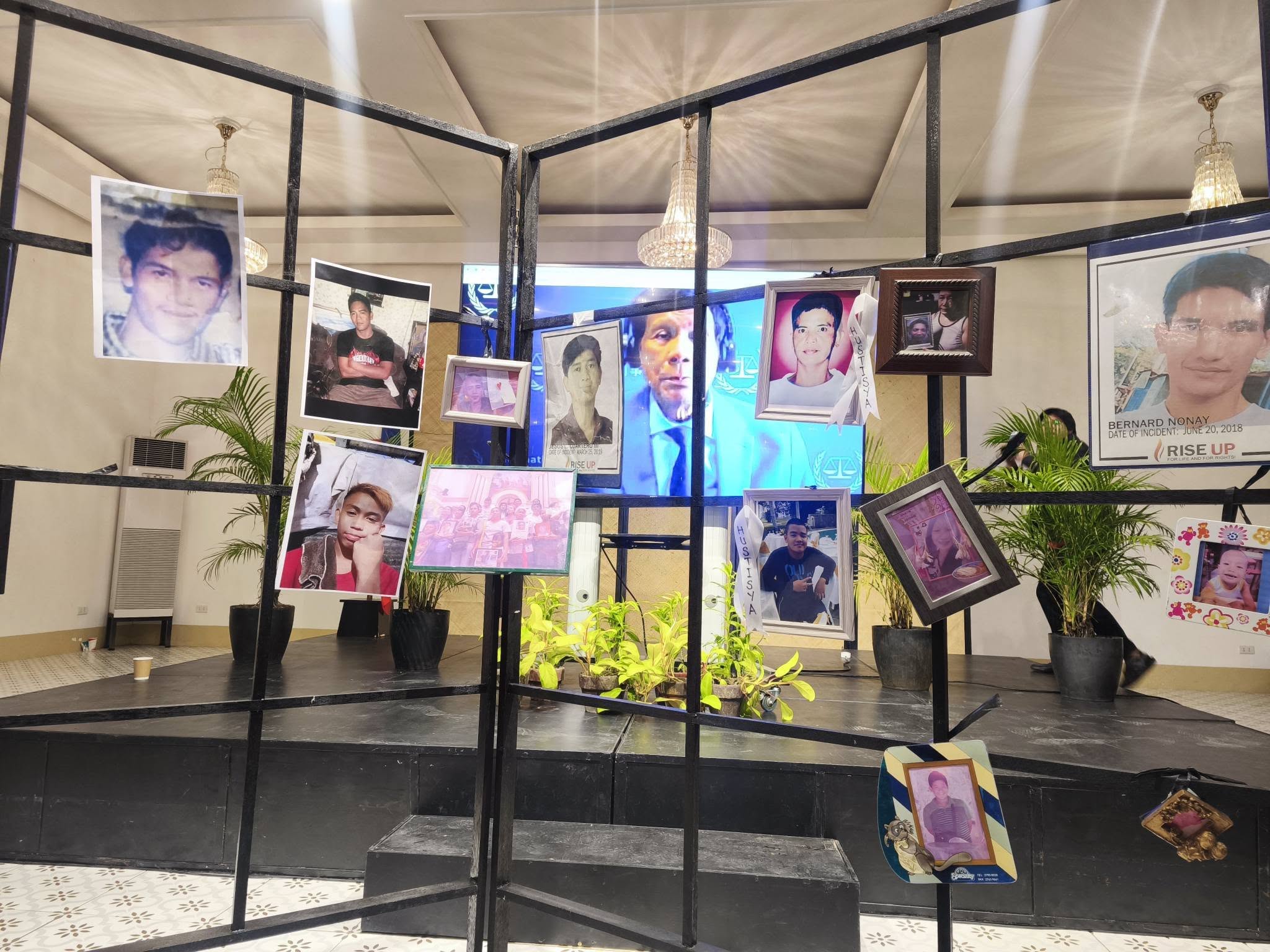
I sat beside grieving mothers. Widows. Families of victims. One woman softly narrated how her husband was shot. A child witnessed his father fall. In the courtroom, prosecutors spoke of “common plans,” “patterns,” and “crimes against humanity.” But beside me were not legal theories — they were shattered lives.
Between these two galleries, I felt as if I were transported back to ancient Rome.
Were the poor turned into gladiators — bodies placed in the arena of political spectacle? And are the tired, frustrated Filipinos made into spectators, drawn into a fight that ultimately serves the ambitions of the powerful?
The right to life is not even the only question here. The deeper wound is this: are the poor being used — both as victims and as defenders — in battles designed by those in high office?
In the morning, I saw devotion. In the afternoon, I saw devastation.
In both, I saw poverty.
The language of politics divides belief systems: “nanlaban,” “neutralize,” “law and order.” But in reality, it is often the poor who bleed, the poor who bury their dead, and the poor who defend leaders with fierce loyalty — even when they themselves remain vulnerable.
As a missionary, I was not in that courtroom as a spectator. I was there as a kamanlalakbay — a companion in our nation’s moral struggle. Listening the entire day felt like witnessing a battle not only of evidence, but of conscience.
The ICC will decide on legal thresholds and criminal responsibility. But the Philippines faces a deeper reckoning.
How did we reach a point where thousands of deaths could be justified as policy? How did suffering become polarized? How did we allow the poor to become both the arena and the audience?
This is not simply about one man on trial. It is about the soul of a nation negotiating its identity between justice and vengeance, between truth and propaganda, between accountability and blind loyalty.
Can we recover our moral compass?
Recovery will not come from The Hague alone. It must begin in our barangays, our parishes, our workplaces, and our families. It begins when we refuse to romanticize violence. It begins when we acknowledge that political power must never feast on the desperation of the poor.
If we are to call for accountability, we must stop turning human lives into spectacle. We must stop recruiting the wounded into wars of belief. We must rediscover that dignity is not partisan.
Justice may take years. But conscience — national conscience — must awaken now.
Otherwise, we remain in the arena, cheering, while our own people fall.
Ciriaco “Jun” Santiago III, CSsR, is a Redemptorist Brother and photojournalist who has covered the Philippine government’s war on drugs since the administration of former President Rodrigo Duterte. He is currently in The Hague, The Netherlands, reporting on the confirmation of charges against Duterte before the International Criminal Court. Santiago serves as coordinator of the Justice, Peace, and Integrity of Creation of the Redemptorist Vice Province of Manila.