
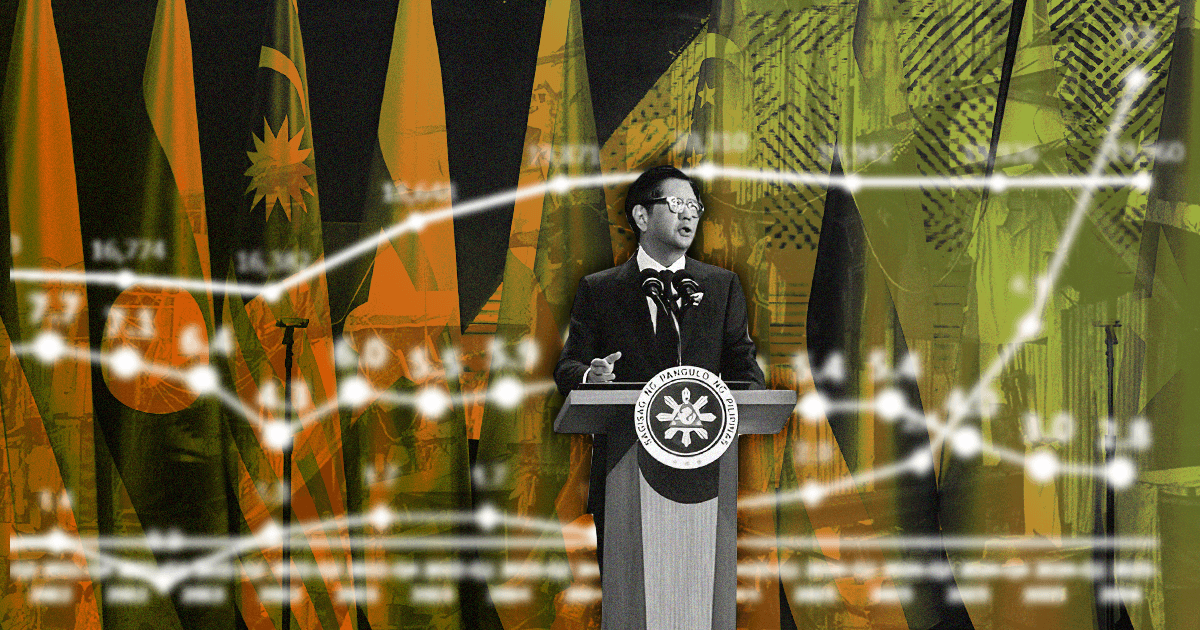
As the Philippines opened the 48th ASEAN Summit in Cebu with Pres. Ferdinand Marcos Jr. as ASEAN chair, research group IBON said the administration cannot champion regional prosperity while it is dragging the economy into stagflation. The group said slowing growth, soaring prices, and worsening joblessness expose the Marcos administration’s failed economic management and diminish its credibility to lead ASEAN especially at this time of crisis.
IBON pointed out that the latest available data for Southeast Asian economies have the Philippines posting: the slowest economic growth, at just 2.8% in the first quarter of 2026; the second highest inflation rate, at 7.2% in April; and the highest unemployment rate, at 5.0% in March.
The group said these indicators statistically confirm the economic distress which weighs so heavily on Filipino households. As it is, the Philippines has the third worst poverty incidence and third worst Human Development Index (HDI) status in ASEAN.
IBON added that the Marcos Jr administration also cannot credibly lead any efforts for energy security or food security, which are among the Summit’s priorities.
The Philippines has among the most expensive electricity and oil products in the region, especially after such sweeping power privatization and oil deregulation. The Food and Agriculture Organization (FAO) has already reported that the 49% of the population suffering moderate and severe food insecurity is the second worst in the region. Moreover, liberalization has driven the agricultural sector down to the third smallest in the region.
ASEAN discourse is rich with language of free market integration, cooperation, and people-centered development. Yet, after decades, the region remains deeply dependent on external capital, export markets, fossil fuel imports, and geopolitical patronage. Trade expansion, investment flows, and regional production networks have not empowered farmers, workers, and informals while profiting domestic oligarchs and external capital.
IBON underscored that there is a role for regional cooperation to advance national development. However, this can only materialize with Southeast Asian governments and leadership that uphold sovereignty including economic independence, agricultural progress, and national industrialization.###