
By Diego Morra
Thirty-three years have passed since the National Democratic Front of the Philippines (NDFP) and the Government of the Republic of the Philippines (GRP) signed the The Hague Joint Declaration. On November 23, 2025, two years shall have passed after both parties inked another agreement to pursue discussions and resume talks after the Duterte regime unilaterally scrubbed negotiations in 2017.
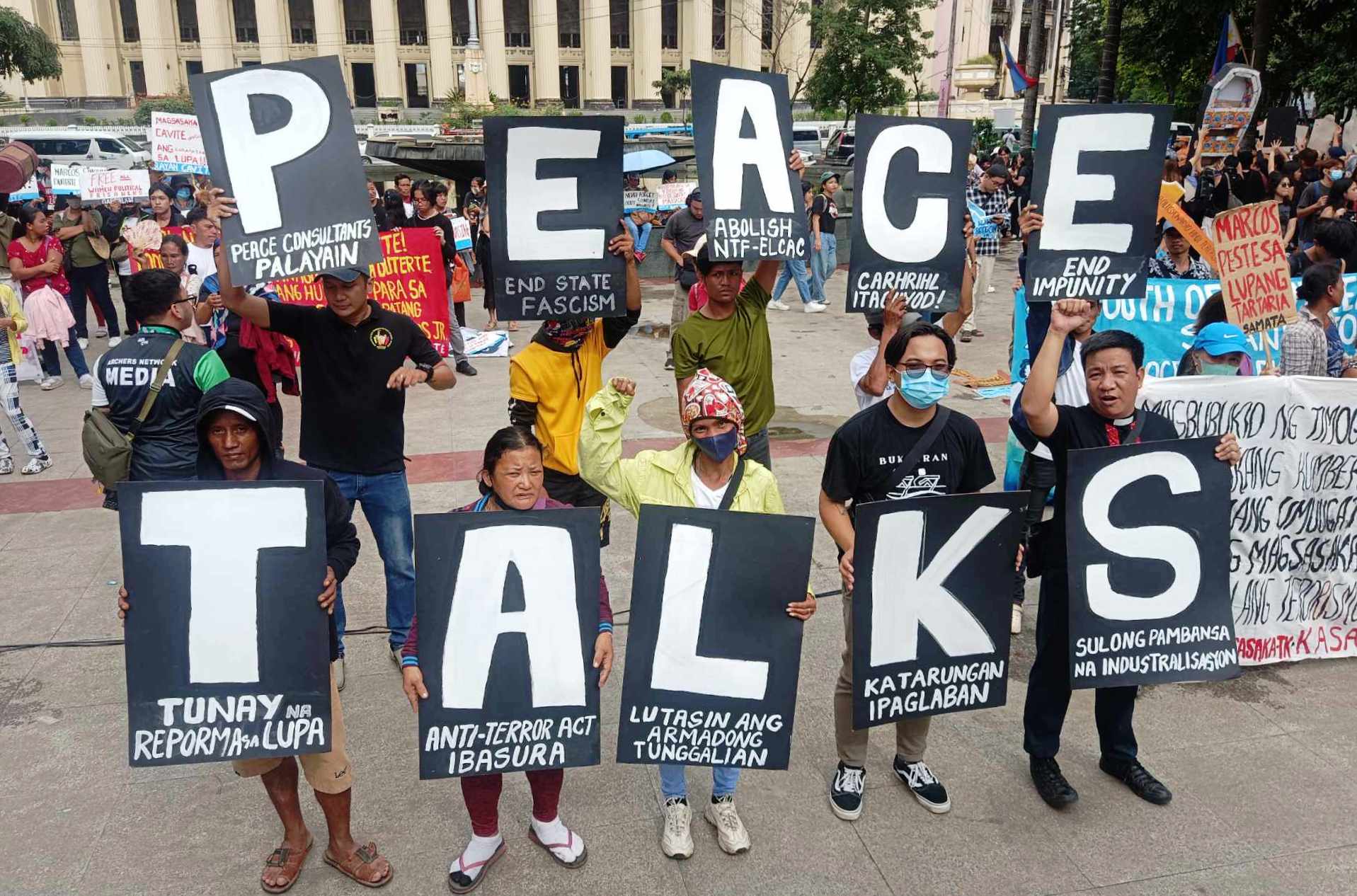
Despite the obstacles within the Marcos Jr. administration posed by a rabid militarist wing, Pilgrims for Peace, which unites advocates for a comprehensive settlement between the NDFP and the GRP, argues that both the November 23, 2023 agreement and The Hague Joint Declaration provide the framework for intensified exploratory talks that could ultimately lead to formal peace negotiations.
Noting that September is Peace Month, Pilgrims for Peace leaders Most Rev. Gerardo A. Alminaza, D.D., Bishop of San Carlos, and Most Rev. Rhee M. Timbang, Obispo Maximo XIII, of the Iglesia Filipina Independiente (IFI) called on both the NDFP and the GRP to revisit the hallmark agreement of 1992 and overcome obstacles to resume the peace negotiation. Alminaza and Timbang stressed that the framework had been set for a long time and the GRP could very well revisit the agreement and hash out what needs to be done for the formal talks.
By zeroing on the roots of the armed conflict, both the GRP and the NDFP could possibly hammer out a solution that must necessarily eliminate the very structures that have institutionalized exploitation and oppression and worsened the economic conditions of Filipino workers and peasants, indigenous communities and marginalized the fisherfolk. The current investigation into the plunder of public funds for bogus, incomplete and substandard flood control projects only worsens the people’s distrust of the Marcos Jr. regime’s sincerity in ridding itself of graft.
To somehow reduce its trust deficit, the administration must give the Filipino people a break by cutting its surplus of motherhood statements dismantling the various agencies organized by the Duterte regime to ramp up the counter-insurgency campaign like Executive Order No. 32, which created the National Task Force to End Local Communist Armed Conflict (NTF-ELCAC) that the previous unlamented regime lavished with billions of pesos to pursue covert operations from red-tagging to abductions, the filing of non-bailable offenses against activists and persistent harassment.
Adding fuel to the NTF-ELCAC’s brutal campaign is the filing of charges for terrorism financing led by the Ant-Terrorism Council (ATC) that the equally unlamented Gloria Macapagal Arroyo regime initiated to target progressive organizations, religious groups and youth, labor, farmer, fisherfolk and government employees. Instead of targeting politicians, DPWH contractors and bureaucrats who have plundered funds for infrastructure projects, the ATC’s operatives have been investigating money belonging to organizations that never stole a single centavo from the emaciated national treasury.
Nonetheless, Pilgrims for Peace reiterated its commitment to push the GRP and the NDFP to resume peace talks and asked both parties to communicate with each other, or reach out to their principals through peace advocates. Two years of silence is a long time and the longer it takes to engage in meaningful discussions, the higher the chance of hostilities. “There are indeed obstacles to resuming the talks, and these must be overcome. These include widespread violations of human rights and international humanitarian law and the ‘weaponization of the law’ under terrorism legislation (namely the Anti-Terrorism Act of 2020 and the Terrorism Financing Prevention and Suppression Act of 2012), which make peace talks nearly impossible,” Pilgrims for Peace admitted.
“In many areas, peacebuilding has been muted or maligned with the NTF-ELCAC’s proliferation of ‘fear-and-terror’ operations. The so-called ‘whole-of-nation approach’ has led to deplorable red-tagging, terrorist-labeling, and criminalization of dissent with military operations that blur the lines between civilian governance and military objectives,” the group noted. The Hague Joint Declaration provides a framework for addressing the root causes of the armed conflict. It did not only lead to the signing of the Comprehensive Agreement on Respect for Human Rights and International Humanitarian Law (CARHRIHL) and the Joint Agreement on Safety and Immunity Guarantees (JASIG) but it was also instrumental in arriving at a common draft of the Comprehensive Agreement on Socio-Economic Reforms (CASER), a crucial component of the entire peace process. Throwing all of these down the drain will make any comprehensive settlement impossible. #