
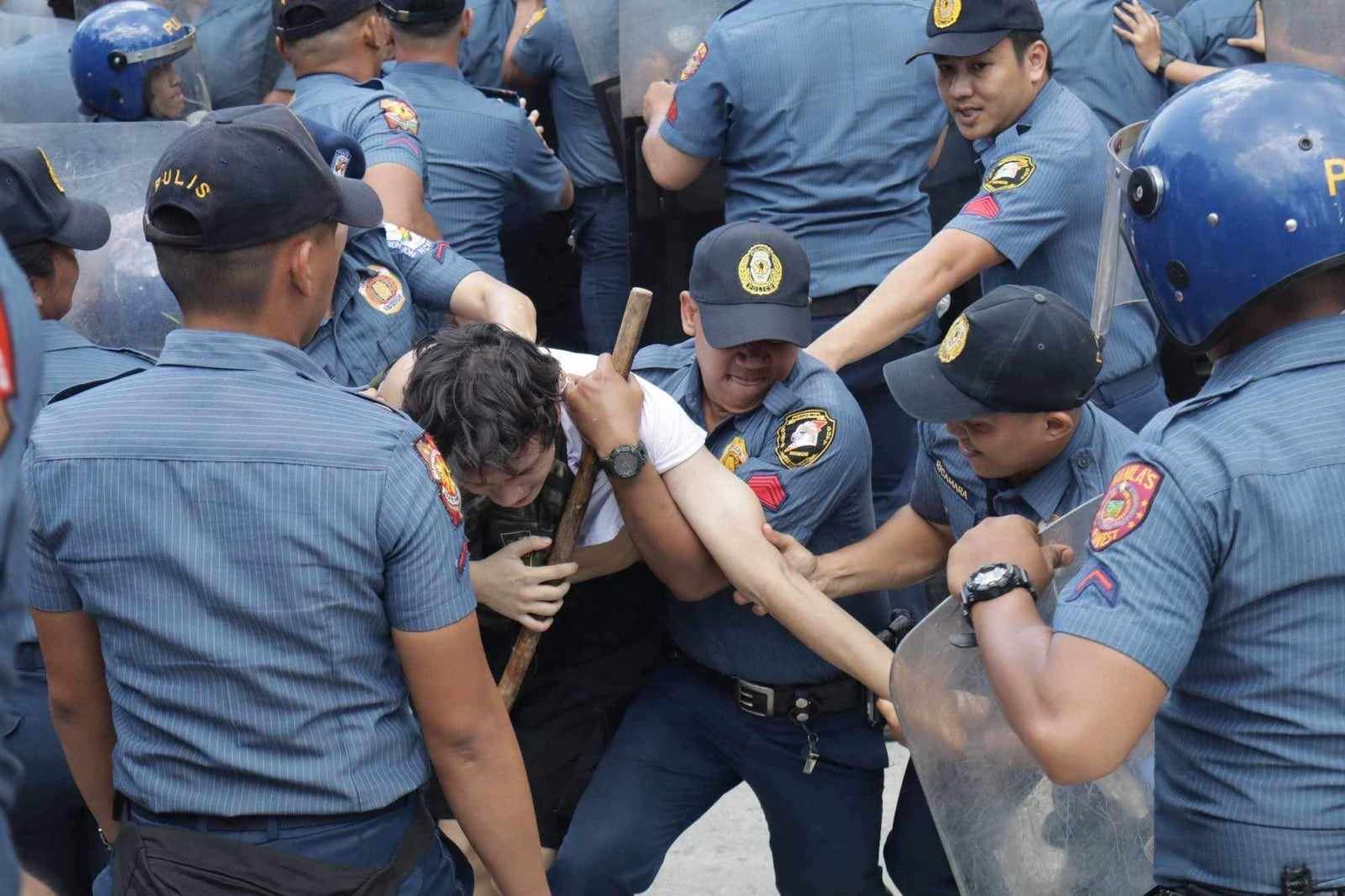
A human rights counsel advised student leaders summoned by the police to lawyer up and stand up against “harassment subpoenas” connected to their alleged roles in the September 21 anti-corruption rallies.
National Union of Peoples’ Lawyers president Atty. Ephraim Cortez said those who received subpoenas from the Criminal Investigation and Detection Group (CIDG) of the Philippine National Police (PNP) are under no obligation to explain themselves.
“[Y]ou are well within your rights to refuse to participate in any investigation,” the public interest lawyer said.
Cortez reminded the subpoenaed individuals they are presumed innocent and covered by the constitutional protection against self incrimination and the right to remain silent.
CIDG acting director Police Maj. Gen. Robert Morico II sent summons to Polytechnic University of the Philippines-Mabini Student Council president Tiffany Faith Brillante, University of the Philippines University Student Council chairperson Joaquin Buenaflor, Kabataan Kontra Korapsyon member Aldrin Kitsune and Alyansa ng Kabataang Mamamahayag leader Jacob Baluyot.
The PNP threatened to investigate at least 20 youth leaders in connection with the massive protests last month.
The student leaders are being directed to appear at Camp Crame on Monday lest they charged with “indirect contempt.”

No special law is above the Constitution
Cortez said that while Republic Act No. 10973 grants some PNP officials subpoena powers, it does not give them the authority to compel anybody to provide information or produce any document.
This grant of subpoena powers may not override and cannot possibly prevail over individual freedoms guaranteed and protected by the Constitution, he explained,
The lawyer said the right against self-incrimination is constitutionally guaranteed and may only be waived in writing and with the assistance of an independent and competent counsel of their choice.
He pointed out that the subpoena powers of the PNP cannot be used to harass, intimidate or threaten anybody to prevent them from exercising their right to free expression, peaceful assembly and redress of grievances.
Cortez in turn warned the PNP that the violation of the students’ rights constitutes a criminal offense punishable under Republic Act 7438 or the rights of persons under custodial investigation.
He advised the respondents to formally inform the CIDG that they are invoking their constitutional rights should they choose to refuse participation in the investigation.
Focus on the corrupt
Meanwhile, Kabataan Youth Party Rep. Renee Co condemned the police subpoenas as an attempt to silence critics of the corruption of the Ferdinand Marcos government.
“They are quick to prosecute innocent citizens but slow to hold the corrupt accountable,” Co said.
She added: “We condemn this kind of repression. The only response to such treatment by the state is the people’s continued struggle in the streets.”
The College Editors Guild of the Philippines also denounced the subpoena against its member Baluyot, saying the student journalist was arrested while covering the protests, along with hundreds of student journalists.
In an earlier statement, Kitsune said he has filed a report with the Commission on Human Rights, saying he is unsure why the police is investigating him for simply exercising his rights as a citizen.
The College of St. Benilde film student said he stands for freedom, human rights and Philippine sovereignty.
“We will stop at exacting accountability from corrupt officials who steal not only trillions of pesos but of the souls and dignity of the Filipino people,” he said. # (Raymund B. Villanueva)