

By Rosario Brenda Gonzalez
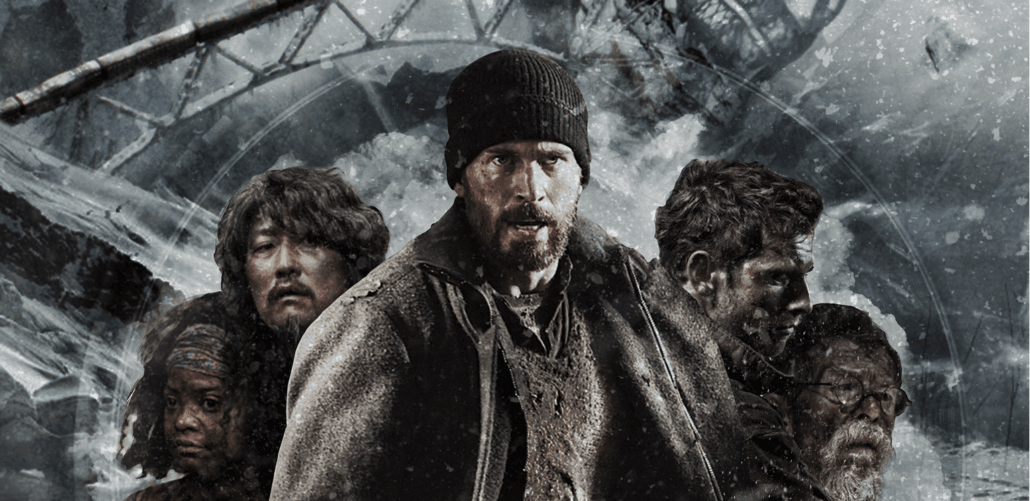
Bong Joon-ho’s 2013 film Snowpiercer has clarity of vision and a straightforward statement on the complexity of class conflict. Starting out with a train of the last survivors of an attempt to end global warming that failed, Snowpiercer reflects a class divided society with the poorest sector sitting it out in the tail-end section of the train (called Snowpiercer) and the richest in the front section including the one who controls its engine.
Chris Evans plays Curtis, the leader of the revolt next to its spiritual and inspirational head Gilliam, a role portrayed by John Hurt. Both, along with the occupants of the tail end section of the train, aim to reach the front part to wrestle leadership from the all-powerful Wilford (Ed Harris). But before they realized their goal, they had to convince Namgoong, a security specialist to help them open the gates in each of the train’s sections.
Bong regular Song Kang-ho spoke mostly Korean all throughout the film as Namgoong while reunited with fellow South Korean Go Ah-sung, who plays his daughter Yona. All proved to be competent actors praising Director Bong, but the movie’s unforgettable character belongs to Mason, the spokesperson and propagandist of Gilford, played with gusto by the brilliant actress Tilda Swinton. She brings her wide knowledge and instinctive flair to be the face of everything that is wrong with Wilford’s rule: inequality, subdued and overt force, lust for power, deception and betrayal.
Unlike Parasite, Bong’s award-winning film where the working class and the rich are both taking advantage of each other, in Snowpiercer it is clear where the oppression emanates. The dark and depressing milieu of the train’s poor section is aggravated by rations of disgusting protein bars and views of bright fruit-bearing trees and top-of-the-line recreational clubs for the rich. Yet Snowpiercer is not a linear presentation of black and white as it also holds what could be shocking revelations. Changes in social structures certainly do not happen in predictable ways.
Based on a French graphic novel, “Le Transperceneige” by Jacques Lob, Benjamin Legrand and Jean-Marc Rochette, Snowpiercer is a social commentary on the class divide that is bound to end on an optimistic note despite that grueling and painful journey towards victory. Bong has tackled themes of social injustice and class oppression and it is in Snowpiercer that he has been most explicit. He once said that he is “constantly exploring why revolutions are so difficult.” And it is also in Snowpiercer that he has shown why Curtis and the poor’s journey to triumph is too exhausting, often unbearable but, in the end, something that should always be seen through rose-colored spectacles. #
= = = = = = =
Rosario Brenda Gonzalez is a long-time development worker who discovered South Korean films and television series during the pandemic. She was encouraged to review 18 South Korean movies, 2 South Korean television series, and 1 Japanese television series upon realizing that many of these tackled social issues in an informative and entertaining manner.
A BA Journalism graduate of UP Diliman, Ms. Gonzalez has been a project evaluator and development management trainer for more than three decades. Prior to that, she was a human rights and church worker.