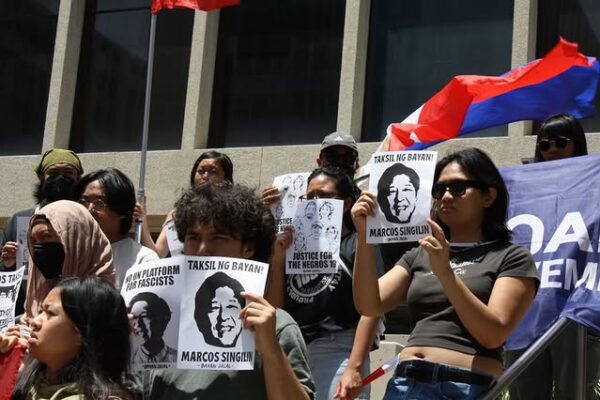

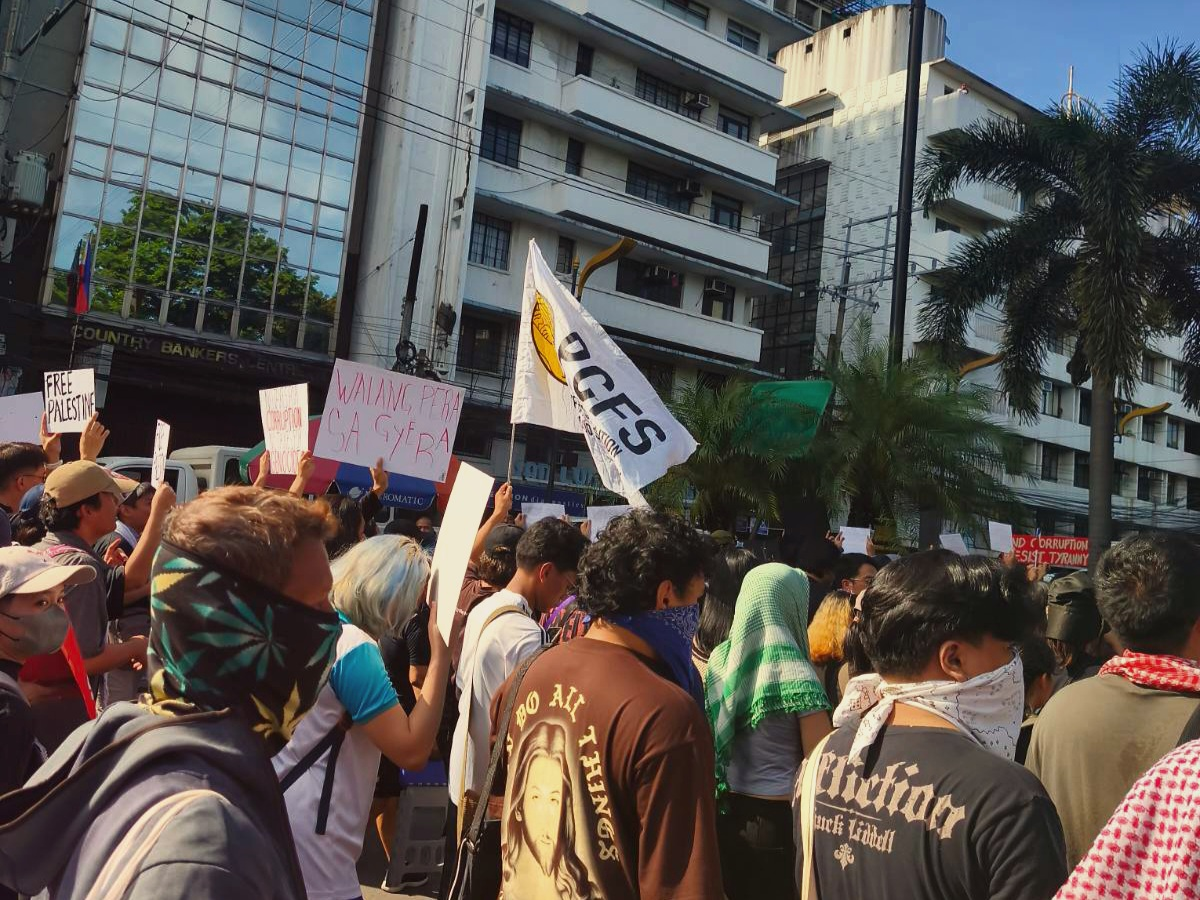
We joined the tens of thousands that flooded Luneta yesterday, the 53rd anniversary of Martial Law, to demand accountability from the bureaucrat capitalists in the Philippines—including its president, Ferdinand Marcos Jr.—for perpetuating systemic corruption at the expense of the people’s welfare. From Indonesia to Nepal, and now in the Philippines, people’s movements are taking the streets to demand change.
Our Coalition shares the stand of our members in the country that President Marcos Jr. is just as accountable for the corruption deeply entrenched in the system—a system he is complicit in, benefits from, and that is part of his family’s legacy. The controversial flood control projects and all other government initiatives from which corruption siphons money have persisted under his administration with his blessing. His move to expose them in his most recent State of the Nation Address is a last-ditch effort to save himself from accountability. He is in no position to take credit for igniting or being a part of the people’s protest against corruption.
Likewise, political factions such as the former Duterte regime should not exploit the situation to prop themselves up as a better alternative. The same corrupt system thrived under his administration, making them just as guilty.
Protests have grown and erupted in many parts of the country to condemn this corruption, peaking yesterday. We condemn the brutal dispersal, beatings, and arbitrary arrests carried out by the police. As of this writing, 216 have been arrested, including minors. One has been reported dead from stabbing. The protesters were not mere ‘thugs’ or ‘provocateurs’, but citizens enraged and fed up with corruption and oppression. The Philippines now joins the rising tide of militant collective action in Asia in recent years, and this should be enough proof that people can shake and change the system.
We have seen how protests in Indonesia and Nepal in recent weeks have called the world’s attention to the same systemic corruption that has kept government officials rich and the rest of their country reeling in poverty, especially in rural areas. The same has happened in Sri Lanka in 2022 and Bangladesh in 2024, whose powerful protests, driven to the brink by economic crises, have led to changes in their respective governments.
People’s movements taking action against corruption are part of the assertion for people’s food sovereignty. When funds are stolen from infrastructure projects like flood control, it’s not just money that vanishes—it’s the very foundation of rural life and stability. This theft leaves communities especially in rural areas defenseless against climate change and economic instability, and creates a cycle of poverty and food insecurity while a privileged few live in opulence.
Protests have grown and erupted in many parts of the country to condemn this corruption, peaking yesterday. We condemn the brutal dispersal, beatings, and arbitrary arrests carried out by the police. As of this writing, 216 have been arrested, including minors. One has been reported dead from stabbing. The protesters were not mere ‘thugs’ or ‘provocateurs’, but citizens enraged and fed up with corruption and oppression. The Philippines now joins the rising tide of militant collective action in Asia in recent years, and this should be enough proof that people can shake and change the system. ###