
Something strange happened after the United States and Israel launched their unprovoked war on Iran: they began losing the propaganda war.
As soon as the first bombs fell on Tehran and other parts of the country and in Lebanon, the duo that has long styled itself as the defender of Western civilization started taking fire, not just from the usual progressive left critics but even from liberal as well as conservative politicians and commentators in the American media ecosystem. Even the Pope weighed in. The message was clear: the attacks were illegal, unwarranted, immoral, and, given the overwhelming military superiority of the US and Israel, would inevitably result in catastrophic death and suffering, on top of the still-ongoing genocide in Gaza.
It felt almost unprecedented. Perhaps it was because the war bore the unmistakable imprint of Donald Trump and Benjamin Netanyahu, two of the most reviled Western leaders today. Or perhaps the ghosts of Iraq and Afghanistan still linger too vividly to ignore. Or maybe it was because yet another brazen and illegal US intervention, this time in Venezuela, had taken place just weeks prior. Whatever the reason, even those who were long cynical about Western media found themselves surprised. But then, something even stranger happened.
Iran struck back. And it struck hard.
This is not to say that Iran has not suffered catastrophically. Among the most harrowing was the killing of more than 160 school children in Minab, Southern Iran, in the first day of the bombings. In what felt like a devastating series of attacks, the Islamic Republic also lost its Supreme Leader, members of his family, and several military and civilian leaders in coordinated US-Israeli strikes. The attacks, which experts concede may be considered war crimes, are yet another proof of a superpower’s might being untethered by international laws and conventions for the human conduct of war.
And yet, despite these horrible setbacks, as many commentators have pointed out, Iran did not need to “win” in conventional terms. It only needed to survive. It only needed to strike at precision targets using its arsenal of weapons, much cheaper and faster to produce than those of the US and Israel.
Reporting from Western outlets, including the New York Times and the Wall Street Journal, has revealed that the true objective of the US and Israel was regime change, decapitate the leadership, then let internal unrest finish the job. Following what they frame as a successful intervention in Venezuela, Washington reportedly sought to replicate the model in Iran: force negotiations under duress, extract concessions, and open the country, particularly its oil resources, to US companies.
But Iran did not collapse. It fought back forcefully enough that even Western media could not ignore it. It did not help that the body language and rhetoric of Trump and his officials, including War Secretary Pete Hegseth, spokesperson Karoline Leavitt, among others, betrayed something closer to anxiety than victory. They seem to know what is becoming increasingly obvious: they are losing not only the propaganda war, but possibly the war itself. Domestic support, already weak at the outset, even among segments of Trump’s MAGA base first galvanized in opposition to the US’ “forever wars,” will likely erode further as the conflict drags on.
To be sure, many of the blows to US credibility are self-inflicted. Its brazen and often senseless threats, even against its own allies, from Greenland and Denmark to the European Union, Latin America, and even Canada, have chipped away at its standing. Whether this erosion becomes permanent remains to be seen. But the broader decline in global credibility has long been underway, accelerated now by these antagonisms and by Washington’s participation in the widely condemned genocide in Gaza.
Here in the Philippines, however, the picture is more complicated. The US retains a loyal cabal of political analysts and commentators who express unwavering support for the superpower and its current “special relationship” with the country. This cabal can rely on the surprising degree of public credibility that the US enjoys among Filipinos, as reflected in surveys and media narratives. This credibility builds on more than a century of US cultural dominance, continued political influence, and an education system that has consistently portrayed America as a benevolent savior and steadfast ally.
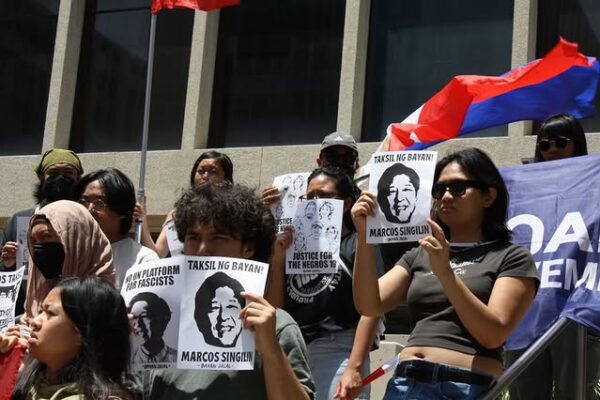
Recent US actions in Palestine, Venezuela, and Iran, particularly the economic crisis stemming from the latter, are testing the capacity of pro-US commentators in the Philippines. The illegal and immoral actions of the US are giant spectacles and important teaching moments that show that the US is not the magnanimous pro-peace and pro-democracy world leader that it purports to be. President Ferdinand Marcos Jr. himself, despite wanting to rebrand his family’s surname as pro-democracy and having presented himself as a staunch US ally, was forced to make overtures to China and Iran amidst the economic crisis. Even an economist mouthing neoliberal talking points about calls to remove the excise tax on petroleum products cannot help but see the need for the US and Israel to end their attacks for a respite from the economic crisis.
The US’ credibility among Filipinos may have taken some hit, but it nevertheless remains remarkably resilient and still far higher than that accorded by many countries in the Global South. More troubling, however, is the persistence of internalized racism that undergirds this enduring belief in American moral superiority. It surfaces in, among other ways, a near instinctive distrust of fellow “Orientals,” to borrow from Edward Said, directed most sharply at countries asserting independence from US domination, like China and Iran.
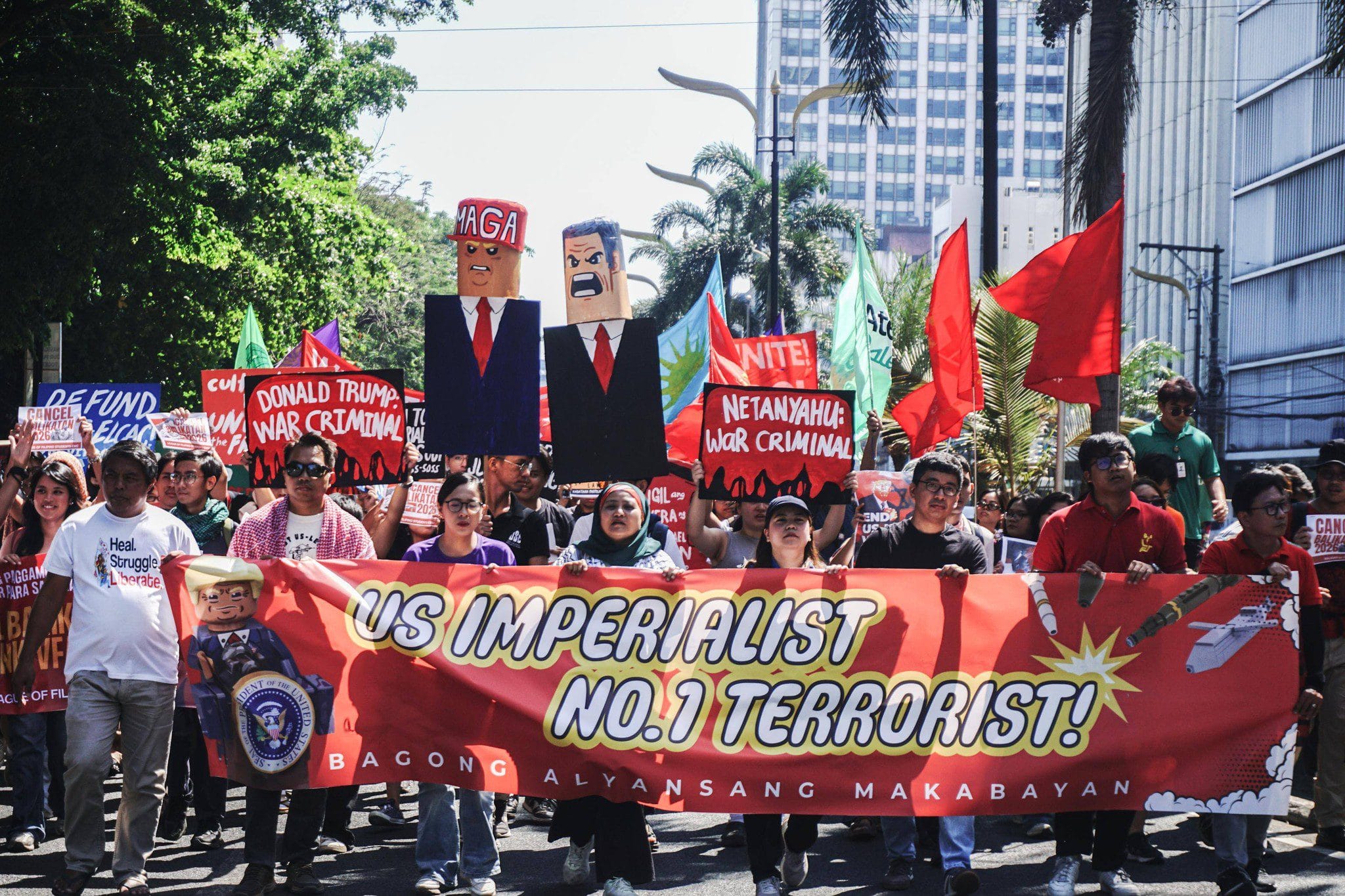
Consider, for instance, how a recent article in Rappler, titled “Lego memes, AI ‘slopaganda’: Iran’s disinformation machine,” frames the propaganda dimension of the Iran conflict. Published under its “Artificial Intelligence” section, it is presented notably as a science piece rather than opinion. The article examines viral Lego-style videos that mock Trump, Netanyahu, and other Western leaders while amplifying Iran’s resistance. Yet it characterizes these as disinformation, as if this satirical video were ever presented as informational content.
Written by Gelo Gonzales, the piece claims these videos aim to boost Iran’s military image and undermine trust in “Western leadership” (a term that should sit uneasily with us as one belonging to a free and sovereign nation). It offers a token presentation of the “other side” of the propaganda war: that Trump’s claims of total victory are “not as clear-cut,” but ultimately frames any narrative suggesting success in Iranian resistance as a piece of disinformation.
But this framing collapses under even the most cosmetic scrutiny. For one, does Iran, a country under devastating attack, not have any right to wage a propaganda campaign against the forces bombing it? To deny that right is to impose a double standard: powerful states may justify their actions, but those on the receiving end are expected to remain silent, even as they are attacked.
For another, it has become increasingly evident that Iran, by surviving, by sustaining counterattacks, and by maintaining control over the Strait of Hormuz, has shifted the dynamics of the conflict. One does not need meme videos to reach this conclusion; even mainstream Western analysis has begun to acknowledge as much.
More troubling, however, is the article’s asymmetry. It assumes bad faith, indeed coordinated belligerence, on the part of Iran, situating it within an “axis of disinformation” alongside Russia and China, while extending considerable benefit of the doubt to “Western leadership.” Its analysis leans heavily on Washington-based, openly pro-US think tanks such as NewsGuard and the Foundation for Defense of Democracies (FDD), whose stated mission is to advance US national security interests and counter perceived adversaries (its website says so).
In casting Iran as the principal purveyor of disinformation, despite being the party under attack, while severely understating the US and Israel’s own “axis of disinformation” (Trump, Hegseth, etc.’s penchant for disinformation is well-documented; as for Israel, well, it is a state built on false premises and has a well-developed system of disinformation and propaganda, as presented in, among others, the documentary film Israelism that can be watched on YouTube), the article and the author have clearly taken a side in the propaganda war.
Regrettably, it chose the immoral side.