
Social media has become a hub for armchair activists, spreading misinformation and muddled ideas of revolution, including the dangerous notion that poor people need ‘saving’.
When I was a new researcher at IBON, I learned on Day One to go beyond existing literature, government statistics, and online data—to step out of the comforts of the office and be grounded in real-life conditions—as secondary data can just as easily mislead as inform.
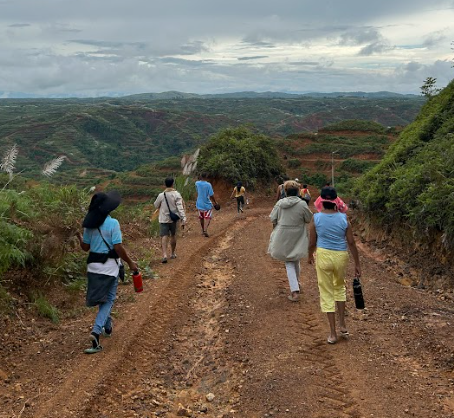
We met Kuya Rey during the International Solidarity Mission in Negros. Once a farmer, he was driven off his land and ended up working as a farmhand in a palm oil plantation in Candoni. The job was precarious, but it was what was available.
One day, an accident at work cost him a finger. For that, management gave him only Php5,000. He had to stop working for a few days to recover, but those days went unpaid under a strict “no work, no pay” policy.
For the Philippine Statistics Authority, Kuya Rey is counted as fully employed. In reality, his so-called employment exists without security, protection, or dignity.
Authorities may describe what happened in Sitio San Isidro as a “voluntary demolition”, pointing to homeowners who already accepted financial assistance. On paper, it looks orderly—consent given, compensation paid.
But that version falls apart the moment we talked to the residents.
Each structure cleared was not just a single household. Behind one owner’s consent were five to seven renting families living under the same roof—families who had no say in the decision, no compensation, and nowhere to go.
The Department of Health (DOH) may report that the doctor-to-patient ratio in the Cordillera Administrative Region meets the standard. On paper, it suggests that there are enough doctors to serve the population.
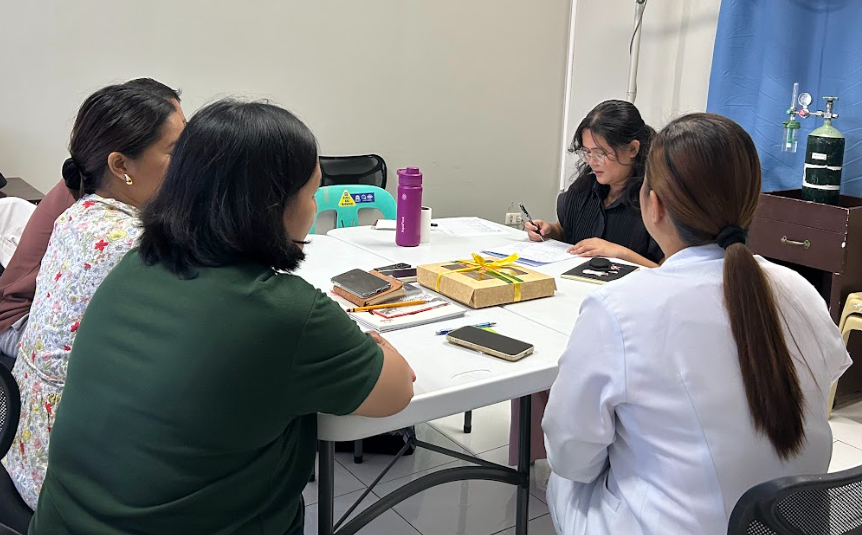
But the picture shifts when you speak with health workers in Baguio City.
They point out that not all doctors can treat all conditions, with each having a specialization and a limited scope of practice.
There is also the issue of the terrain. In Baguio City, hospitals and communities are separated by steep, winding roads. For many residents, especially those in more remote areas, reaching a doctor is far from straightforward.
It may also be said that barangay health centers are in place across Iloilo City—proof on paper that basic healthcare has reached the community level.
But the picture changes when you visit the communities.
Some of the facilities operate without electricity or running water. There is also a limited number of deployed health workers—too few to meet the needs of the communities.
These are details you won’t find in reports and statistics—you only see them when you visit the community, so touch grass, be with the people.
The presence of researchers in the communities should not even be debatable anymore; it should be a logical necessity, recognized as an integral part of understanding reality.
And out there, I have come to grasp that it is the people whom you thought needed you and your glorious awareness-raising who will save you from your own arrogance and ignorance.
Once we recognize this as essential to understanding, we begin to see that what people need are researchers and activists who will tell their stories.