
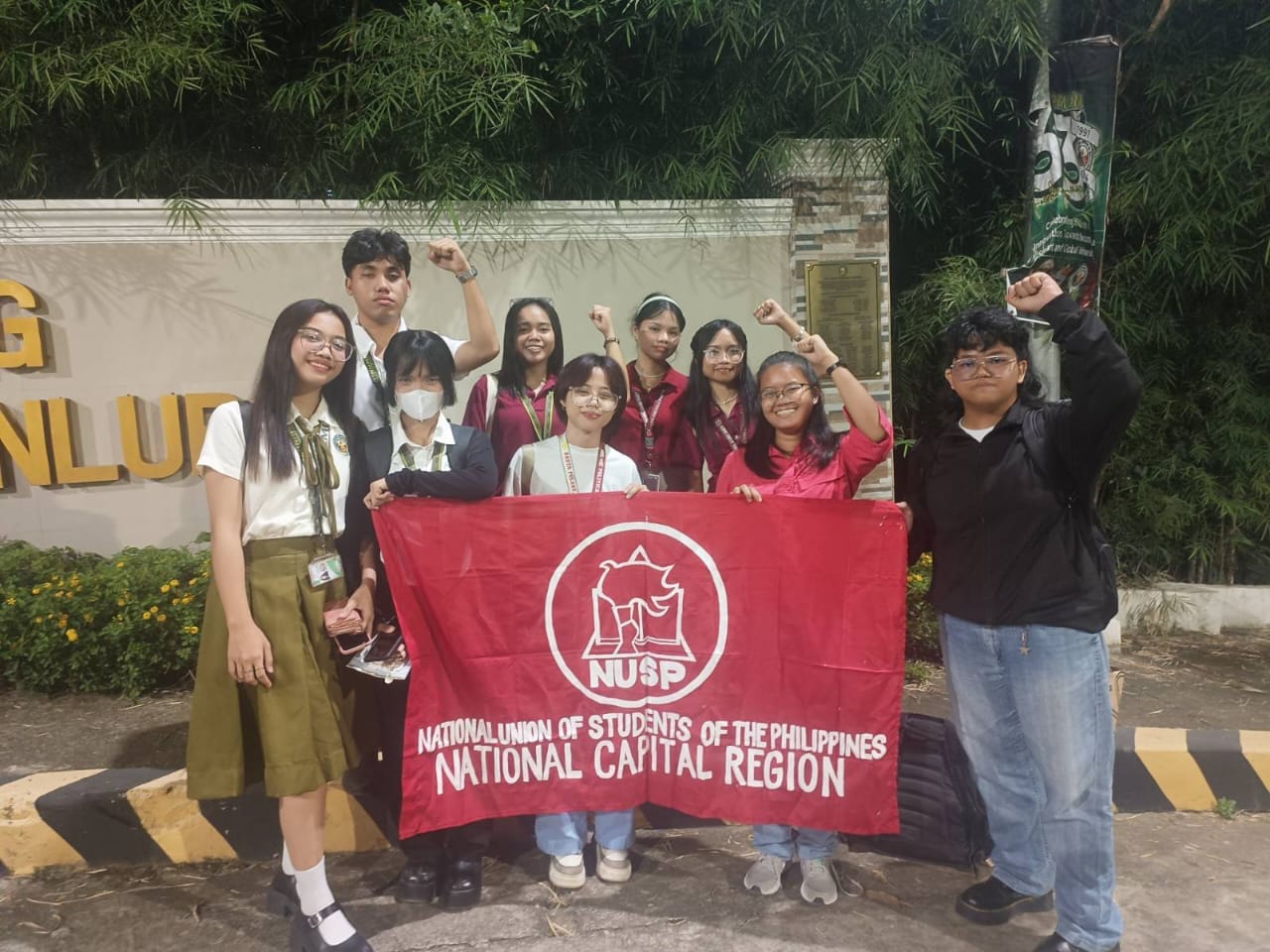
It isn’t the first time student politics stirred up the public’s eye, especially when it concerns the platform of candidates running for respective posts. As Pamantasan ng Lungsod ng Muntinlupa (PLMun) gears up for 2024 student election, it is clear that the student body is standing at a crossroads of awareness and action.
The Warden Publication, PLMun’s official student-run publication, released candidates’ stances on key issues to reveal a figure of where the candidates, and perhaps the student party, stand.
However, rather than promoting an informed and engaging discourse on pressing societal concerns to weigh in on—charter change, the public transport modernization program, divorce, student activism, haircut policies, transgender and gender non-conforming access to male and female restrooms, boycotting pro-Israel brands, approving Sexual Orientation, Gender Identity, Expression, and Sex Characteristics (SOGIESC) protections, and the use of Artificial Intelligence (AI) in academics—it seems that many of the candidates appear unaware and oblivious to the very issues that will shape their futures; worse, still, inappropriate and disparaging comments about them only highlight the superficial level of discourse that continues to dominate student politics vis-à-vis what is truly needed when student elections become to be the talk of the school.
Warden Publication made a great platform to really discuss and reflect on the urgent and significant challenges facing the nation, and more broadly, the world. The fact that many candidates either abstained or appeared unaware of these issues is deeply concerning. It raises the question: is ignorance being mistaken for neutrality?
Social Awareness
In any election, the candidates’ stand on the most pressing and critical issues should reflect their understanding of the community’s needs alongside their vision for progress. However, following the lack, if not absence, of social awareness, elections seemingly devolve only into popularity contests. Case in point: the PLMun student election 2024.
Instead of offering informed perspectives, it seemed apalling that many candidates appeared to be unaware of issues such as charter change and the Public Transport Modernization Program (PTMP)—both of which have since been drawing public criticism as it drastically impact the lives of many Filipinos especially in the face of bureaucracy in the government.
Charter change is not just a question of political re-engineering—it is about governance through power tripping at best and power distribution at worst that put citizens’ rights at stake. If candidates don’t understand how this affects them and their fellow students, how can they meaningfully engage in discussions that could reshape our democratic framework?
Similarly, PTMP aims to modernize the traditional jeepneys for an imported, airconditioned minibuses. This has far-reaching consequences on the livelihoods not only of small-scale jeepney drivers, operators but also their families and commuters-at-large.
Education
Education plays a pivotal role in shaping an engaged and informed citizenry. It is not just about textbooks and exams but about cultivating critical thinking, empathy, and the ability to analyze and respond to social issues. Thus, the lack of awareness only signals a larger failure—our education system’s inability to integrate social issues into everyday learning.
In the 2022 report of the Programme for International Student Assessment (PISA), the Philippines ranked 77th out of 81 countries globally in the student assessment conducted by the Organization for Economic Cooperation and Development (OECD) for 15-year-old learners.
Many educators, solons, and advocates lamented on the quality of education following the dismal performance of Filipino students at the 2022 PISA report.
House Deputy Minority leader and Alliance of Concerned Teachers (ACT Teachers) Partylist Rep. France Castro further noted that the result only showed the programs implemented by the Department of Education as “ineffective” and have “not addressed” the learning crisis.
There are also stance among educators regarding the correlation between the much contested charter change to the uptick of out-of-school youth.
“With no source to pay for tuition fees, the potential outcome is an increase in the number of out-of-school youth. They might lose hope of completing their education because they can no longer afford to study at public state colleges,” said Grade 5 teacher Roel Mape.
This year, the Philippine Statistics Authority (PSA) reported that out of the 42.8 million Filipinos aged five to 24 years, 10.7 million individuals are categorized as out-of-school children and youth.
“If privatization favors foreign investors, where will the impoverished citizens go? Where can impoverished students study if it becomes privatized? Of course, when it’s private, profit is the aim here. This will lead nowhere but to profit-making, that’s what the Marcos Jr. administration want to happen,” the teacher added.
The rapid evolution of technology is another layer of complexity, particularly with AI advancement that is increasingly being embedded in education. As we know that AI is used to provide tools that can enhance learning and research. However, given these advancements come challenges regarding data privacy, academic integrity, and deepening inequality.
Candidates must understand these pressing issues and their responsibilities beyond tackling it. In this rapidly changing world, it is crucial to ensure that crisis in education and society are addressed that students are aware of, rather than promoting a deepening division between the privileged and marginalized.
Integration
The Philippines remains one of the few countries without a divorce law, despite growing clamor be it in public or in legislation, while LGBTQIA+ community continue to face discrimination due to the absence of legal safeguards like SOGIESC especially in enforced policies such as hair and dress code and handling of transgender and gender non-conforming students’ access to restrooms.
Similarly, the controversial stance regarding boycotting of pro-Israel brands is a call for solidarity with the global fight for human rights and justice. Student movements like Youth for Justice and Peace highlighted that the struggles of the Filipino and Palestinian peoples are interconnected, if not intertwined, in their fight for genuine liberation against US imperialism.
All these are not just a matter of policies—it’s a matter of human dignity. Without awareness and education, as some candidates abstain or remain ignorant in confronting such glaring issues and missing the opportunity to take a principled stance indicate a lack of integration between policy, rights, and realities on a significant global issues.
Moving beyond ignorance
Since time immemorial, student activism has been at the forefront of revolutionizing economic, political and cultural landscapes—from the anti-Marcos protests to the continuing and growing resistance of Filipino people among many issues. Students have the ability to catalyze action, challenge the status quo, and demand accountability.
However, the culture of disengagement threatens the very foundation of activism. When running candidates remain unaware to key social issues, not only they fail to represent the students but also the marginalized, underserved, and underreported communities within their constituency.
PLMun student politics particularly in their upcoming student elections should be a wake-up call. In a time of pressing global and national challenges, ignorance or indifference to critical issues like charter change, PTMP, divorce, and SOGIESC protections is unacceptable. These discussions are neither trivial nor taboo but is only necessary to highlight in the discourse of social awareness and education.
Furthermore, with every democratic process comes a respectful discourse. Unfortunately, the recent backlash on some candidates’ photos show how easily disrespect and triviality can hijack meaningful debate. These disparaging remarks do nothing but undermine the candidates. Most importantly, these impede what must be done in the first place—integration, education, and community engagement.
What we need is an educational system that fosters informed and militant activism, ensuring that students are not only aware but also understand the personal and collective stakes of such issues.
Students must demand better from their candidates to ensure that the future leaders of our society are not just figureheads but informed advocates for militant and empowered citizenry. Students must fight for a future that reflects the values of inclusion, social justice, and meaningful change. Without this push, only then we risk allowing ignorance and indifference to dictate the direction of our society.