
Breaching obligations to protect the environment, States should incur legal responsibility and may be required to cease the wrongful conduct, offer guarantees of non-repetition and make full reparation depending on the circumstances, the World Court ruled.
By DOMINIC GUTOMAN
Bulatlat.com
MANILA – For Filipino young environmental defenders, the recent advisory opinion of the International Court of Justice (ICJ) is “historic” as it reinforces the obligations for State-parties to protect the environment and climate system from greenhouse gas emissions from human activities.
“The ICJ ruled that the environment and climate are human rights issues. This means that states have a legal duty to protect both people and the planet,” said Youth Advocates for Climate Action Philippines (YACAP) in a statement. “The ruling affirms what frontline communities have long been saying: the protection of our environment is not optional; rather it is a matter of justice, equity, and survival.”
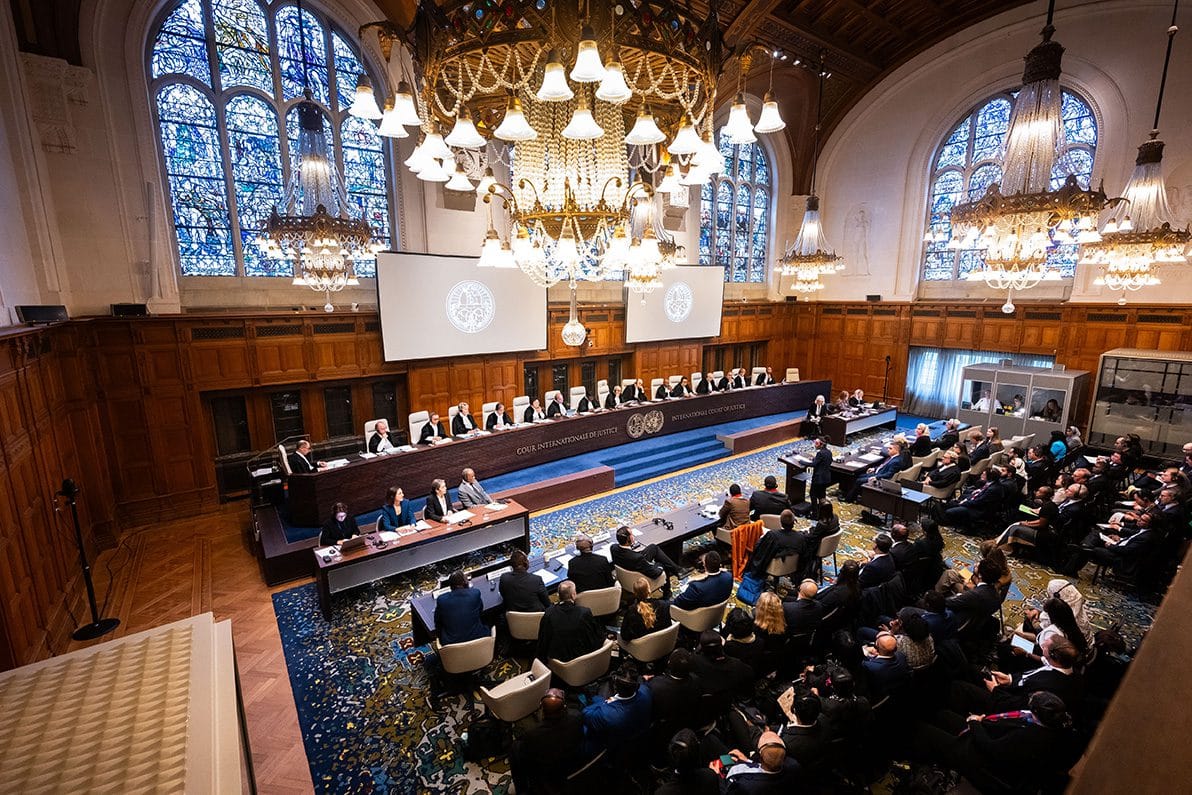
In the ruling, the ICJ, also known as the World Court, said that the climate change treaties set forth binding obligations for State parties to ensure environmental protection. Among these treaties are the United Nations Framework Convention on Climate Change (UNFCC), the Kyoto Protocol, and the Paris Agreement. In the Philippines, all these legally-binding treaties are ratified, therefore, the government is responsible for failure to uphold the much needed environmental protection.
Breaching these obligations, States should incur legal responsibility and may be required to cease the wrongful conduct, offer guarantees of non-repetition and make full reparation depending on the circumstances, the World Court ruled.
“Instead of addressing the root causes of our climate vulnerability, the administration pushes through with unscientific and unconsulted flood control projects, while allowing unregulated mining, reclamation, dredging, and massive land grabbing; all of which worsen the impacts of typhoons and displace entire communities,” said YACAP, underscoring that the Filipino people have been suffering widespread flooding.
On Thursday, July 24, at least 40 cities and municipalities have already declared a state of calamity due to the impacts of tropical cyclones Crising, Dante, and Emong, and the enhanced southwest monsoon (Habagat).
In September 2021, Vanuatu, a Pacific Island nation, declared its intention to request an advisory opinion on climate change from the Court. The move was driven by the assertion of youth-led group Pacific Island Students Fighting Climate Change, which emphasized the urgent need for climate action, especially for vulnerable small island nations.
This youth participation has been notably recognized not only by the government of Vanuatu but also the United Nations (UN), and most importantly, gathering solidarity from fellow youth environmental defenders like YACAP.
“We commend the powerful leadership of Pacific youth and the government of Vanuatu for taking this bold step. Their action reminds us that every decision we make about the environment matters, and that no one—and no country—should be left behind in shaping our climate future,” YACAP noted.
Renee Louise Co, representative of Kabataan Party-list, the first youth sectoral party in the Philippine Congress, said that the advisory opinion gives Filipino coastal communities the legal backing to demand action and accountability. For her, this could be an instrument to legally hold big emitters responsible for rising seas that threaten homes and livelihoods.
“For typhoon?vulnerable areas like Rizal and Eastern Samar, this means survivors and youth leaders now have firmer ground to demand support and reparations. Women and girls, who make up around 80% of those displaced during storms and face heightened risks in evacuation centers, can push for protections rooted in international law,” said Co in a statement.
Ferdinand Marcos Jr. is set to deliver his State of the Nation Address (SONA) on Monday, July 28. Environmental group Greenpeace Philippines staged a creative protest by placing a standee of the president in the flooded areas in Cainta, Rizal: demanding that climate polluters, specifically oil and gas companies, be held accountable for severe flooding across the country by using the landmark advisory opinion of the World Court.
“The ruling of the world’s highest court marks the start of a new era of climate accountability on a global scale, and a turning point in the march for climate justice,” said Greenpeace Senior Campaigner Virginia Benosa-Llorin. “The President would be extremely negligent if he ignores the opportunity this offers for new legal actions against polluters, particularly those whose activities have significantly contributed to the climate crisis.”
As of this writing, the government’s Office of Civil Defense (OCD) reported that damages to infrastructure already reached P4 billion, while the agricultural losses already amounted to P217.5 million. OCD officer-in-charge Assistant Secretary Bernardo Rafaelito Alejandro IV said in a virtual press briefing that nearly 1.9 million Filipino people were affected.
“At Monday’s SONA, we want to see President Marcos, Jr. take up the cudgels for the millions of Filipinos constantly besieged by extreme weather,” said Benosa-Llorin, urging the president to demand climate reparations as a nation and to pursue the enactment of the Climate Accountability (CLIMA) Bill.
The CLIMA Bill is first of its kind in Southeast Asia and similar to the ICJ ruling. It seeks to hold big companies-polluters accountable for climate damages. The bill allows survivors of extreme weather events to seek compensation for damages linked to climate change, with claims funded through a dedicated reparations mechanism. Under the bill, the fund will be sourced from penalties imposed on oil, gas, and other high-emission industries that exceed the carbon limits established. (RVO)