

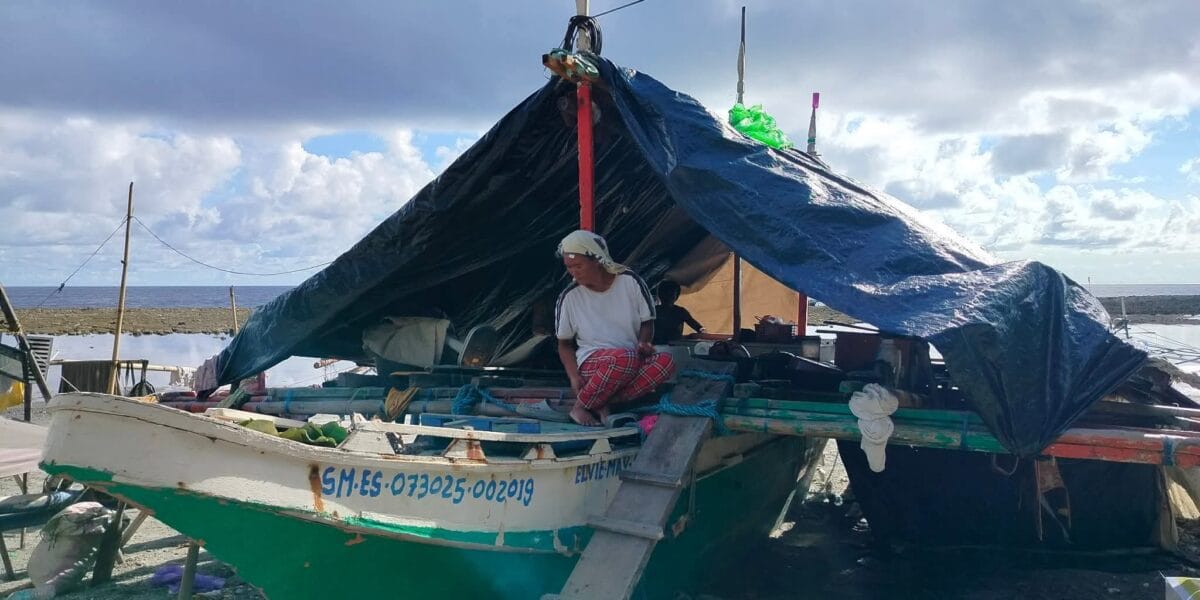
Beyond shelter, livelihoods remain uncertain. In their community, the coast has been elevated, disrupting fishing grounds.
ALBAY — Sixteen days since the magnitude 7.8 earthquake struck, 116 families from Barangay Pangyan in Saranggani province have finally found a safer place to stay. That is, the open grounds in front of Pangyan Central Elementary School. Unlike the cracked hillside where they once lived, this space is not landslide?prone.
“We’ve just settled here on Tuesday (June 23) after staying under makeshift shelters by the shore,” 20-year-old Daniela Lagunsay said in a phone interview.
The June 8 disaster exposed deep cracks on the hill behind their temporary shelters, destroying houses built in “danger zones”. With continued aftershocks and heavy rains, the risk of landslides made staying longer dangerous.
“If we don’t take action, we won’t get the aid we need,” Lagunsay added, crediting a group that helped in assessing post-quake hazards and in coordinating with the local government.
Jassim Guila, executive director of Cavite-based non-profit organization Mutual Aid Disaster Relief – Search and Rescue, confirmed in a virtual interview that they had already alerted the barangay chairman about the looming landslide threat.
Their ground visits allowed them to listen to what the communities actually needed.
In a Facebook post, the group stressed that “safe shelter was among the highest priorities, as many families were living in fishing boats, makeshift structures, roadside areas, and other unsafe locations.” Their hazard assessment and coordination with local authorities paved the way for the relocation, linking the Provincial Government of Sarangani, Department of Social Welfare and Development Region 12, and Pangyan’s barangay leadership.
“The successful relocation of families from Purok Dungon marks an important milestone in reducing disaster risk. However, significant humanitarian needs remain,” the group noted.
Lagunsay explained that more than one family is assigned to each white tent provided by the DSWD. As of yesterday, only ten tents were ready, with more expected to arrive. She said they still need tarpaulin for additional cover.
Beyond shelter, livelihoods remain uncertain. In their community, the coast has been elevated, disrupting fishing grounds. The tuna boat her father relied on was lost to fire during the quake.
“We don’t know how we would start again,” Lagunsay said quietly. “We’re back to zero.” (RTS, RVO)
 Save as PDF