
Church leaders warned Thursday that corruption and political impunity continue to erode public trust in the Philippines, as accountability cases involving top officials expose what they described as the selective application of justice.
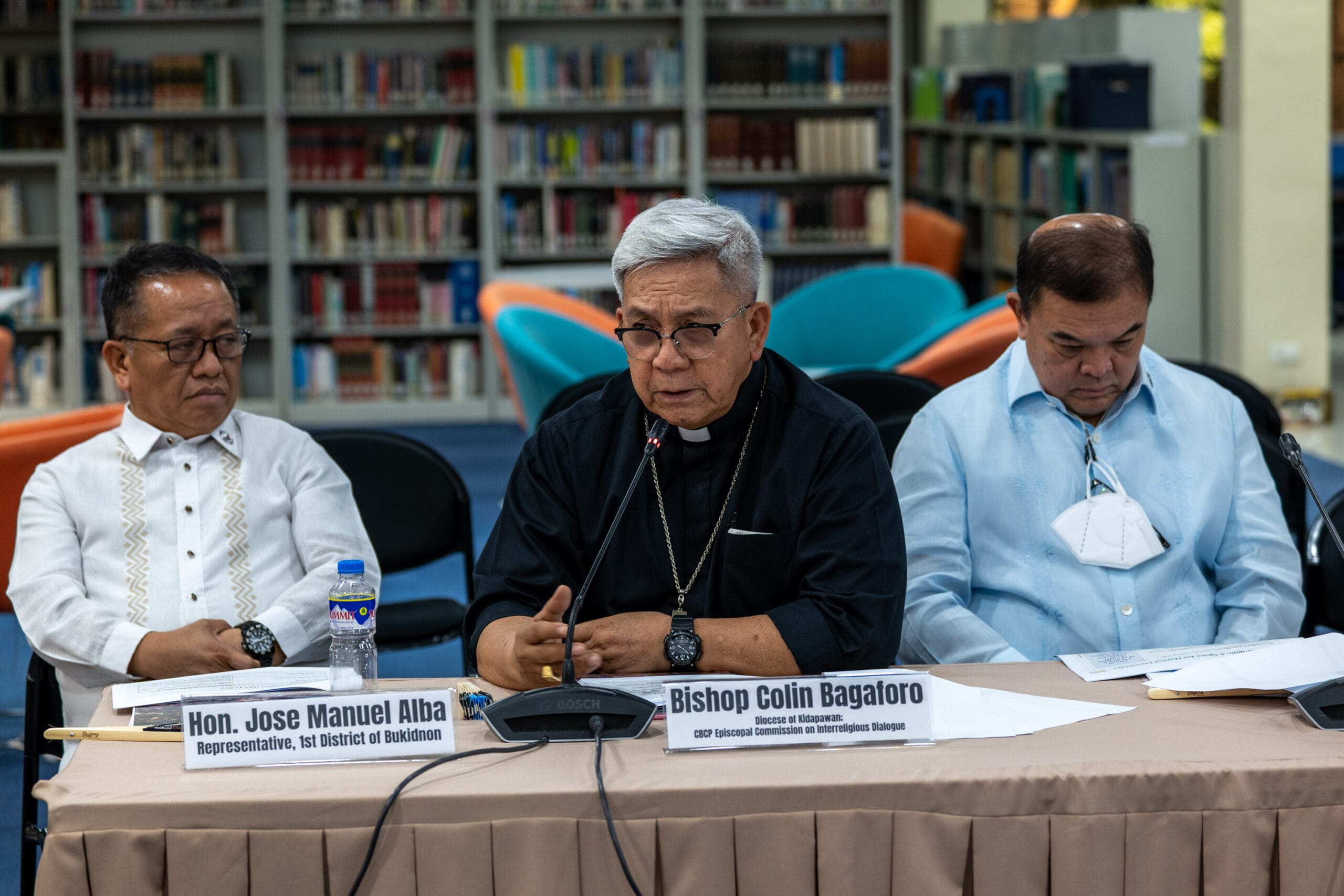
Bishop Colin Bagaforo of Kidapawan, chairperson of the Episcopal Commission on Interreligious Dialogue of the Catholic Bishops’ Conference of the Philippines, said recent controversies involving “several public officials, especially senators and the vice president of the Republic of the Philippines” once again revealed how corruption weakens democratic institutions and deprives Filipinos of honest governance.
“The rule of law loses its meaning when exemptions are made for the powerful, the influential, or the politically connected,” Bagaforo said.
The statement comes amid corruption allegations involving lawmakers and the impeachment proceedings against Vice President Sara Duterte, as public scrutiny intensifies over how accountability mechanisms are applied to influential political figures.
Progressive groups have long called for broader accountability beyond individual officials, arguing that corruption and impunity are deeply embedded in the country’s political system.
Bagong Alyansang Makabayan (Bayan) demanded “full accountability without exception against all those involved, primarily the masterminds of the systematic corruption in government.”
Bayan said both President Ferdinand Marcos Jr. and Vice President Sara Duterte should be held accountable over separate corruption controversies and abuses of power, adding that “Marcos, Duterte, and all those involved in large-scale corruption should be removed from office.”
Bagaforo, convenor of the InterReligious Leaders’ Council for National Transformation, said accountability “must apply to all — regardless of political affiliation, social status, popularity, or position in government.”
He called on institutions such as the Ombudsman and the Sandiganbayan to “relentlessly pursue all cases where there is probable cause and sufficient basis under the law.”
Without naming specific officials, the bishop said there should be “no excuses in the exercise of the law” in cases involving corruption, abuse of authority, negligence of duty, and repeated violations of ethical standards expected from public servants.
“Accountability cannot be selective. Justice cannot depend on political convenience,” he added.
The bishop also pointed to the recently revived Bishops-Legislators’ Forum on Integral Human Development as an attempt to push for ethical leadership and shared responsibility in governance amid deepening public distrust in state institutions.
“At a time when public cynicism toward institutions continues to deepen, initiatives that encourage moral reflection, ethical leadership, and shared responsibility in governance become even more necessary,” Bagaforo said.
He urged Filipinos to continue demanding transparency and integrity in public office and to resist the normalization of corruption in daily political life.
“Citizens must continue to exert moral and democratic pressure against corruption in all its forms — from the highest offices of government down to the smallest transactions that normalize abuse and dishonesty in public life,” he said.
The prelate called to restore “ethics, responsibility, and moral courage in governance.”