
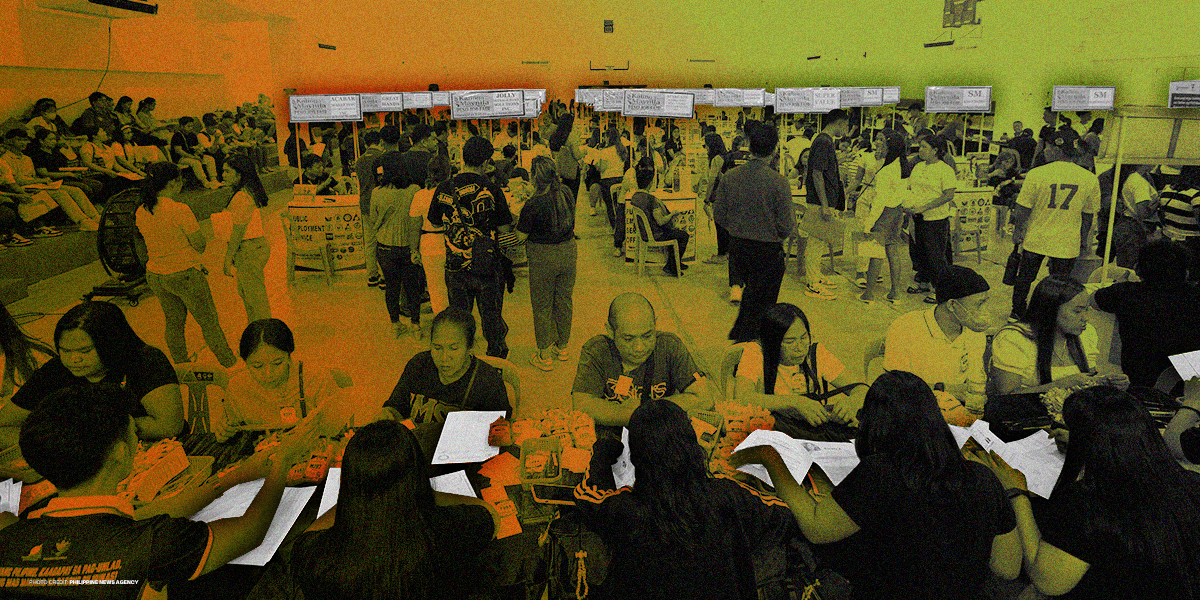
Latest Labor Force Survey (LFS) results for April 2026 show that the Philippine jobs situation has worsened since the onset of the oil price shock, with the economy struggling even more to create decent and sufficient-paying jobs as rising fuel costs push up prices of basic goods and services, research group IBON said.
Comparing figures from before the unprovoked United States (US) attack on Iran in February with the latest April round, total employment declined from 49.4 million to 48.9 million. This means 536,000 fewer Filipinos employed even as families face mounting costs of living.
The sharp rise in underemployment is also alarming. The number of underemployed Filipinos—those who have jobs but are still looking for additional work or better-paying employment—increased by 1.6 million between February and April, reaching 7.4 million or 15.2% of employed workers. This is the worst underemployment since 2022 and reflects how available jobs are increasingly unable to provide adequate incomes for workers and their families.
The worsening quality of employment is also reflected in the number of hours worked. Between February and April, the number of full-time workers fell by 2.7 million, from 34.5 million to 31.8 million. At the same time, part-time workers increased by 1.6 million, from 14.4 million to 16.1 million, while the number of workers classified as “with job, not at work” rose by 560,000. These shifts suggest that millions of workers have lost full-time jobs and are being pushed into more insecure work arrangements.
The number of unemployed Filipinos was reported as declining by 247,000 to 2.4 million, equivalent to an unemployment rate of 4.7 percent. However, IBON stressed that official unemployment figures are underestimated because millions of discouraged or unavailable jobless Filipinos are not counted and instead classified as not in the labor force (NILF). The number of Filipinos classified as NILF greatly increased by more than one million to 30.5 million in April.
IBON executive director Sonny Africa said the government should not dismiss the adverse labor trends as mere “seasonality.” While employment fluctuates across seasons, household spending on food, housing, transport, utilities and other basic needs is continuous. The government should ensure stable and sufficient-paying jobs that allow families to meet their daily expenses year-round.
The urgency is even greater today as inflation remains elevated at 6.8% in May, which is a huge jump from 1.3% in the same period last year. The prices of food, utilities, transport, and other essentials continue to rise and inflation can still accelerate in the coming months. Nominal wages are not able to keep up, with the national average of Php510 falling Php795 short of the Php1,305 family living wage for a family of five.
The April 2026 figures are particularly troubling because employment, unemployment, and underemployment indicators are all worse than in the same period last year.
“The overall labor force picture is of an economy that is still not creating enough work, where available jobs do not provide enough income for families’ basic needs, and where worsening global conditions are further squeezing Filipino families,” Africa said.
The group stressed that social assistance to cope with the oil price shock is still urgently needed on a massive scale. Looking beyond, the country needs a development strategy that generates stable, productive, and adequately paid employment through strengthening domestic agriculture and Filipino industry, rather than relying on low-quality and precarious work that leaves millions of workers struggling to make ends meet.###