

They were two of my peers at the University, only a few years removed from our days haunting the halls of Vinzons, went missing while organizing landless farmers in Hagonoy, Bulacan, exactly twenty years ago today. Many clues, a few witnesses, and countless visits to cemeteries, military camps, and police stations later, we learned a few details: they were abducted by Colonel (later General) Jovito Palparan’s soldiers, taken to secret locations in the area, forced to serve the officers, and tortured. Sherlyn attempted to mislead her captors. She was escorted to her fiance’s mother’s house, where she managed to leave a note. The captors found the note and returned Sherlyn to the camp, where she was beaten senseless and hung upside down by her ankles. God knows how many times she had been raped before, but then they raped both her and Karen. Raymond Manalo, a witness who later escaped, believed both were killed and their bodies burned. But he was not sure.
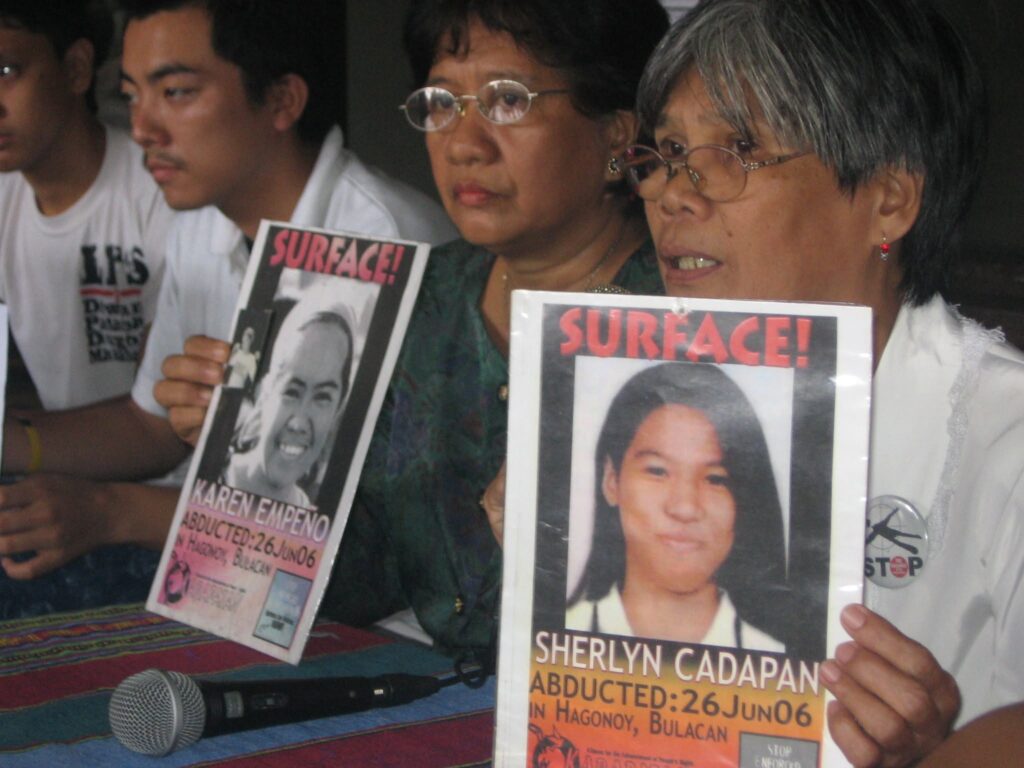
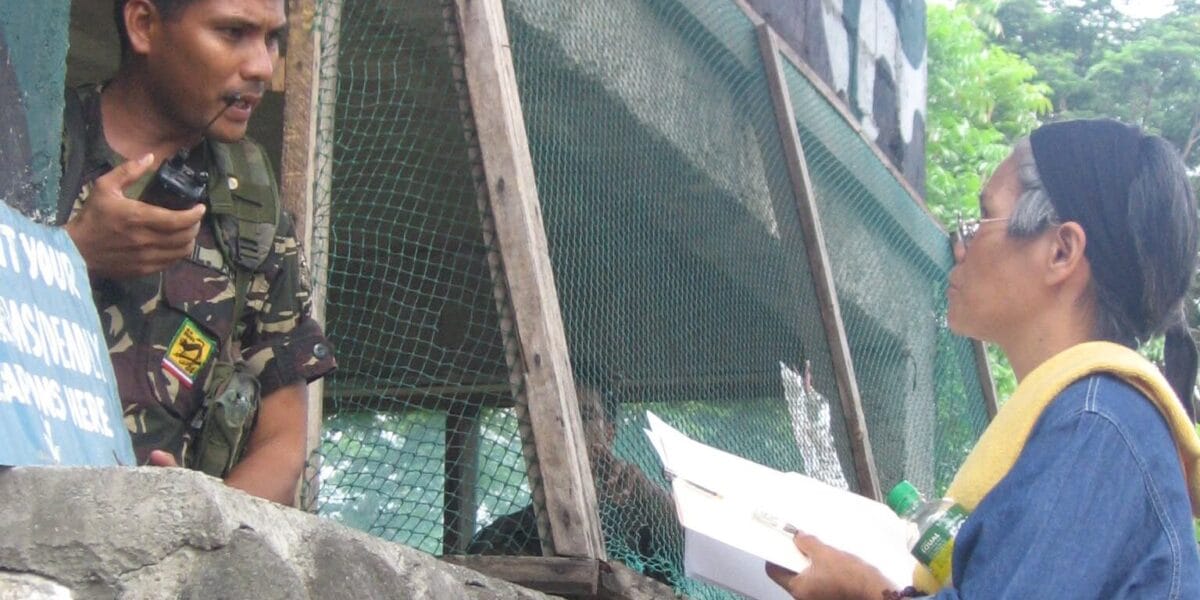
And so the mothers searched. A few times, I came with them: to the 7th Infantry Brigade camp in Balanga City, where Sherlyn and Karen were reportedly seen, where we met then-Major (later Colonel) Segundo Metran, who would neither confirm nor deny their presence and instead debated with us about the supposed perils of activism; to a cemetery in Labrador, Pangasinan, where they dug up a half-burned body from an unmarked grave, only for DNA tests to come back negative — and the body had dentures, which neither Karen nor Sherlyn had; to another cemetery in Cabanatuan, at a site identified by Raymond, where an unidentified body with gunshot wounds was exhumed, only to turn out not to be them. In press conferences. During the first anniversary, in the second floor of AS. In countless protest actions. Every December 10, International Human Rights Day, since 2006.
I remember the hearings at the Commission on Human Rights, where then CHR Chair Leila de Lima compelled Palparan to appear. Surrounded by soldiers, he was defiant in his blanket denials, yet somehow proud that he may have “inspired” others to attack activists because, according to him, they were basically rebels, godless, deserving of their fate. In the middle of Palparan’s arrogant rants, Raymond Manalo, who had until then sat quietly beside Karapatan’s Marie Hilao Enriquez, suddenly stood up and growled from what sounded like the depths of his being: “Tinortyur mo ako! Tinortyur mo ako!” Palparan’s cordon sanitaire quickly closed around the general, but Chair De Lima quieted the hall and firmly declared: “Nobody will touch him! He is Raymond Manalo!” I remember witnessing that commotion and not being able to hold back tears. De Lima declared a recess. I interviewed Palparan outside. He was curt, angry, and dismissive. He said he had to pee. A friend happened to be in the restroom. “He didn’t even wash his hands after peeing,” my friend said.
I remember hearing Palparan’s name in the Batasang Pambansa during President Arroyo’s State of the Nation Address. He was a hero, Arroyo said, urging other officers to follow Palparan’s sterling example. She then assigned him to other “hotspots,” where abuses followed him. She promoted him to general. Nearing his retirement, we got hold of his phone number and called him. I don’t recall exactly what Palparan said. I remember only that he was curt, angry, and dismissive. He would later run for senator and lose. He would run again under a bogus party-list group and win, but would later be disqualified. He would become a fugitive, only to be found hiding like a rat in Santa Mesa. He would stand trial, still curt, angry, and dismissive. And then, one fine day in September 2018, in the middle of the International People’s Tribunal in Belgium, we heard that the local court had found him guilty, and we celebrated.
Cut to this month, the twentieth year since Karen and Sherlyn disappeared, and their mothers discover that Palparan is no longer detained at Bilibid and is probably being coddled by the very soldiers and officers at the Philippine Military Academy who were once told to follow his sterling example. They have done him proud. And here we are still, begging for, demanding justice. Still looking for answers. Still looking for Karen and Sherlyn — and for the many hundreds, thousands, of others.#
