
Bagong Alyansang Makabayan demands immediate removal of excise and value added taxes on oil products
“Inflation explosion” is how progressive groups define the impending effects of the US/Israel war on Iran as massive hikes in prices of petroleum products loom in the next few days.
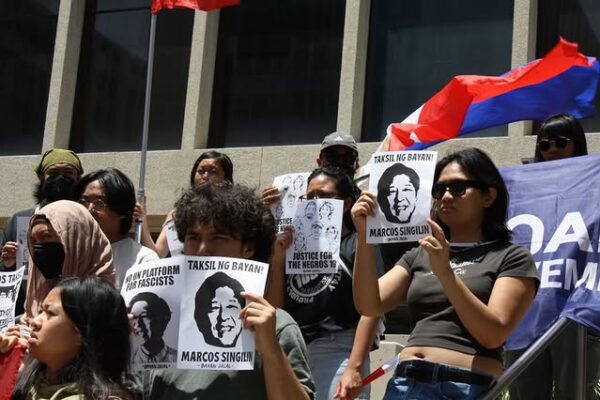
With a projected P15/liter increase in diesel and P7/liter in gasoline prices starting Tuesday, Bagong Alyansang Makabayan (BAYAN) demanded the removal of value added and excise taxes on petroleum products, warning of a runaway inflation should the Ferdinand Marcos Jr. fail to swiftly act against oil price increases.
BAYAN said Marcos should immediately remove the excise tax on oil products, pointing out that the measure has some legal basis in the Tax Reform for Acceleration and Inclusion (TRAIN) Act when imported oil reaches a certain level.
The government imposes an additional 12% value added tax to many products and services, including oil products, the removal of which shall protect the people from the far-reaching effects of the crisis in West Asia.
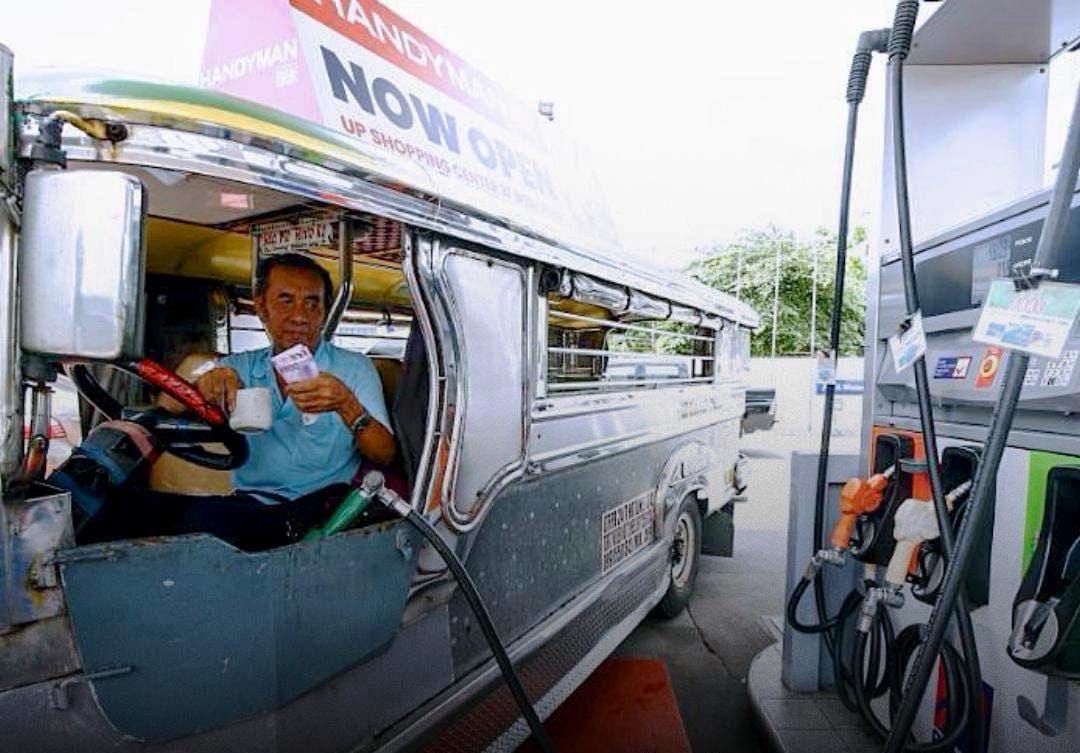
After 10 consecutive weekly price hikes even before US and Israel ignited another war in the world’s biggest energy-exporting region, per-liter prices of gasoline, diesel, and kerosene already rose by ₱6.70, ₱9.40, and ₱7.70, respectively.
In dominant petroleum retailers, pump prices are currently at ₱65.65/liter for gasoline, ₱62.10/liter for diesel and ₱75/liter for kerosene. These get more expensive the farther one is from Manila.
Removing both the excise tax and VAT would lead to an estimated total reduction of approximately ₱16–₱18 per liter for gasoline and ₱12–₱13 per liter for diesel.
BAYAN said the “oil price shocks” are caused by US-Israel aggression that in turn instigates “major uncertainties in the global oil market,” putting tremendous pressure on the import-dependent, oil-intensive economies like the Philippines’.
In the Senate, Francis Escudero on Wednesday called for amendments to both tax measures to allow Marcos to suspend or lower excise and VAT on fuel whenever global prices exceed benchmark assumptions for Dubai crude.
“The law should be amended to automatically give the President that power to suspend or lower excise and VAT rates when prices exceed the estimated range of Dubai crude oil based on the BESF, which guides government budget assumptions,” he said.
Escudero’s proposal came as Marcos himself said he was in talks with lawmakers in both houses of Congress for an authority to reduce taxes should Dubai crude exceed $80 a barrel.
‘Scary prospects’
Mary Zapata, president of the Confederation of Truckers Associations of the Philippines, said a prolonged conflict in the Middle East scares transportation players.
She admitted that they are already thinking of asking their clients for service fee increases inasmuch as the government does not have a fuel subsidy plan for their business.
Zapata warned that several trucking companies may stop operations in case of runaway oil price hikes, which in turn may cause jobs among industry workers.
It may also lead to further inflation in the prices of commodities due to disruptions in supply delivery.
Zapata’s warning was echoed by provincial bus operators who said they have petitioned the transportation authorities for fare increases, along with jeepney and city buses operators.
Alex Yague of the Provincial Bus Operators Association of the Philippines said they are asking for P.50 increase for every kilometer.
The Land Transportation Franchising and Regulatory Board (LTFRB) meanwhile said an across the board fare hike is a possibility, including those offering point-to-point or P2P transport, airport taxis and transport network vehicle services (TNVS) or app-based ride-hailing services.
LTFRB chief Vigor Mendoza there are active petitions for permanent fare increases of P2 for jeepneys and city buses, 50 centavos per kilometer for provincial buses, and an increase of 30 to 40 percent for point-to-point (P2P) services.
The agency also said that the roll out for fuel subsidy for public transport may be implemented by April.
Meanwhile, the Federation of Free Workers have suggested a four-day work week to offset the projected increase in fare hikes, a suggestion immediately opposed by businessmen.
The Employers’ Confederation of the Philippines (ECOP) said such suggestions need careful study as there is no one-size-fits-all solution to the crisis.
ECOP’s Sergio Ortiz Ruiz said small businesses may not be able to cope with such suggestions, leading to loss of jobs.
The country’s most militant labor federation said a pro-labor solution is what Filipino workers need during the crisis, such as a P1,200 minimum daily living wage hike for workers.
Kilusang Mayo Uno said it supports demands for the removal of excise and value-added imposition on oil products. # (Raymund B.Villanueva)