
Part of Matigsalug cultural protocols for undertaking any major activity includes seeking permission and guidance from ancestors and spirits of the land via the Panubad (ritual). Abucayan said that the Panubad and community meetings are held before any activity such as construction takes place. But he acknowledged that the influx of businesses and private resorts is threatening the land and livelihoods of the Matigsalug tribe.
At the heart of these issues of development is a structurally weak FPIC system, according to Villardo. Notably, under the current FPIC process of the National Commission on Indigenous People (NCIP), there is no “explicit mechanism” for saying no. Villardo said: “In the discourse of human rights, the right to say yes includes the right to say no. Just because there is already a proposal or funding for infrastructure projects, it doesn’t mean Indigenous Peoples can’t say no. If the only option is to say yes, then it is no longer a meaningful consultation.”

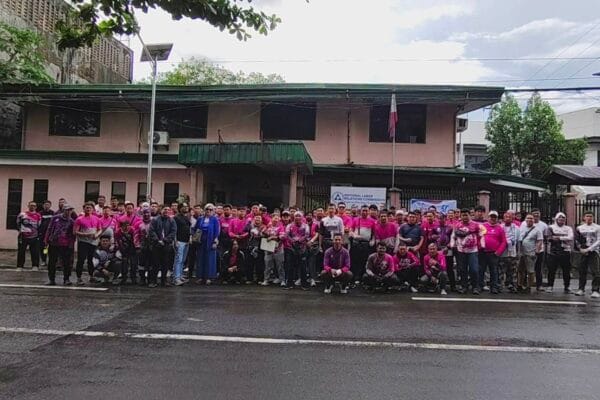
The Greek Hills Resort, owned by non-Matigsalug operators, on the tribe’s ancestral land in Sinuda barangay, Kitaotao. The municipality’s mayor Edwin P. Abucayan says the influx of developments are threatening the area and livelihoods of the Matigsalug tribe (Image: Anonymous)
This highlights deeper concerns. The NCIP does not have a budget to carry out the FPIC process, so investors often shoulder the consultation costs. Once this happens, they expect cooperation. “The moment a company gives money or investment, they begin to expect returns because, in their view, they have already spent something and that should secure the community’s consent,” said Villardo, who believes the NCIP must be in control of the process.
Geroncio Aguio, the NCIP director for Region 11, part of which encompasses the Matigsalug ancestral domain, noted that in some cases, Indigenous Peoples ask for money from proponents of projects, and “some communities sign the deals because they believe they will get a signing bonus”.
A recently launched policy by the Federation of Matigsalug-Manobo Tribal Councils (Femmatrics), the recognised CADT holder for the Matigsalug tribe, looks to formalise recognition and permission for non-Matigsalug settlers to establish businesses on the ancestral domain. It introduces Certificates of Land Occupancy for non-Matigsalug entities who are granted consent to occupy the land for 25 years that can be renewed. The policy, which Abucayan supports, aims to prevent the continued informal and private leasing of communal land, and is already being exercised: in July, the Municipality of Kitaotao and Femmatrics awarded a small number of certificates.
One Matigsalug woman from barangay Sinuda said: “My [hope] is that the entry of businesses into our community will genuinely create employment opportunities for the people of the barangay and that it will not further contribute to the marginalisation of the tribe.”

Lorenzo Gawilan Jr, chair of Femmatrics, and Vice Mayor of the Municipality of Kitaotao, Mary Ann Angit-Ople, sign a Certificate of Land Occupancy in July 2025 granting consent to a non-Matigsalug entity to occupy the land for 25 years (Image: Municipality of Kitaotao)
A way forward
Local and regional leaders point to potential approaches to tackling these issues.
Abucayan says that the leadership of the ancestral domain should “open up” about the problem of continued land sales. It should then be lobbied by Femmatrics’ Council of Elders – political and spiritual leaders responsible for maintaining customary laws and resolving conflicts – “as soon as possible to the concerned departments in the municipality”, he said.
He also emphasises the role of young Matigsalug people, saying that more of them should develop an interest in the issue and in taking ownership of the process. The Kitaotao mayor suggests this can be done by looking at the problem of land sales through the lens of the potential loss of culture that will result. “It is necessary that our Council of Elders continuously share and pass on the history of Matigsalug culture, especially to the youth,” he said.
Villardo shares similar concerns, saying that broadly, young Indigenous people are losing interest in participating in tribal decision making. “There are communities where the youth prefer the city and no longer return to the community. We need to do something about that [exodus] as it is also weakening the FPIC process” due to a lack of leadership continuity and involvement of the younger generation, he said.

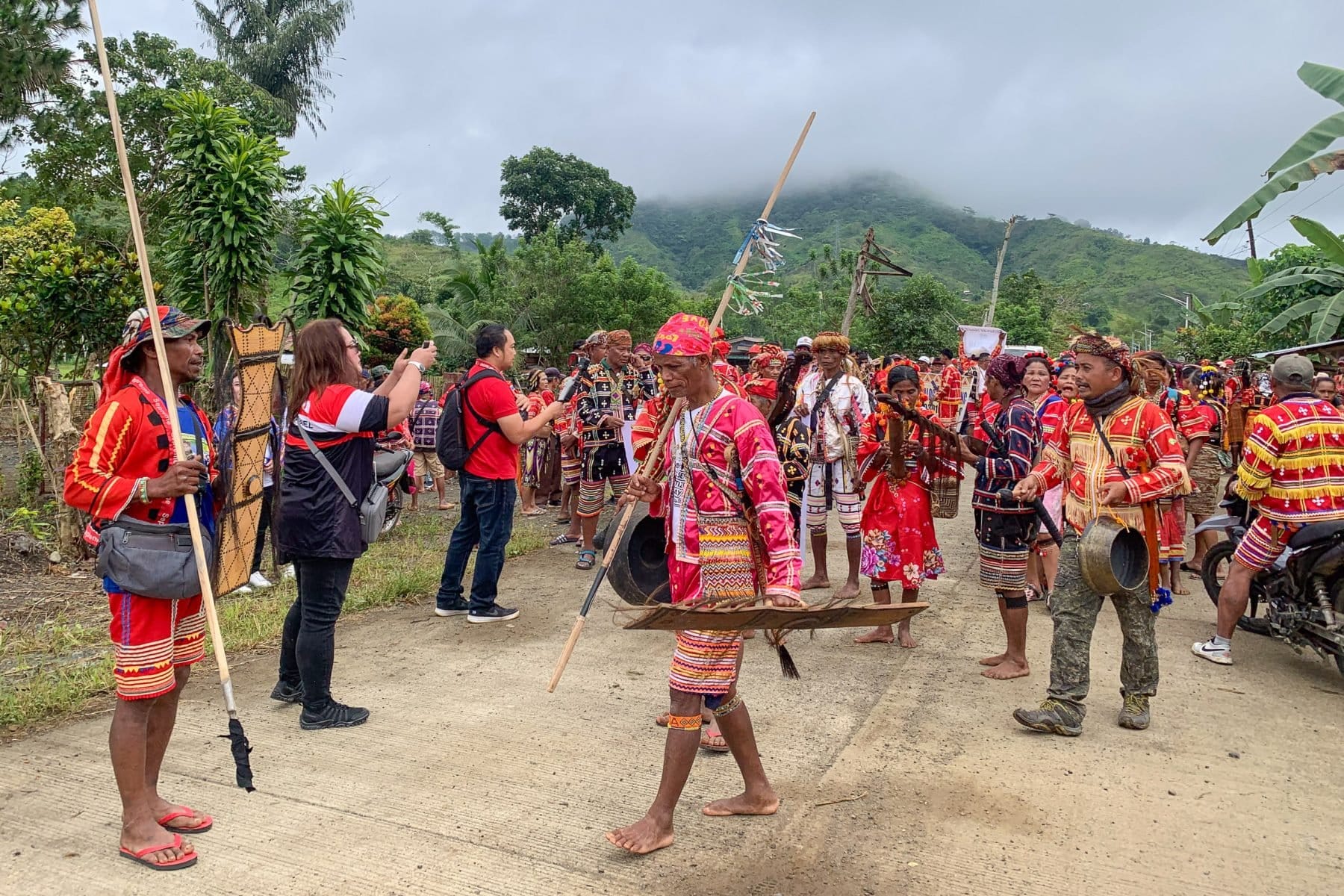
A community meeting after a Panubad (ritual) in Sinuda’s cultural centre. Villardo advocates for a rights-based approach to development, strengthening the role of representatives selected by Indigenous communities to serve as a link between them and the government (Image: Judy Ann Egay / Dialogue Earth)
Villardo advocates for a rights-based approach to development. This involves empowering community leaders and insulating them from political interference, and includes strengthening the role of Indigenous Peoples Mandatory Representatives (IPMRs). These representatives are selected by ICCs/IPs to represent them and act as a bridge between the community and local government, but their role, he says, is currently too often politicized.
“Do not forget that you are there to represent the interests of the community,” he said in a message directed to the IPMRs. “You were placed in that position by the Council of Elders so you could listen to discussions, participate in the discourse, and bring the information back to the community – not to act as a yes-man to the political leaders.”
NCIP Region 11 director Aguio wants to see the establishment of an Indigenous Peoples’ wealth management plan, alongside improved financial literacy programmes, particularly for women and young people. He believes such initiatives would restore dignity and integrity to Indigenous governance by enabling communities to strategically manage their resources, rather than being a passive recipient of external development.
In response to the challenges and concerns regarding the FPIC process, the NCIP’s Ancestral Domains Central Office in Manila told Dialogue Earth in a statement that it is committed to ensuring Indigenous Peoples are properly consulted before any projects affect their land and way of life. However, it said that some of these challenges come from “bigger issues” in the government. “For example, there are laws and policies that treat land and natural resources [as] belonging to the state, not to the Indigenous Peoples, even if they have lived there for generations.”
“Our ancestral land is deeply intertwined with our lives. It must be protected and preserved not only in honour of our ancestors, but also for the generations to come.” —
A Matigsalug woman from Sinuda barangay in Kitaotao
It also highlighted recent legislative developments that impact its operations, such as a proposed law to take away its powers and distribute them elsewhere. “This is because some people think the NCIP’s current powers make it harder for businesses and investors to start projects,” it said.
Another new law, which is now in force, has moved the FPIC process online for energy projects, and the NCIP said there are plans to apply this to mining projects. While these changes aim to streamline procedures for investors, the NCIP said they present challenges when it comes to maintaining thorough and culturally sensitive consultations.
“Even with all of these changes, we are doing our best to explain and share the special situation of Indigenous Peoples,” the NCIP added. “Their rights to their lands are different and cannot be treated the same as regular land ownership. That’s why the FPIC process must be understood and respected in a special way.”
The Matigsalug woman from Sinuda barangay said: “It is important for those in leadership to remember that, despite the demands of ‘development’, they should not come with environmental and cultural cost.
“Our ancestral land is deeply intertwined with our lives. It must be protected and preserved not only in honour of our ancestors, but also for the generations to come.” #
= = = = = = =
The author is an advocate for Indigenous rights protection and a member of the Matigsalug tribe of Bukidnon in the Philippines. She is working on projects to improve Indigenous farmer participation in decision making within her community.
Kodao’s republication of this article is the first of a content-sharing agreement with Dialogue Earth.