


Allowing commercial fishing within municipal waters poses additional danger to small fisherfolk and their livelihood, the Roman Catholic Diocese of Bacolod warned.
In a pastoral statement issued by Bishop Patricio Buzon, SDB over the weekend, the Diocese said last year’s decision by the First Division of the Supreme Court (SC) strikes at the heart of the already marginalized fishing communities.
“This would jeopardize local livelihoods and risk irreversible harm to marine ecosystems, violating both environmental sustainability and social justice,” Bishop Buzon said.
Highly-contested ruling
The High Court division upheld last Aug. 19 a Malabon Regional Trial Court (RTC) decision declaring the Fisheries Code’s preferential access provisions unconstitutional.
The Code prohibits commercial fishing within 15 kilometers of coastal waters, only allowing small fishing activities in the area.
The Malabon RTC ruling however invalidated Sec. 16 of the Code on the jurisdiction of the municipal government to regulate commercial fishing in waters of up to 15 km. from the shoreline.
The RTC also struck down the outright ban on commercial fishing in waters with a depth of less than seven fathoms.
Multi-sectoral opposition
The decision and SC’s validation earned immediate condemnation from Pamalakaya, the country’s biggest fisherfolk association.
The group pointed out that less that 10% of Philippine municipal waters are less than 10 fathoms and the Court’s decision would open 90 percent of the country’s coastal waters to overexploitation.
Pamalakaya said commercial fishing techniques such trawling, purse seines, and Danish seines may then be used in municipal waters that damage coral reefs on the seafloor.
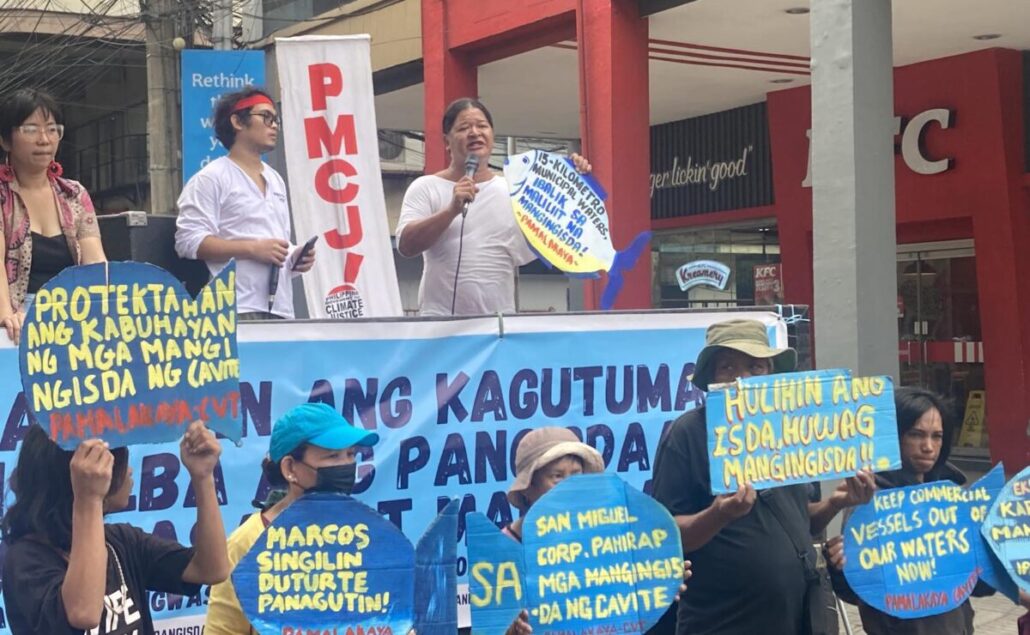
Local government officials of coastal provinces and towns also expressed outrage at the decision, compelling the Department of Agriculture to appeal the ruling.
Romblon Mayor Gerald Montoya told a fisherfolk summit last March he will never honor the ruling if it becomes final and executory.
Bohol governor Aris Aumentado meanwhile emphasized local government’s jurisdiction over town waters, indicating they will contest the ruling’s implementation in their respective areas.
In its motion for reconsideration filed earlier this year, the DA urged the SC to reconsider its ruling to ensure the sustainability of the country’s fisheries and coastal communities.
Anti-poor
In its pastoral letter, the Bacolod diocese cited the 45,000 small-scale fishers across 25 coastal cities and municipalities in its jurisdiction, saying the decision is anti-poor.
“[T]hey (small fisherfolk) are often excluded from decision-making processes that directly affect their survival,” Bishop Buzon said.
The Roman Church’s “preferential option for the poor” compels Catholics to defend the voices of the most marginalized, the prelate said, adding small-scale fisherfolk are workers of the sea who play a vital role in food security and sustainable development.
“For these people, fishing is not simply a livelihood but their only means of survival. Thus, to endanger their access to the seas is to endanger their lives and future,” the bishop said.
“If left unchallenged, this court decision would allow large commercial fishing vessels to encroach on the waters reserved for municipal fishers under Philippine law,” Buzon added.
Allowing commercial fishing in municipal waters would risk irreversible harm to marine ecosystems, violating both environmental sustainability and social justice, the pastoral statement adds.
“Therefore, we appeal to our lawmakers, local government officials, and the judiciary to reexamine this policy and engage directly with the communities most affected,” it reads.
Bishop Buzon asked parishes in his jurisdiction to organize campaigns and conduct information drives on the impacts of commercial fishing in municipal waters. # (Raymund B. Villanueva)