
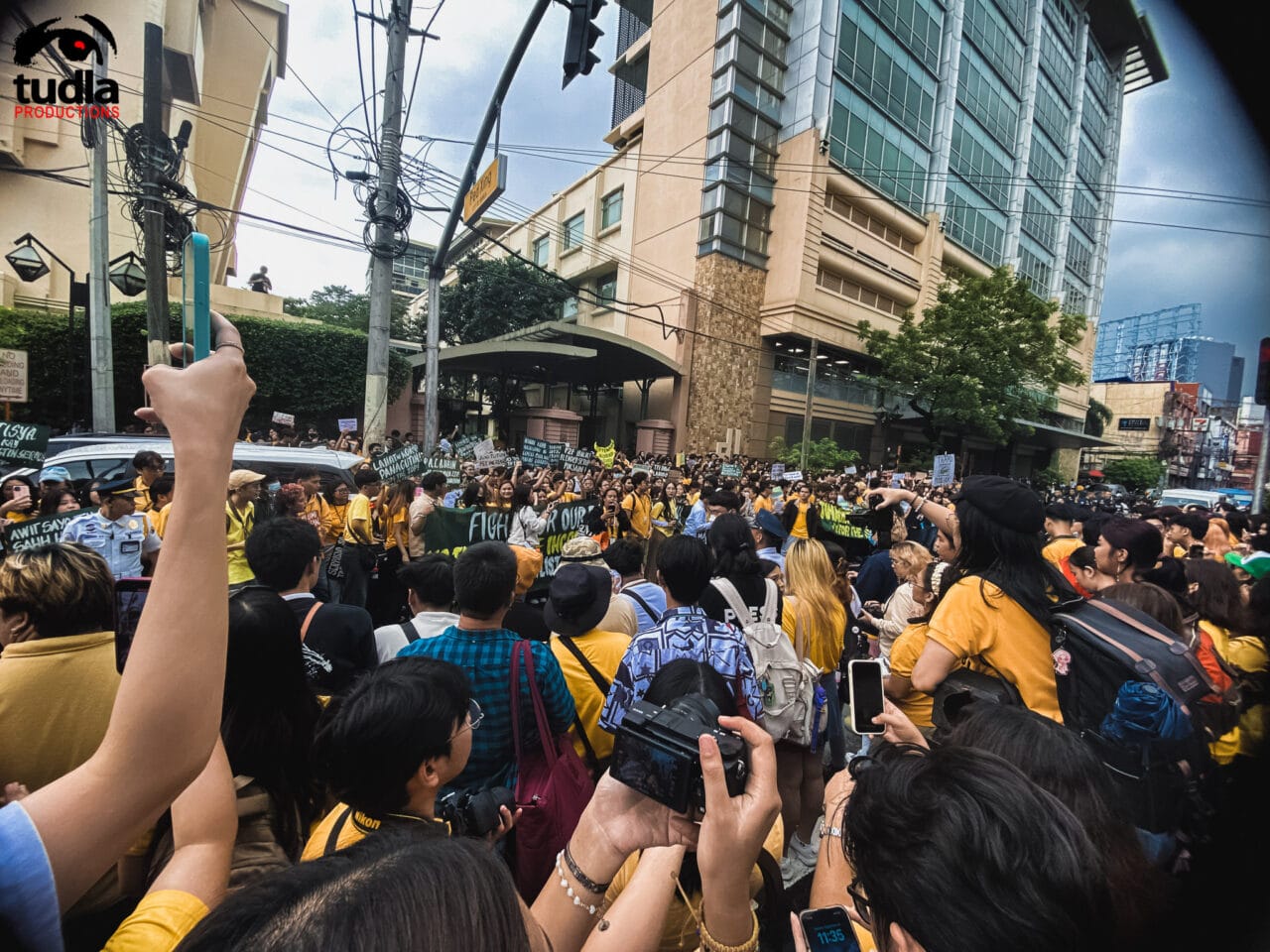
On September 29, on a usually quiet, overcast Monday morning, more than a thousand students from Far Eastern University (FEU) walked out of their classes for the first time in a long time.
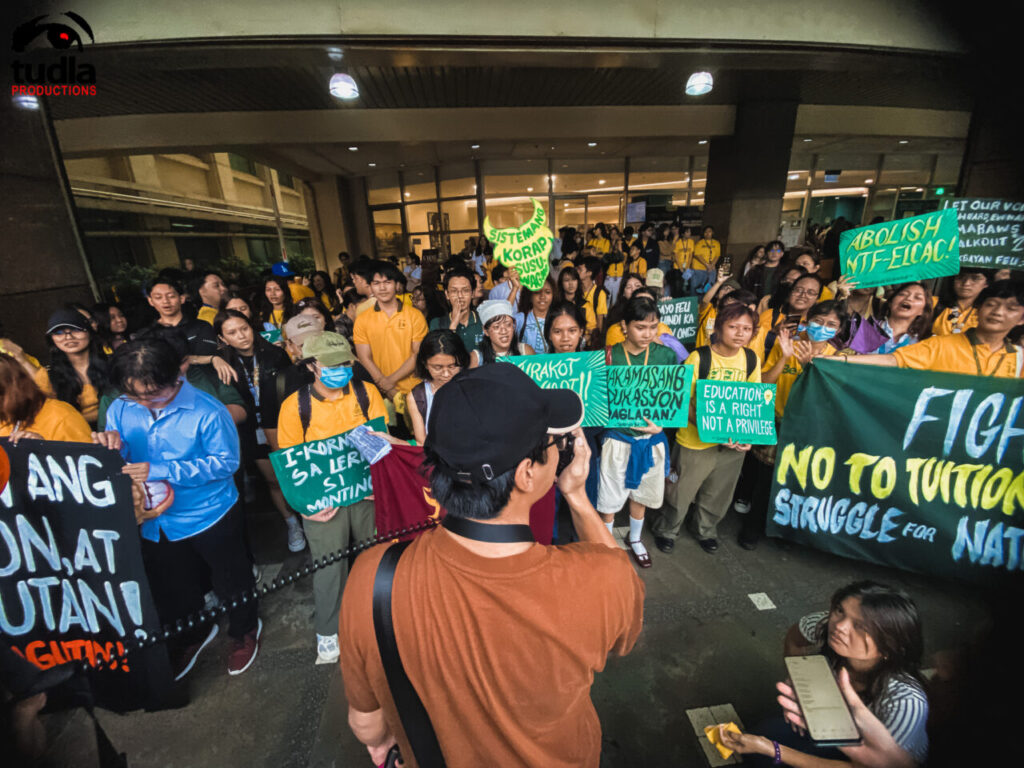
Raezon Gonzales, the FEU Central Student Organization (FEUCSO) President, stated that this has been the first time in 30 years that a walkout has been staged by students as a sign of protest against corruption issues and to drumbeat their local student campaigns.
“The last time FEU students walked out was during the 90s. We’ve had the chance to look back on our history. 3000 students walked out at that time. But this is the first time that our generation attempted to stage this walkout,” he shared.
From local to national
“We walked out not only because we are one in condemning the current corruption in the government, the ghost flood control projects, and the police brutality that is happening in our country. We also walked out because we are taking a stand against the local issues we are facing within the campus: the implementation of the hybrid modality and the increase of school fees within our own university,” Gonzales stated in an interview with Manila Today.
While walkouts from other universities were usually launched on Fridays like an unspoken norm, curiously, Tamaraws called for a walkout on a Monday. The reason behind, Gonzales explained, is tied to the local campaign that they have been contending against: the implementation of a hybrid learning setup as per CHED Memorandum No. 4 series of 2023.
The memorandum allows Higher Educational Institutions (HEIs) to conduct 50% face-to-face classes and 50% online classes despite easing out of the pandemic. This shift in learning modality, implemented only this semester, burdened the students in terms of learning, Gonzales said.
The student leader further added that the implementation of the hybrid set-up limits their face-to-face classes on Mondays to Wednesdays, as Thursdays to Saturdays are allotted for online classes. Online classes were harder for the students as concerns over internet connectivity affected the quality of learning.
There seems to be no other way but to open the week with a resounding protest, as they hoped that it would push the administration to heed their calls regarding the blended learning set-up.
“We are also becoming critical. We are aware of our power as students. We are frustrated, and this fuels us to walk out. All of us are affected by what is happening inside and outside the university. We are all affected by this system,” Gonzales said.
Kyte Percia, the president of the Institute of Arts and Sciences Student Council (IAS SC) shared that the hybrid set-up posed challenges to students, especially with the suspension of classes brought about by flooding and torrential rains.
“The school couldn’t adapt to these suspensions. Lately, suspensions have fallen on our intended dates of face-to-face classes. We’re only attending online classes because of this, resulting in many classes that have had a hard time adjusting. Lab-heavy courses can’t use the facilities [because of this set-up],” Percia said.
Percia noted that with the recent corruption controversy within the national government and the costly education and challenges that they suffer from in FEU, it is only a matter of time before the student body begins to voice out their dissent.
“This is not just us airing out our personal problems; this is the voice of the students who want to express that they are experiencing hardships under this current set-up,” he said.
Expect more walkouts
When asked why universities and students are staging more walkouts, Rebecca Baliton of the National Union of Students of the Philippines – NCR (NUSP-NCR), only said that these are products of cumulative dissatisfaction of students with what is happening inside and outside their schools.
“The students are feeling the quality of their education decline while experiencing repressive policies within the school. Then they had to adjust to suspensions brought about by floods because of rampant corruption by the government officials. We see how the corruption disrupted our daily lives. From minor inconveniences like suspension and feeling like we are not getting the quality education that we paid for, to bearing the brunt of rising prices, and finally witnessing how lavish wealth is flaunted by corrupt government contractors, officials, and their nepo babies. It’s no surprise that students are fed up with the system. Enough to make them want to act and mobilize on their own,” Baliton stated.
Baliton emphasized the importance of these types of protests, stating that petitions and negotiations can only go so far, and militant actions like walkouts make student campaigns harder to ignore by school administrations and even the government itself.
“Collective actions like these can push the powers-that-be into acting on our demands. Continuing to arouse, organize, and mobilize would later on yield positive results in manifesting good governance and crafting a much better alternative to this current system,” she added.
Gonzales, for his part, highlighted the importance of resistance.
“I do not agree with what others say: that students should just study in their classroom. We are taught to be critical. This is why we’re here right now in the streets. We have done everything in our power to forward our campaigns to the administration, but these diplomatic actions were futile. When diplomacy does not work anymore, we are left with no choice but to take this fight to the streets,” he said.
The student leader added that certain freedoms that the students enjoy right now are mere fruits reaped by those who came before them, by student movements who first resisted against the repression and corruption within and outside their universities.
“This will not be the last time that FEU will stage a walkout. This is the first of many,” Gonzales said, reiterating that until their grievances are heard, the Tamaraws are not afraid to reclaim the streets once more.