
Drug-related killings continue in the Philippines even as a seemingly soft-spoken president has replaced the one who is facing accusations at the International Criminal Court (ICC) of ordering the deaths of tens of thousands of suspected narcotic dependents.
A small team of academics and researchers at the University of the Philippines (UP) have kept the count going since the end of the Rodrigo Duterte presidency and the start of the Ferdinand Marcos Jr. administration in July 2022.
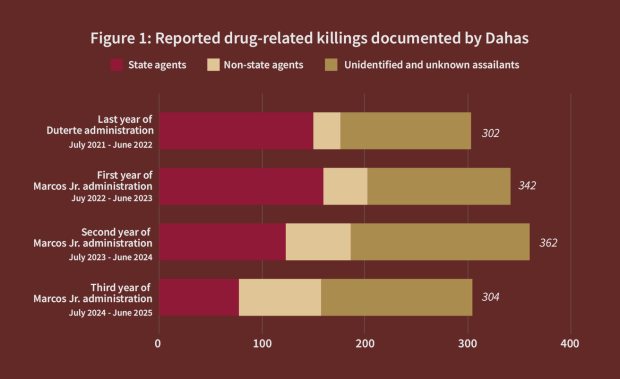
The Dahas Project of the UP Third World Studies Center has reported 1,008 drug-related killings in the first three years of the Marcos Jr. government.
In its latest report last year, Dahas (Filipino for “violence”) said 362 were killed in the second year of the Marcos Jr. administration, a slight uptick from the 342 victims reported in its first year and a steady increase from the 302 fatalities in the Duterte administration’s last year.
“While reported killings decreased to 304 this year (2024-2025), the numbers still indicate that the violence persists with more or less the same ferocity,” Dahas said.
Marcos Jr.’s government promised a “bloodless” anti-drug campaign, with the president himself repeatedly speaking of taking a “slightly different” approach to focus on rehabilitation and pursuing high-profile targets.
His promises were seen as a way to distance and differentiate himself from Duterte who openly bragged about ordering the killings ICC prosecutors have pointed out at the confirmation of charges sessions last Monday and Tuesday at The Hague.
Marcos Jr., however, appears to backtrack on his pronouncements, directing the Philippine National Police (PNP) to return to operations targeting small-time drug peddlers.
The general his government tasked to arrest Duterte in behalf of the ICC, General Nicolas Torre III, even remarked as soon as he was appointed by Marcos to be chief of the PNP to multiply the arrests as a performance metric.
The Commission on Human Rights warned that “historically, such frameworks have risked incentivizing shortcuts, abusive, or arbitrary practices, which undermine human rights and erode public trust in law enforcement.”
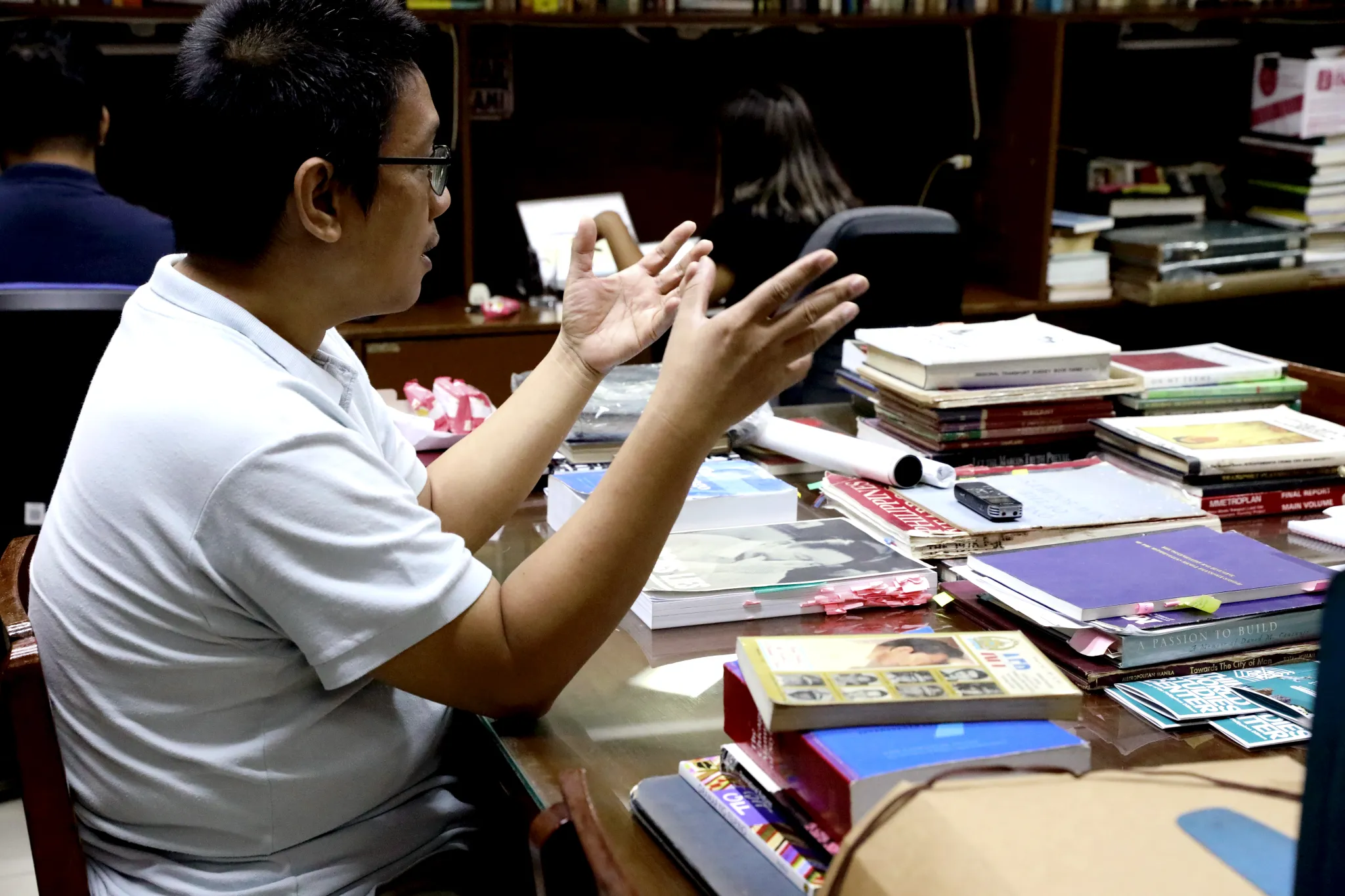
UP researcher Joel Ariate Jr. sees no significant change in Marcos Jr.’s approach to illegal drugs compared to Duterte.
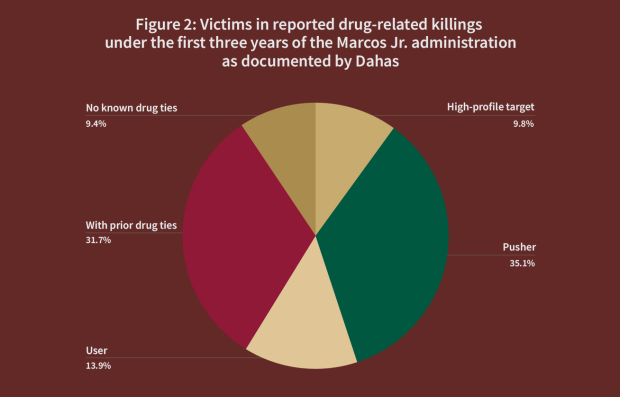
He said that 35.12% of the drug-related killings under Marcos Jr. were small-time drug pushers, just like during Duterte’s time.
State agents also still hold responsibility for a significant portion of the bloodshed: 360 or 36% were killed in law enforcement operations.
“One indicator that we are looking into is how many were killed by the PNP and government’s PDEA (Philippine Drug Enforcement Agency), and we see them being responsible from 35 to 40% of the killings,” Ariate Jr. said.
“There had been no change (from Duterte to Marcos Jr.),” he concluded. # (Raymund B. Villanueva)