
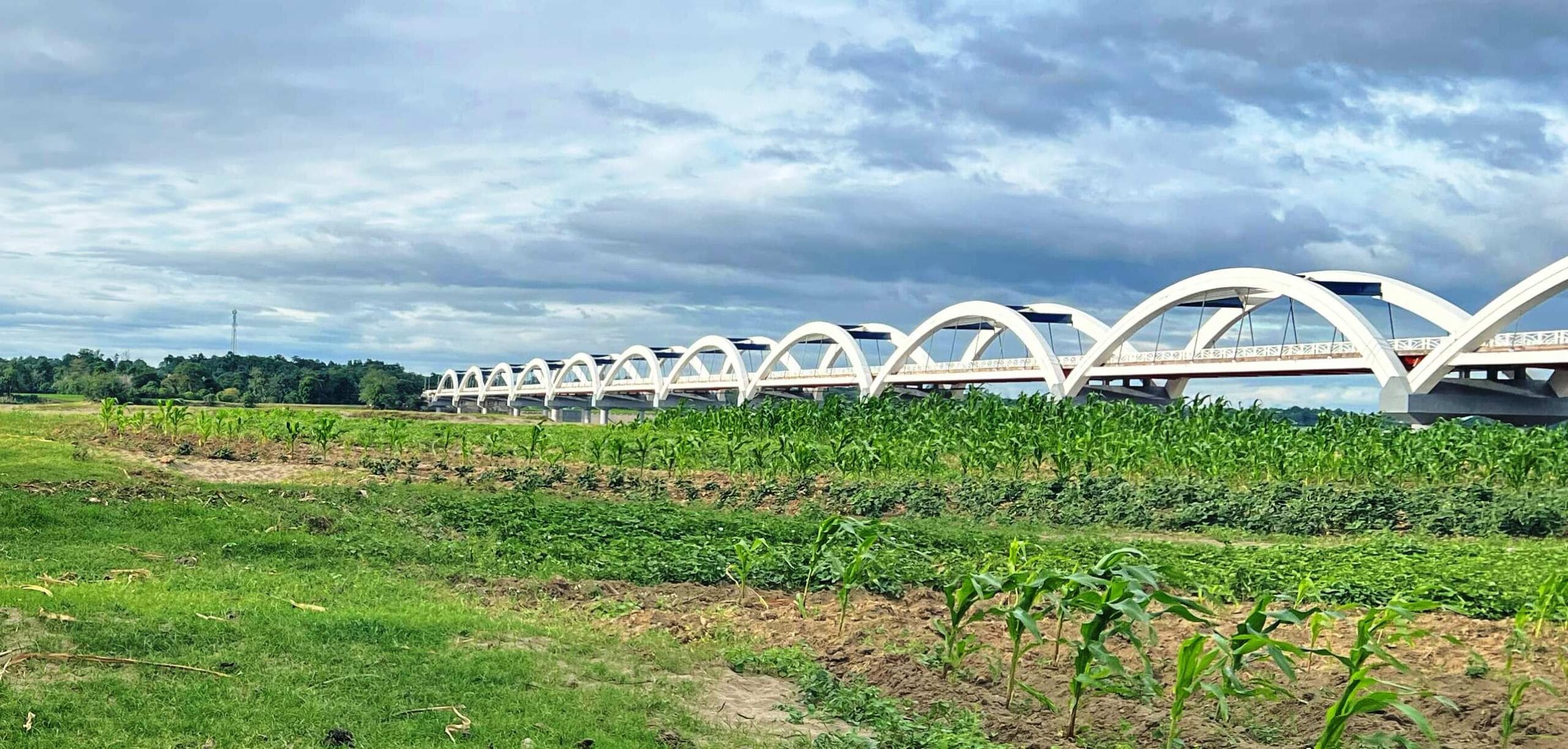
ACT Teachers and Gabriela Women’s partylists called for a thorough probe on the collapse of the Cabagan-Sta. Maria Bridge in Isabela province, suspecting corruption and substandard materials were used in the brand-new bridge’s construction.
Following the collapse of a portion of the yet-to-be inaugurated bridge last Thursday, the Makabayan parties said a comprehensive investigation must be conducted on the incident that injured 8 victims.
“It is alarming that a P1.22 billion bridge that was just retrofitted on February 1 has already collapsed. This is not a simple accident or mere negligence. We need to examine the possibility of corruption and substandard materials,” ACT Rep. France Castro said.
The bridge took 11 years to complete, including retrofitting work just last month.
Former ACT Teachers Rep. Antonio Tinio pointed out that while authorities are currently focusing on the flagman who allowed the overloaded truck to pass, the investigation must extend to the quality of materials used and possible corruption in the procurement and construction processes.
“While the police are pursuing the flagman, the quality of materials used and possible corruption in procurement and construction should also be investigated,” he said.
ACT called for a congressional inquiry to determine accountability at all levels, from the contractor RD Interior Jr. Construction to the officials of the Department of Public Works and Highways (DPWH) who approved and supervised the project.
“If corruption and substandard materials are proven, they should be charged with plunder and economic sabotage,” Castro said.
Tinio also emphasized that the incident reflects a broader pattern of infrastructure failures due to corruption in government projects.
“This is not an isolated case. We’ve seen multiple instances of newly built or rehabilitated infrastructure failing prematurely. This points to a systemic problem of corruption and lack of proper oversight in our infrastructure projects,” Tinio stated.
Gabriela echoed ACT’s sentiments, condemning “rampant corruption in government infrastructure projects,” citing the alleged 30% “Standard Operating Procedure” (SOP) or automatic kickbacks to politicians.
“This systemic ‘concrete corruption’ in infrastructure projects is not just stealing from government coffers—it is directly stealing from the Filipino people, especially the poor who need these public services the most,” Gabriela Partylist first nominee Sarah Elago said.
“When 30% of project funds automatically go to politicians’ pockets, what’s left for quality materials? What’s left for proper implementation?” she asked.
Elago pointed out that concrete corruption in infrastructure projects manifests in dangerous and even deadly consequences, as seen in collapsed bridges, roads that quickly deteriorate, and other substandard public facilities.
Meanwhile, Malacanang Palace announced forthcoming investigations into the incident, promising accountability.
“If there is any trace of corruption in what happened from 2014 until now, those responsible must be held accountable,” Palace spokesperson Claire Castro said.
ACT welcomed Malacañang’s statement but stressed that the investigation must be independent and transparent to ensure that all responsible parties are held accountable, not just low-level personnel.
“If the administration is truly serious that ‘heads will roll,’ not only should the small people be held accountable but also high officials who were negligent or benefited from possible anomalies,” Castro said.
“We need to dismantle this entrenched system of kickbacks and corruption. The Filipino people, especially the poor, cannot afford to keep paying the price of corruption with their safety, their access to services, and sometimes even with their lives,” Elago added.
The lawmakers also called for immediate safety inspections of all similar infrastructure projects, especially those handled by the same contractor, to prevent further incidents and ensure public safety. # (Raymund B. Villanueva)