

By DOMINIC GUTOMAN
Bulatlat.com
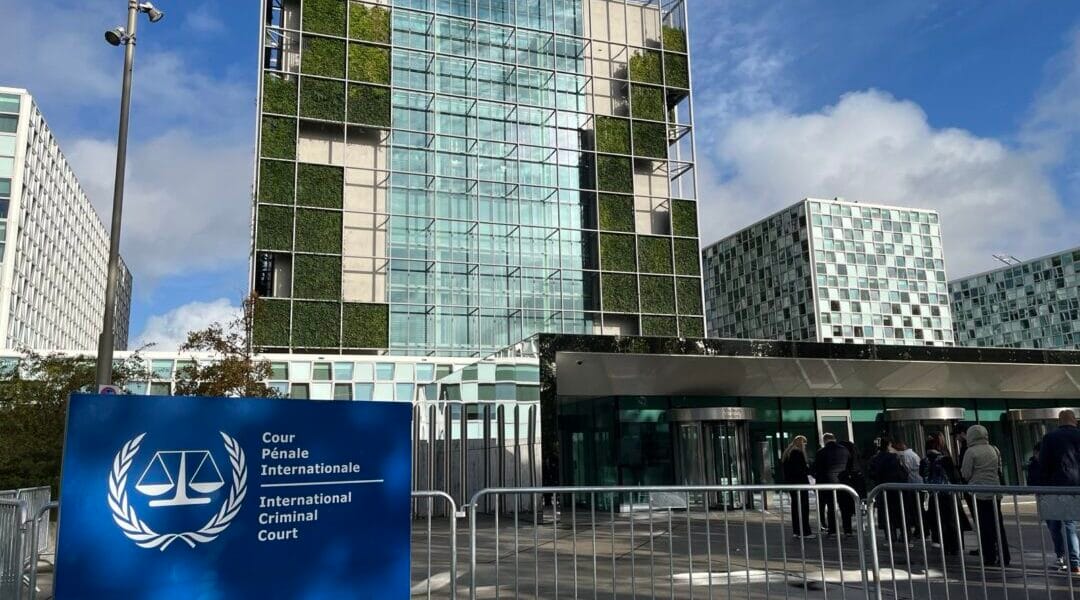
MANILA – The United States, through its president Donald Trump, is waging a campaign to dismantle the International Criminal Court. For drug war victims’ lawyers, this move undermines the Filipino’s ongoing case against Rodrigo Duterte.
“The Filipino people will lose more when we refuse to cooperate with the court that has assiduously investigated and is currently prosecuting legitimate crimes against all of humanity,” said Neri Colmenares and Kristina Conti, lawyers of victims from the National Union of Peoples’ Lawyers (NUPL), in a statement.
The Trump administration seeks to isolate the ICC by paralyzing its political and financial support, by pressuring other nations to withdraw from the Rome Statute. Last month, Trump also imposed sanctions on at least 11 ICC officials through travel bans and asset freezes.
Malacañang said the Philippine government is reviewing its policy on cooperating with the ICC.
“We do not gain any in supporting the US, which is rudimentarily invoking Westphalian sovereignty to protect criminals in its highest offices. It is false patriotism to simply claim we need to protect one of our own, when that one has caused the death and agony of many more,” the Filipino lawyers added.
Colmenares and Conti further emphasized that the Philippines’ best interest is to ensure that no future criminals will be emboldened to commit or even imagine the gravest of humanity’s crimes— cemented by rejoining the ICC.
The ICC Pre-Trial Chamber I unanimously confirmed all three counts of crimes against humanity of murder of Rodrigo Duterte after it found substantial grounds to believe that he was responsible for the widespread and systematic attack against a civilian population between November 1, 2011, and March 16, 2019.
The ICC Appeals Chamber also rejected all four grounds of Duterte’s appeal and ruled with finality that the court has jurisdiction over the case: since the crimes were committed when the country was still a member-state of the Rome Statute.
The case of Duterte and his brutal drug war campaign is only among the cases prosecuted by the ICC. In general, the Court has jurisdiction to the most serious crimes of concern to the international community: genocide, crimes against humanity, war crimes, and the crime of aggression.
However, the US State Department declared it a threat to their sovereignty— the same rhetoric exploited by pro-Duterte supporters to undermine the jurisdiction of the ICC over Duterte’s alleged crimes against humanity.
“The ICC and its friends are waging a war against our country, not with bullets or missiles, but with statutes, compacts and the force of so-called international law,” Marco Rubio, US Secretary of State, said in a video statement.
However, Colmenares and Conti said that the “statutes, compacts, and the force of so-called international law” protect more people from the world from grave human rights violations and serious crimes perpetrated by powerful individuals.
“Treaties like the Rome Statute commit states to a framework of international law and order that penalizes four major crimes that are universally reviled,” the Filipino lawyers noted. “ Courts like the ICC promise fair and competent trials to even those who break with norms identified by the international community.”
During the 10th year since the launch of Oplan Tokhang, the official campaign of the Philippine government against illegal drugs during the Duterte administration, victims’ families also demand to rejoin the ICC.
“We are really looking forward and pleading for the government to rejoin the ICC,” said Llore Pasco, mother of two drug war victims and a member of Rise Up for Life and for Rights, in an interview with Bulatlat.
Her two sons, Crisanto and Juan Carlos Lozano, were brutally killed by police in Quezon City during the height of the anti-drug campaign in May 2017.
Nanette Castillo, a mother who lost her son Aldrin in the brutal anti-illegal drug campaign, also told Bulatlat during the gathering that she is thankful that ICC is hearing the case.
“Some ask why we must seek justice outside the country. The answer is simple: the international community is the one that has shown concern while the Dutertes continue to wield strong influence here in the Philippines.” she said in Filipino.
It was exactly 20 years ago when the ICC was established through a United Nations diplomatic conference on July 17, 1998.
ICC President Judge Tomoko Akane said in a statement that in recent years, the international law has come under increasing pressure through direct attacks and weakening of the commitment.
“It has never been more important than it is today to defend the international rule of law and to continue the pursuit of justice,” she said. “Even in the most challenging times, the International Criminal Court will remain steadfast in its mission: to bring justice to the victims of the most serious crimes of concern to the international community.” (RVO)
 Save as PDF