
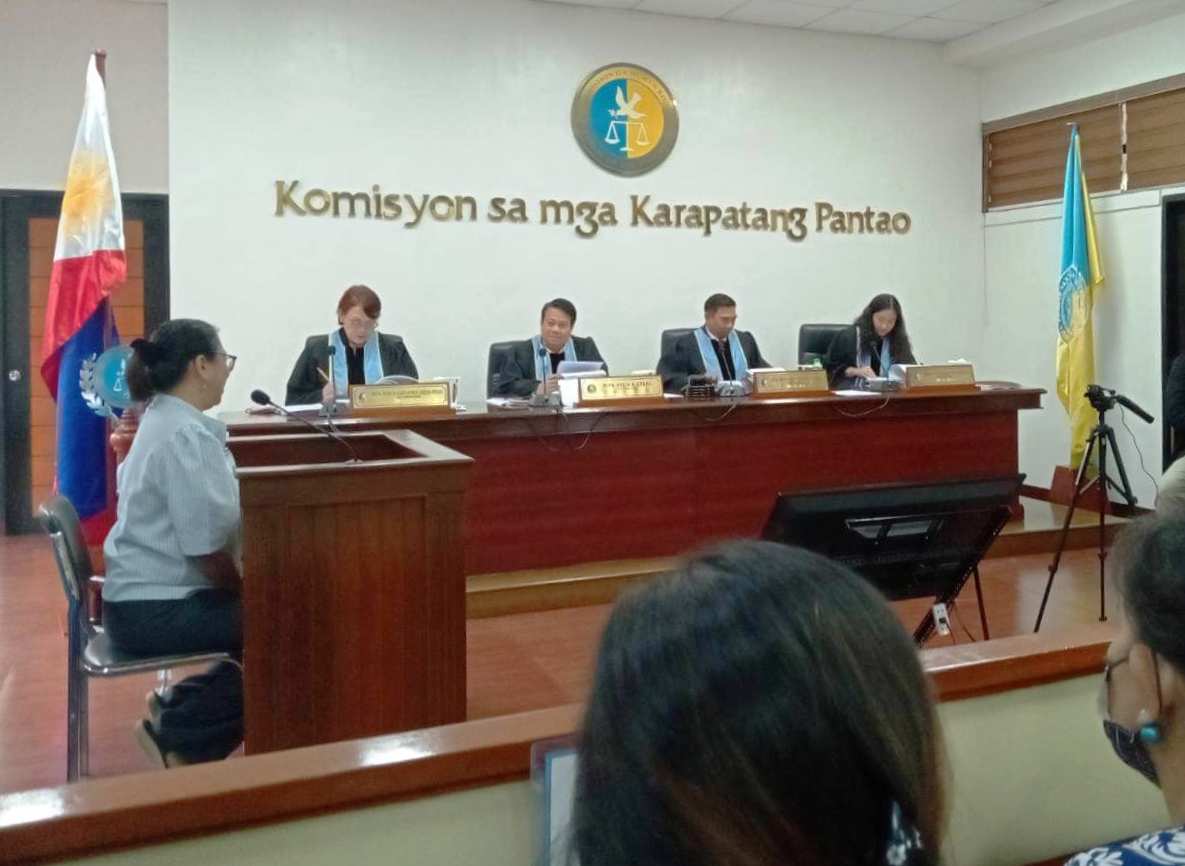
Victims urged the Commission on Human Rights (CHR) to squarely address violations under the Ferdinand Marcos Jr. and Rodrigo Duterte governments at the conclusion of its nationwide inquiry on red-tagging this week.
At the national human right institution’s inquiry for Luzon, several victims pointed to government state forces as perpetrators of the widespread practice of red-tagging happening even in the heart of the capital city.
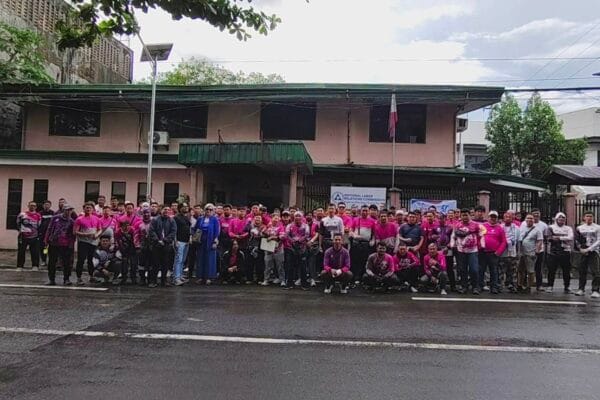
Women community leaders from the Tondo District revealed last January 15 of getting unwelcome late night visits from the 11th Civil Military Operations Battalion of the Philippine Army, taking pictures without permission.
The resource persons said the army unit rents a house in Tondo and would often hold overnight drinking sessions, causing trouble in the community.
In one incident, the residents were reportedly summoned to receive financial assistance, but the event turned out to be a “fake surrender ceremony.”
Tondo had been reportedly targeted for militarization since late 2022 when soldiers started occupying the historic and largely-residential district.
Red-tagging as government policy
In a statement, human rights group Karapatan said the testimonies of the victims clearly establish red-tagging as a state policy.
“As bad as these reports are (from Metro Manila), remote villages in the countryside have it much worse because their communities and production areas are being subjected to aerial bombings and artillery attacks,” Karapatan secretary general Cristina Palabay said.
“De facto martial law exists as villagers suffer hamletting and food blockades,” she added.
The CHR finished its red-tagging inquiry in the Visayas and Mindanao in 2024.
Herself a resource person on being red- and terror-tagged in the inquiry, Palabay said the practice and graver human rights and international humanitarian law violations are part of government’scounter-insurgency operations in militarized communities.
In her testimony, Palabay cited multiple instances from 2018 to 2023 where she as well as Karapatan colleagues and affiliates were red- and terror-tagged by former Pres. Rodrigo Duterte, officials of the National Task Force to End Local Communist Armed Conflict, military units, paramilitary forces and other state personnel.
In a much-publicized quote in May 2017, Duterte threatened to “decapitate” Palabay and Karapatan, which he alleged to be a “fake human rights group.”
This was after KARAPATAN wrote the United Nations Special Rapporteur on the Rights of Internally Displaced Persons about the worsening plight of internal refugees in Mindanao due to intensifying bombings and other military operations under Duterte’s counter-insurgency operational plans (oplan) Bayanihan and Kapayapaan.
“We (thus) call on the CHR to look into the deleterious effects that militarization in urban areas and the countryside has wrought on the people’s rights and welfare.”
Abolish NTF-ELCAC
In an earlier statement, Karapatan called for the abolition of the government’s counter-insurgency task force and the repeal of the Anti-Terrorism Act of 2020 as government’s leading mechanisms on red-tagging.
“Red-tagging involves hurling false accusations, often against human rights defenders, in order to vilify them or their organization, beliefs and activities, and eventually justify the commission of graver human rights violations against them and their group or community,” Palabay told the CHR.
“It is a vicious and insidious way of suppressing dissent and sweeping human rights violations under the rug,” she added.
“Considering that the Supreme Court has already ruled that red-tagging threatens a person’s life, liberty and security,” added Palabay, “the series of inquiries being conducted by the CHR is an important step in coming up with a clear picture of how prevalent red-tagging is across the country and its detrimental effects on the conduct of human rights work, and what accountability mechanisms can be adopted to put a stop to it.”
The CHR has yet to issue a statement on its inquiry.
A Kodao source said the commission did not publicly announce the activities “to ensure the safety of the resource persons.” # (Raymund B. Villanueva)