
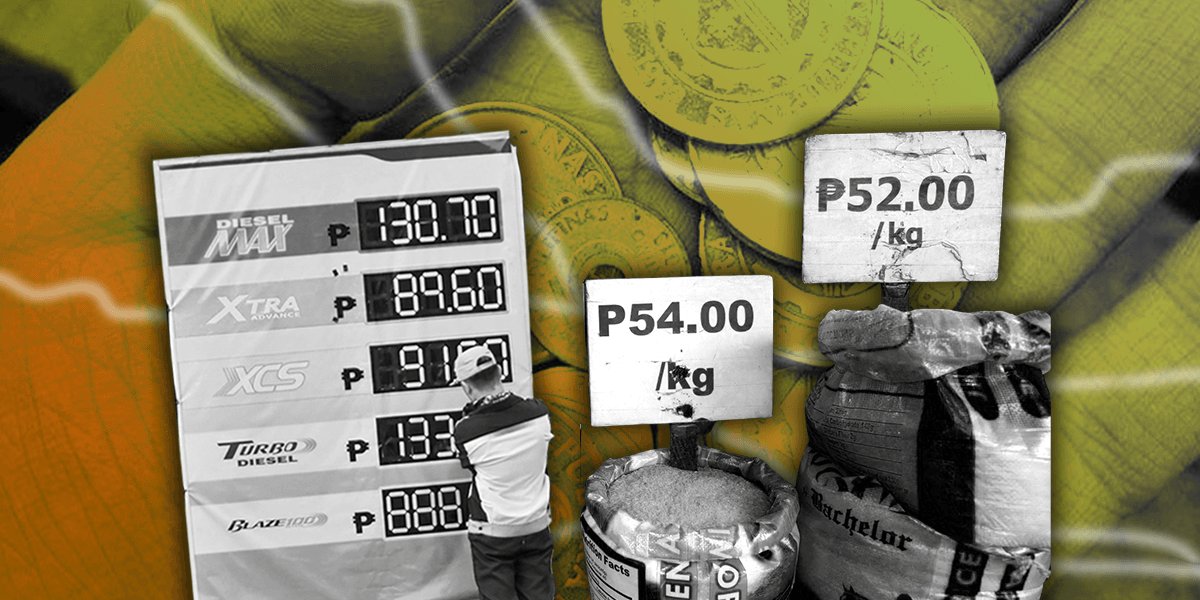
The Congressional Policy and Budget Research Department (CPBRD) reports that the country’s economy is undergoing stagflation—particularly slowing growth for three consecutive quarters and the sharp acceleration of inflation. It attributed this to supply-side shocks, mainly the oil crisis caused by the US-Israel attack on Iran. The CPBRD also warned against expansionary policies like excessive government spending, and recommended financial discipline, sweeping deregulation and aggressive infrastructure development.
However, the CPBRD’s diagnosis of the economic crisis is short-sighted, missing the deeper structural vulnerabilities that have plagued the economy for decades. As a result, the same market-driven policies that caused the crisis in the first place are still being pushed.
Structural problems
The closure of the Strait of Hormuz and its impact on global oil prices are obvious triggers for the inflation spike, especially given our extreme dependence on imported oil. However, this does not explain the steady slowing of economic growth since 2017.
Gross domestic product (GDP) has slowed from a 7.1% peak in 2016, to 4.4% growth in 2025 and just 2.8% in the first quarter of 2026. This is because earlier boosts from temporary demand drivers like expanding wage employment, remittances and fiscal stimulus started to fade in the 2010s, exposing unresolved weaknesses in the economy’s foundations. Pandemic lockdowns in 2020-2021 and corruption scandals last year further aggravated this.
Ultimately, the basic problem is that the Philippines has a consumption-driven, services-heavy economy, where household spending accounts for much of demand. Meanwhile, agriculture and manufacturing are too weak to generate decent jobs, stabilize prices, or reduce import dependence.
Household expenditure accounting for a large 72.6% share of GDP in 2025 means that a huge part of economic growth is dependent on Filipino families, the majority of whom have low and unstable incomes. Agriculture’s share is at 7.9% of GDP which is its smallest in the country’s history, while manufacturing at 17.4% is at its smallest in nearly 80 years.
Same failed policies
Not recognizing that the inflation spike is oil price-driven and that slowing growth is due to deep-seated structural problems results in misguided policy responses that will only exacerbate the economic crisis.
Fiscal discipline narrowly understood as government spending restraint will just deepen stagnation. While it is true that poorly targeted spending, arbitrary price controls, or reckless money creation could worsen inflation or cause shortages, all this says is that every policy measure has to be designed and implemented well. It’s narrow-minded to overstate risks and ignore underlying problems to justify government inaction.
In a stagflationary period because of structural problems and vulnerabilities, the question isn’t whether government should intervene, but how. Looking at the bigger picture, well-designed interventions to protect incomes, prevent profiteering, support food and fuel supply, and sustain productive public spending are called for. These can reduce hardship without necessarily worsening inflation.
The CPBRD’s call for deregulation is particularly problematic in being oblivious to how decades of neoliberal policies are part of why the country has weak domestic production and such high exposure to global shocks. Oil industry deregulation, for instance, is a policy failure that has made the Philippines have among the most expensive and volatile oil prices in Southeast Asia, where nine out of 11 member-countries of the Association of Southeast Asian Nations (ASEAN) regulate their respective oil industries all the way up to nationalization.
The sweeping call for infrastructure meanwhile ignores how corruption-prone, construction-heavy, and import-intensive this has been. There’s a structural blind spot in highlighting how construction momentarily boosts headline growth but failing to understand that this has weak productivity, technology, and multiplier effects unless linked to productive transformation of domestic industry and agriculture.
Basic changes needed
To genuinely boost the Philippine economy, basic changes are needed to overcome structural weaknesses, particularly in productive domestic sectors, as well as to substantially improve public welfare.
This can begin with the immediate implementation of relief measures to protect the purchasing power of at least the poorest 15 million Filipino families who bear the worst burden of high prices amid low and stagnant incomes.
In the long-term, structural transformation should be prioritized. This includes food security, agricultural modernization, Filipino industrialization, and stronger public education, health, housing and social protection. Expanded public investment in social and economic services can and should be financed by a more progressive tax system, starting with a billionaire wealth tax and higher income taxes on large corporations and the richest families.
Without these basic changes, stagflation will not just be a temporary episode but a recurring symptom of a structurally underdeveloped and import-dependent economy.