

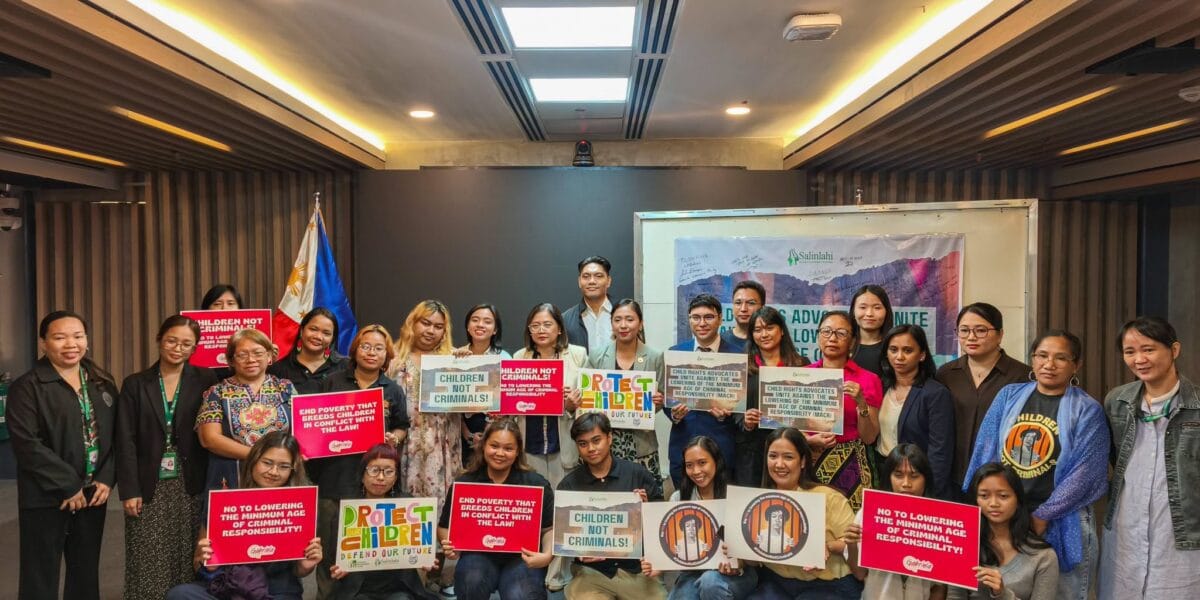
Child rights groups led by the Salinlahi Alliance for Children’s Concerns, together with church, student, and youth groups, gathered at the House of Representatives on June 29 for a roundtable discussion opposing the lowering of the minimum age of criminal responsibility (MACR).
The groups said recent school violence reflects deeper problems in the country, including the normalization of violence and the lack of social services for children.
“We are united with the demand for accountability from the adult gun owners, one of whom was a police officer, and the State, which has the duty to address the root causes of school violence, such as poverty, functional illiteracy, and children living in an unstable family and community environment laden with abuse, neglect, and antisocial influences,” said Elle Buntag, Salinlahi spokesperson.
The group also urged the government to focus on restorative justice for children who were killed, traumatized, or involved in the incident. Buntag said children should not be treated like adults in the justice system, arguing that punishment alone only shuts the door on their future.
“More than calling for lowering the minimum age of criminal responsibility, we should redirect our efforts to demanding more accessible mental health professionals, school guidance counselors, psychologists, and social workers; more spacious, well-resourced, and operational Bahay Pag-asa facilities; and quality education, including early childhood care, child-friendly and safe public spaces such as playgrounds and libraries.”
Gabriela Women’s Party Rep. Sarah Elago added that there is no evidence that suggests incarceration of children prevents violent incidents such as the Tacloban school shooting.
“Instead of lowering the age of criminal responsibility, the government must urgently address the severe deficits in our social infrastructure, from the chronic lack of mental health care services, counselors, and social workers to children and youth development facilities such as community libraries and recreational centers,” Elago said.
“We must confront the real problems they face: poverty, various forms of abuse, bullying, and other profound distresses that stem from systemic social failures,” she added.#
