
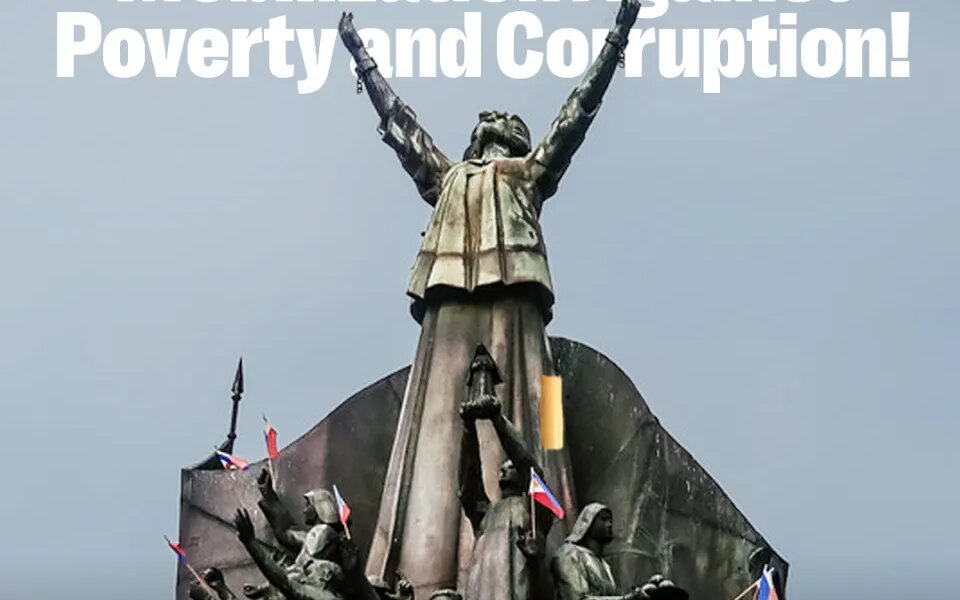
The Kilusang Magbubukid ng Pilipinas (KMP) called on farmers, farmworkers, fisherfolk, and rural communities to join the People’s Mobilization against poverty, corruption, and lack of accountability on June 28 at the EDSA People Power Monument.
KMP expressed solidarity with the broad mobilization led by the White Ribbon Movement (WRM) and supported by the Kilusang Bayan Kontra Kurakot (KBKK) and various organizations and sectors demanding accountability from public officials involved in corruption and the misuse of public funds.
“Corruption directly worsens the poverty and hardship experienced by farmers and rural communities,” KMP said. “Every peso lost to corruption is a peso taken away from programs that should support domestic food production, genuine agrarian reform, free irrigation, disaster response, public healthcare, education, and other essential social services,” according to Danilo Ramos, chairperson of KMP.
The farmers’ group noted that rural communities continue to face landlessness, low farmgate prices of agricultural produce, rising production costs, climate-related disasters, and severely lacking government support. It said these longstanding problems are compounded by corruption and the diversion of public resources away from the needs of the people. “Ang pondo para sa agrikultura at magsasaka, nilulustay sa korapsyon. Halos isang taon na matapos ang mga imbestigasyon, wala pa ring nakukulong at napapanagot sa mga sangkot,” Ramos said, adding his province, Bulacan, is considered as the epicenter of flood control corruption with more than Php1 billion worth of flood control projects flagged in separate audit reports from 2025 to 2026.
For farmers and rural communities, the issue is significant because flood control funds are intended to protect agricultural lands, livelihoods, and communities from flooding and climate-related disasters. When public funds are lost to corruption, farmers bear the consequences through damaged crops, weakened rural infrastructure, and reduced access to essential government services.
KMP also underscored the need for full accountability in ongoing investigations involving anomalies in public spending, including flood control projects and other large-scale government programs that have a direct impact on farming and rural communities.
In particular, KMP demanded a comprehensive update on the Department of Agriculture’s implementation of the Farm-to-Market Roads Program (FMR). Amid concerns over overpricing and implementation anomalies, the government transferred responsibility for farm-to-market road construction from the DPWH to the DA beginning in 2026. The DA has also launched audits, transparency measures, and public monitoring to “strengthen accountability and prevent corruption in future projects.”
In 2025, the DA ordered a comprehensive audit of all farm-to-market road projects implemented from 2021 to 2025 amid allegations of overpriced, substandard, and even non-existent projects. The DA’s initial audit flagged eight “missing” farm-to-market road projects in Davao Occidental worth approximately P100 million, which had reportedly been funded and declared completed but were found to have no actual accomplishments on the ground. Preliminary audit findings also showed that only about 65% of the 4,810 farm-to-market road projects funded from 2021 to 2025 had been completed, while hundreds remained unfinished, deferred, or had not even started despite receiving funding.
For farmers, every anomalous or ghost farm-to-market road means higher transport costs, reduced incomes, delayed delivery of produce, and continued neglect of rural communities that depend on public infrastructure for their livelihood. Accountability in farm-to-market road projects is therefore essential not only to combat corruption but also to advance food security and rural development.
“Justice delayed is justice denied. We demand the fast tracking of efforts to prosecute all those responsible for plunder, corruption, and misuse of public funds. Public officials, regardless of position or political affiliation, must be held accountable for their actions. Lahat ng sangkot dapat managot,” the group said.
According to KMP, the June 28 mobilization is an important opportunity to strengthen public unity and collective action against poverty, corruption, and impunity.
“The fight against corruption is also a fight for farmers’ rights, food security, and social justice,” KMP said. “We encourage farmers and all concerned Filipinos to join the June 28 mobilization and demand genuine accountability and social justice.” ###