

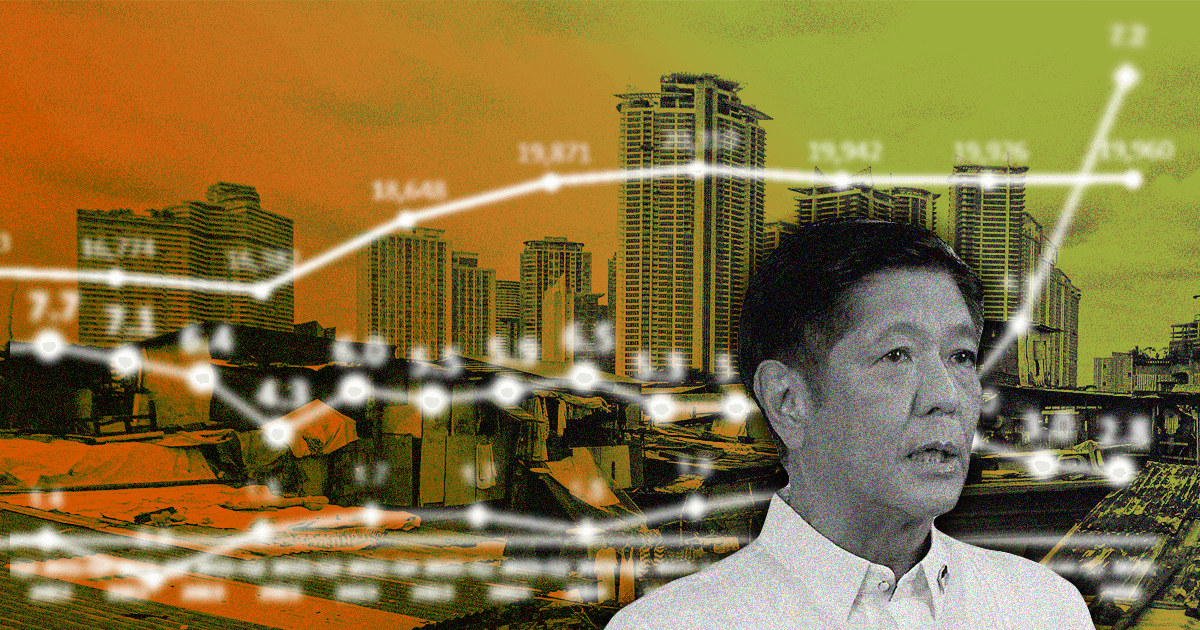
The latest gross domestic product (GDP) figures confirm the all-fronted economic deterioration that tens of millions of Filipinos already feel every day. Over 14 million poor families have been driven to worse distress, and 2-3 million more vulnerable families may be pushed into poverty from the Marcos Jr administration’s business-as-usual stance and largely performative responses.
Inflation tripled in just two months, from 2.2% in February to 7.2% in April; 357,000 jobs were lost between February and March, and now economic growth has slowed to 2.8% in the first quarter of 2026. Rapidly rising prices, worsening joblessness, and slowing growth are a clear stagflationary pattern that bears down the worst on tens of millions of poor and vulnerable households.
The government cannot claim that it is addressing problems “directly and decisively” when families are forced to pay more for food, transport, electricity, and other essentials as their livelihoods become even more insecure.
The Marcos Jr administration cannot use the crisis being global as an excuse. It has to be called out for making the domestic impact worse by its refusal to cut oil taxes, stop oil firm overpricing, freeze prices of basic commodities, and provide immediate relief for every family in need.
The government has to overcome its counterproductive fiscal conservatism. The trajectory of slowing growth starting in 2017 was momentarily masked by the pandemic collapse and rebound, but has been aggravated by corruption scandals last year and the much more serious oil shock this year. The fiscal demand is to spend more to avert a deeper slowdown, arrest growing joblessness, and give urgent relief.
Narrow-minded debt sustainability or fiscal consolidation cannot override the need for strategic and higher public spending to protect household purchasing power, mitigate cost-push inflation, and begin to reduce dependence on imported fuel and food.
Poverty figures are unavailable, but in any case, the reported Unified Package for Livelihoods, Industry, Food, and Transport (UPLIFT) beneficiaries are barely 10% of the over 14 million self-rated poor families before the oil shock. Targeting shouldn’t mean giving too little subsidies to too few and should include all transport workers, fisherfolk, farmers, and low-income households already in markedly distressed circumstances.
The government should also avoid excessive knee-jerk monetary tightening, which will just further dampen growth and employment while doing little to solve oil shock-driven cost-push inflation. This will further choke household consumption, which accounts for 73% of aggregate demand, as well as stifle micro, small and medium enterprises (MSMEs) with higher capital costs.
The government needs to look at the crisis in a broader and long-term way. This means using public funds to provide relief, protect livelihoods, and stabilize the economy. Ordinary Filipinos should not be left to carry the burden the inflation, job losses, and slower growth shock on their own.