

By Devian Claire B. Bersales
QUEZON CITY — Governance issues, prolonged displacement, political interference, and continuing human rights concerns remain among the biggest challenges confronting the Bangsamoro peace process, experts said in a State of Mindanao Forum held on July 15 at the UP College of Law, University of the Philippines Diliman.
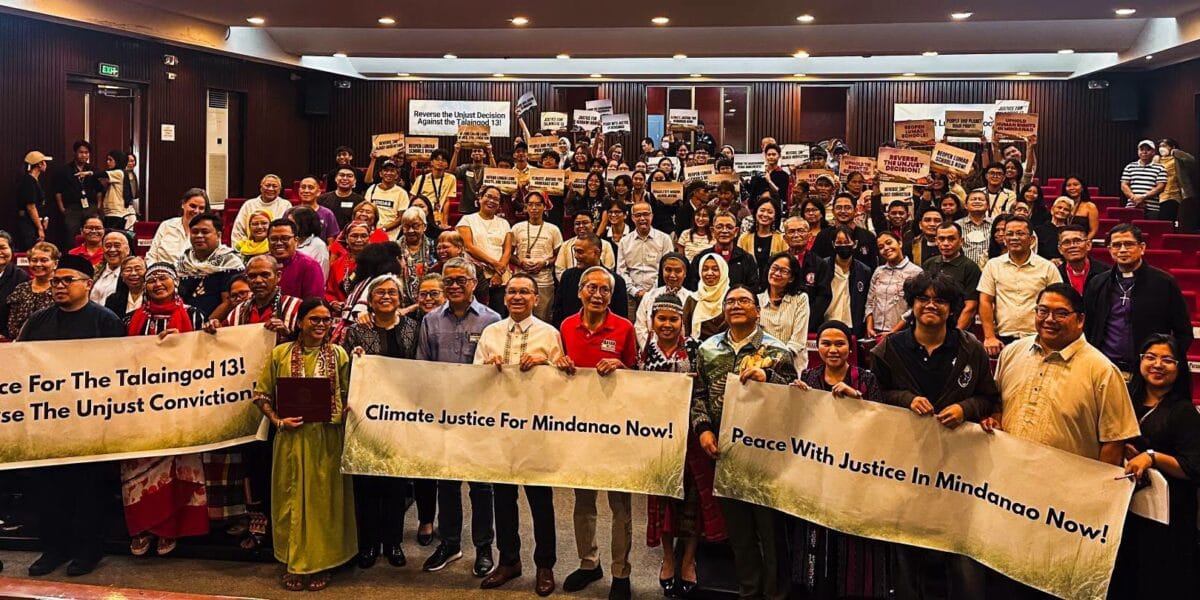
Organized by Mindanao Climate Justice (MCJ) and other groups, the forum examined the political, social, and human rights situation across Mindanao. They tackled issues affecting Lumad communities and the Talaingod 13, speakers underscored that the progress of the Bangsamoro Autonomous Region in Muslim Mindanao (BARMM) remains central to the island’s future.
Associate Professor Tirmizy Abdullah of Mindanao State University–Marawi said the Bangsamoro transition should be measured by the lived realities of communities that continue to bear the consequences of armed conflict, particularly those displaced by the 2017 Marawi Siege.
Speaking as a Maranao and an internally displaced person (IDP), Abdullah said rehabilitation cannot be considered successful while thousands of families remain unable to return home.
“Our measure of transition and rehabilitation is the return of the lives of the IDPs,” Abdullah said.
Displacement in Marawi continues
Nearly a decade after the siege, he noted that around 16,000 to 17,000 families continue living in temporary shelters, while approximately 80,000 individuals remain displaced across the country.
Abdullah challenged government narratives that Marawi has already recovered, saying the continuing displacement reflects the unfinished state of the Bangsamoro transition.
“The government wants the world to believe that Marawi has healed and that normalcy has returned. But we are here to expose that lies.”
The discussion also examined recent developments within BARMM and their implications for the peace process.
Peace and governance advocate Maria Victoria “Mags” Maglana said recent leadership changes in the Bangsamoro Transition Authority (BTA), including the replacement of Interim Chief Minister Ahod “Al Haj Murad” Ebrahim, should not be viewed merely as internal political disagreements within the Moro Islamic Liberation Front (MILF).
Instead, she argued that the situation should be understood within the broader implementation of the Comprehensive Agreement on the Bangsamoro (CAB), warning that continued political interference could undermine years of peace negotiations.
“If the implementation of the transition stalls, one possibility is a return to conflict.”
Maglana added that the Bangsamoro peace process represents more than the establishment of autonomous institutions. It is also an opportunity to address historical injustices, strengthen democratic governance, and demonstrate that political differences can be resolved through peaceful means.
She further pointed to persistent governance concerns across Mindanao, including political dynasties, corruption, and weak public service delivery, saying these continue to limit meaningful democratic participation.
Maglana also noted that despite provisions in the Bangsamoro Organic Law reserving parliamentary seats for non-Moro Indigenous Peoples (NMIPs), many indigenous communities continue to struggle in asserting ancestral land claims and participating meaningfully in regional governance.
Lasting peace, when?
Complementing the discussion on governance, Union of People’s Lawyers in Mindanao (UPLM) spokesperson, lawyer Arvin Dexter Lopoz, stressed that lasting peace in Bangsamoro and the rest of Mindanao cannot be achieved without addressing continuing human rights violations.
Lopoz cited cases involving Lumad teachers, church workers, indigenous leaders, and human rights defenders who were acquitted after facing what he described as fabricated criminal charges, arguing that these reflect the persistent risks faced by individuals advocating for communities affected by conflict.
“The state of human rights in Mindanao cannot be separated from the struggles, the sacrifices, and the persecution suffered by environmental defenders and human rights advocates all across the island of Mindanao,” Lopoz said.
Lopoz urged the pursuit of criminal, administrative, and civil cases against officials responsible for alleged extrajudicial killings and fabricated charges, saying justice remains essential to building lasting peace and strengthening democratic institutions.
Abdullah stressed that “normalization” should not be reduced to the decommissioning of former combatants or the conduct of elections. Instead, he said, it must include rebuilding communities, restoring livelihoods, ensuring the safe and dignified return of displaced residents, and addressing historical injustices that continue to shape life in the region.
“For as long as our people are displaced, rehabilitation and transition are both failures,” he concluded.
As BARMM prepares for its first parliamentary elections, speakers maintained that the success of the Bangsamoro transition will ultimately depend not only on political milestones but on whether governance delivers justice, accountability, and tangible improvements in the lives of the Bangsamoro people.
