

One of the rare occasions when I, as a kid, engaged in team sports was during our high school intramurals, when I was recruited, out of desperation, to play for one of the school’s football teams simply to fill out the roster. Few wanted to play football, while practically every sports-minded male student wanted to play basketball. I was a fullback.
I don’t remember whether I played left or right fullback. In the context of the team, it meant I was one of the weakest players, not responsible for any offensive action and tasked only with preventing the other team from scoring. Well, it turns out defense is pretty important in football, too.
I remember our last game ending in a tie after regulation and extra time, so it went to a penalty shootout. I was one of the last to take a kick. It was still tied. Nobody had scored. I stepped up and unceremoniously kicked the ball with my left foot (I was left-footed when kicking). The goalie did not anticipate my left-footed shot. It went in. Unfortunately, the referee disallowed it because I had kicked before he blew the whistle. So when I took the kick again, the goalie already knew which side the ball was going to. He promptly caught it. We went on to lose the game.
So went my oh-so-brief football career.
But I remember many things from it. I remember the utter exhaustion of running back and forth across that enormous field, the brutal physicality of the game, especially for fullbacks who have to deal with athletic, nimble strikers several inches taller and several kilos heavier than you. I enjoyed the hell out of it.
There is something so basic and elemental about football, even at that beginner level. Sure, it takes skill and talent and strength to do well on the field. But it also takes smarts and will. I’d argue that in no other sport is will more visibly on display than in football. As game time passes, exhaustion becomes overwhelming. In the end, only the strongest wills remain on the field.
That is precisely what we see as spectators: the strength of will, in physical form. Every goal warrants the most joyous celebration precisely because it is so damn hard to score.
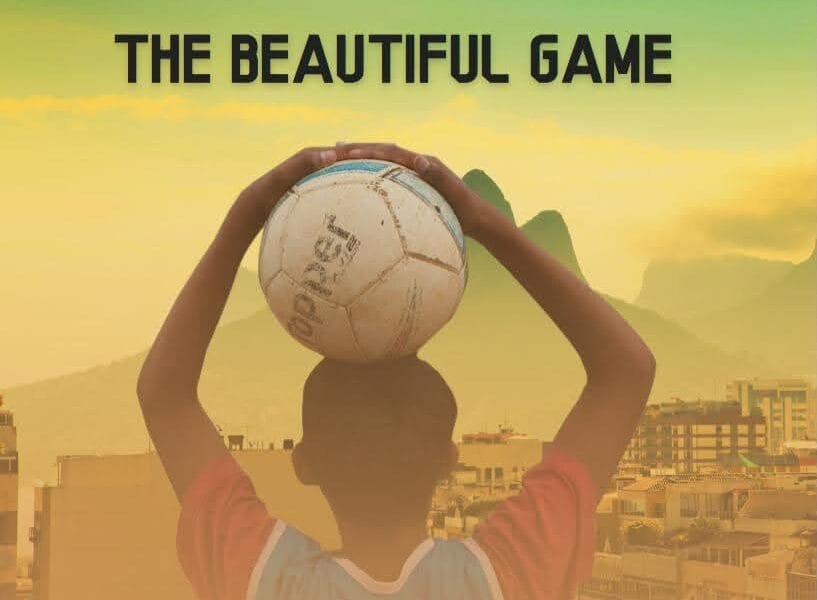
It is also, in my mind, the very thing that makes football the most popular sport in the world. It is the very thing that makes it “the beautiful game.” It is so simple, so elemental, that watching a match becomes watching a contest of wills.
In its simplicity, football also becomes whatever we deem it to be. It is a blank canvas on which artists like Pele, Ronaldo and Ronaldinho, Maradona and Messi, Zidane and Mbappe, and many others have painted masterpieces with their feet. It is also a blank canvas for us, the fans, onto which we project our hopes and dreams — and our fears and nightmares as a people.
One of the first articles I wrote for Pinoy Weekly was a sports article, in 2002. It was about Ronaldo and the Brazilian football team, and what the sport and the win might have meant to a country like Brazil, on the cusp of massive societal changes and amid deepening class tensions. Never mind that much of our own country, let alone the poor communities and sectors that read Pinoy Weekly, did not watch or play football. (We often copy the Americans in calling the sport “soccer.”)
For me, though, writing about Brazilian football and Ronaldo was a teaching moment — about finding solidarity in spaces filled by large masses of people, about affirming humanity and empathy in spaces where we share our hopes and dreams and project our own aspirations onto a football field.
I have also previously written about Filipinos and football, about the missed opportunity for Filipinos to excel at the sport. Its simplicity and rawness lend themselves well to Filipinos who wear their hearts on their sleeves, who often work hardest under the harshest conditions, who own no capital or wealth apart from their own will to work harder, to earn for their families, to make life better for their children, even in distant lands and while divided by time.
I imagined someone like Pacquiao as a striker, his determination in the ring deployed even more powerfully on the football field. He could have been our Messi. Instead, he is our Pacquiao — whatever his faults and limitations.
It was Bertolt Brecht, as I recall, in The Life of Galileo, who wrote: “Unhappy the land that is in need of heroes.” Because, of course, we are an unhappy land. And so are millions of impoverished and suffering football fans around the world: the millions of immigrants in Europe who needed Zidane and Mbappe; the kids of Latin America who looked to Maradona and Messi for inspiration; and even we Filipinos who, recently, clung our very fragile hopes to the fate of a 21-year-old Alex Eala to draw us from the depths of national despair amid the still-growing influence of populist fascists like the Dutertes and Marcoses.
Whether we like it or not, we are compelled to look to Pacquiao, our local basketball heroes, our Bata Reyes, and now, our Alex Eala. To paraphrase Marx, we make our own history, but we do not get to make it as we please. And so I have come to understand that we may never, as a people, love football as much as much of the world does, and that is okay. We have all those other spaces to fill and advocate for.
Recently, during much of the time I can spare while staying in this football-crazed Southeast Asian country (not the Philippines), I have been reading a lot of Ryszard Kapuscinski’s writings. Polish by citizenship and a journalist by profession, he supposedly covered hundreds of wars and revolutions across the world and wrote some of the most moving, empathetic reportage. He was also a bit of a pessimist, having been burned by the blind optimism surrounding many promises of imperfect attempts at revolution, including those in Poland. One of his most important works was The Soccer War. (I know. Why not call it The Football War?) It takes its title from the war between El Salvador and Honduras that erupted in the aftermath of three World Cup qualifying matches between the two countries.
It was a devastating and absurd war, lasting only a few days, but evocative of how this beautiful game can represent both our humanity and our hostility toward one another as nations. Also striking about this war is how the ruling classes — both Honduras and El Salvador were governed by military-dominated oligarchic states — cynically capitalized on the World Cup qualifying matches to foment ultranationalist anger toward a neighboring country with which they had a land dispute.
It was not football that caused the tragic war, but the ruling elites. And they mercilessly pitted one nationalist fervor against another.
And so, in the context of class tensions and exploitation, football becomes a space for both distraction and destruction. It is still a beautiful game, and one around which we can potentially unite, but it is also one through which our hopes and dreams, our fears and nightmares, can be exploited to further the agendas of the powerful and the ultrarich.
We see this again in this year’s World Cup, even to the absurd extent that Donald Trump sought to use his influence over FIFA’s corrupt leadership to overturn a decision to suspend a US player. We see it in the cruel punishment of the Iranian football team, forced to leave the US within a day after each of their games there.
We see it, I have to admit, in how we pit Spain against Argentina: one supposedly more progressive because its country stood for Palestine, the other supposedly favored by the FIFA powers-that-be and burdened with the fascist Milei as its president. The truth is that no country, no national team, is monolithic. No team wholly absorbs or embodies the politics of its government. And the truth is that, whatever the circumstances that brought each team to the final, their game is still something to admire. It is still a beautiful game. It is still a blank canvas where our progressive aspirations can take hold.
Wherever the game ends up is where we want it to be. It is we who make this game beautiful.
